Direct Answer: A built-in masonry grill and a fire pit are two different scopes of work with different footings, materials, and permit considerations. Both start with proper base prep and material choices suited to the Peninsula’s coastal environment.
We get calls and form submissions about this more than almost anything else. A homeowner wants an outdoor BBQ, or maybe a fire pit, or sometimes both, and they want a quote. The problem is that ‘outdoor BBQ’ and ‘fire pit’ get used almost interchangeably, but the actual work involved is pretty different. One is a freestanding structure built to contain an open flame. The other is a structural masonry surround housing a grill insert, with a countertop and sometimes a prep area beside it. Treating them as the same thing is how homeowners end up with mismatched bids and budget surprises.
On the Monterey Peninsula, there’s an extra layer to this conversation: material selection and base preparation matter more here than they do inland. The salt air rolling in off Monterey Bay, the moisture cycling from coastal fog, and the soil conditions on the Salinas side of the Peninsula all affect what a properly built outdoor structure actually looks like. Getting those decisions right from the start is what separates a project that holds up for decades from one that starts failing within a few seasons.
I want to walk through both, the fire pit side and the built-in grill side, and explain what actually goes into each one. Not a sales pitch, just the real breakdown of what the work involves.
A Fire Pit and a Built-In Grill Are Not the Same Project
This is the first conversation I have with almost every homeowner who contacts us about an outdoor cooking or fire feature. They’ve submitted a form checking ‘fire pits‘ but described wanting a built-in BBQ, or they’ve asked for ‘an outdoor grill and fire pit’ as if it’s one line item. Both are legitimate projects, but they involve different scopes, different structural requirements, and in some cases different permit conversations.
A fire pit is typically a freestanding or partially below-grade masonry structure. It’s designed to contain an open flame, direct heat, and handle the thermal expansion that comes with repeated heating and cooling cycles. The masonry scope includes the ring structure itself, heat-resistant materials throughout, and proper drainage so water doesn’t pool at the base. Gas-burning fire pits also require coordination with a licensed plumber or gas contractor for the line, that’s a separate trade and a separate cost.
A built-in masonry grill surround is a different animal. It’s a structural stone or block enclosure that houses a grill insert, supports a countertop surface, and often includes adjacent storage columns or a side burner housing. The masonry scope covers:
- The concrete footing sized for the structure’s total weight
- The CMU block or natural stone surround
- Countertop material and installation
- Any integrated stone features like side walls or a prep column
Gas line rough-in, electrical for outlets or lighting, and plumbing for a sink are each separate licensed trades. The masonry work is the base everything else builds around, which is exactly why it needs to go in first and go in right.
One homeowner in Pebble Beach submitted a form to us asking for ‘a quote for a grill on the patio.’ Simple enough on the surface. But once we discussed it, the project included a gas grill insert, a stone surround, a concrete countertop, and existing pavers that needed to be cut to accommodate the footing. That’s a meaningfully different scope than the first read, and it’s the kind of thing that only becomes clear through a site visit.
The Base Is Where These Projects Either Work or Don’t
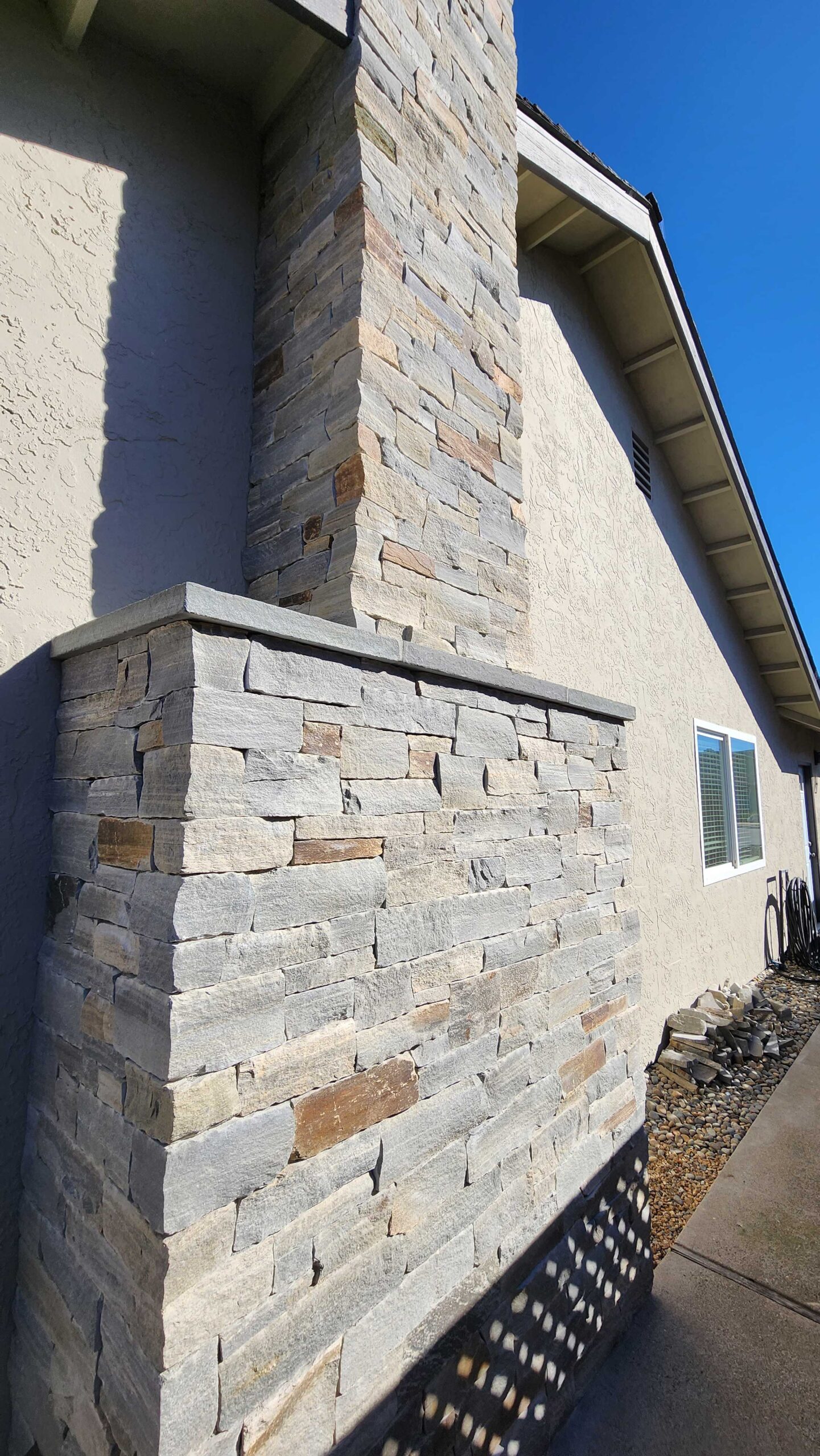
Every built-in masonry grill or fire pit starts below grade, and what happens there sets the outcome for everything above it. A proper concrete footing is sized for the structure’s weight, poured over compacted sub-base material, and positioned to account for drainage slope at the site. Skip or shortcut that step, and the finish material on top will eventually tell the story, cracking, shifting, or separating at the joints.
This is especially relevant on the Salinas side of the Peninsula, where soil conditions can include expansive clay. Clay soils absorb moisture and swell, then dry out and contract. A footing detail that performs fine on a well-drained lot in Carmel Valley may not hold up on a property in north Salinas without some adjustment. We’ve seen jobs where a previous contractor poured a shallow, unreinforced pad and called it done, and the surround was already moving within two winters.
For the surround itself, most built-in grills are constructed from CMU block as the structural core, with a finish material applied to the outside. That finish can be natural stone, manufactured stone veneer, or brick, the choice affects both aesthetics and long-term performance. On a coastal property, what separates custom stonework from off-the-shelf hardscape comes down to decisions like these: which stone species handles salt air, which mortar mix is specified for coastal exposure, and whether the installer understands how moisture moves through the assembly.
Andy Stoddard in Carmel Valley wrote in a review about having his gas grill built in by our team: ‘The finished project is beautiful. It has become a well used focal point in our backyard.’ That kind of result comes from getting the structural work right first, the visible stone is the last step, not the first.
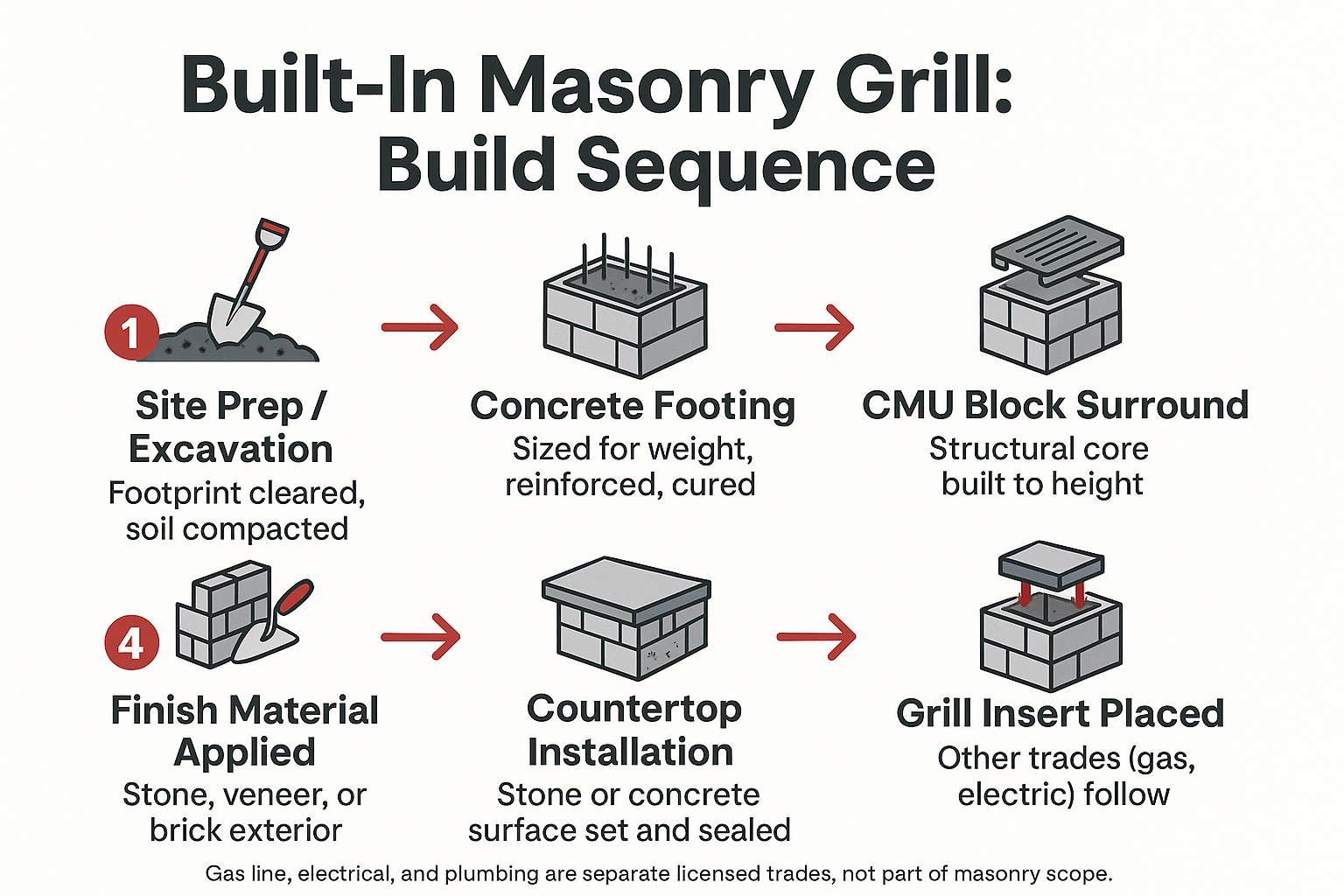
How a Built-In Masonry Grill Gets Built: Step by Step
This breakdown shows the correct build sequence for an outdoor masonry grill surround, from ground preparation to final inspection.
Why Material Choice on the Peninsula Isn’t Optional
I’ve seen showroom samples that look beautiful and fail outdoors within two or three seasons on a coastal property. The Monterey Bay microclimate is harder on exterior masonry than most homeowners expect. Salt air, coastal fog, and moisture cycling don’t give materials the break they’d get in a dry inland climate.
A few things I pay close attention to when specifying materials for a grill surround or fire pit on the Peninsula:
- Stone species: Some natural stones that hold up well in Sacramento or Fresno will spall or absorb moisture and crack here. Denser, lower-porosity stones handle the coastal environment better.
- Mortar mix: The wrong mortar will start failing at the joints within a few seasons. The right mix for a coastal masonry project isn’t the same as a standard interior spec. Planning an outdoor fireplace well requires thinking about this before a single stone is set.
- Heat-rated materials: For fire pits and anything near a firebox, materials have to handle repeated thermal cycling. That means refractory components where the flame contacts the structure, not just standard stone.
- Drainage detailing: Water that sits against a masonry base accelerates deterioration. Countertops need to slope slightly. Fire pit bases need a way for water to exit. This is basic but often missed.
For a fire pit specifically, the gas vs. wood choice also shapes the material spec. A wood-burning fire pit needs refractory liner material and more attention to heat management at the base. A gas fire pit has its own requirements around ventilation and access for the gas components.
The Monterey Bay Unified Air Pollution Control District also has rules that affect wood-burning fire features, something worth understanding before you decide on fuel type. Readers can review the air quality rules that apply to outdoor fire features in this area for a more detailed breakdown.
Fire Pit vs. Built-In Masonry Grill: Key Differences at a Glance
These aren’t just aesthetic differences, they affect structural scope, trade coordination, and what a complete project actually costs.
| Factor | Fire Pit | Built-In Masonry Grill |
|---|---|---|
| Primary function | Contain open flame for ambiance/warmth | House a grill insert for cooking |
| Structural core | Ring wall, refractory liner, drainage base | CMU block surround with footing |
| Countertop required | No | Yes, stone or concrete |
| Other trades needed | Gas line (if gas-burning) | Gas, electrical, plumbing (varies) |
| Permit likelihood | Varies by jurisdiction and fuel type | Usually required; verify locally |
| Coastal material concern | Heat-resistant + moisture-resistant spec | Salt-air-rated stone + mortar spec |
| Cost range (general) | Lower, simpler structural scope | Higher, more materials and trades |
Combining Both Into One Project: What That Conversation Looks Like
Several homeowners who’ve reached out to us, including a few in Salinas and Pebble Beach, have wanted to combine a fire pit, a built-in grill, and paver work into one backyard project. That’s a smart way to plan it. When the hardscape layout, drainage grade, and material palette are decided together, the whole project holds together better visually and structurally.
But it also means the estimate process is more involved. A contractor who gives you a price on this kind of combined scope without seeing the property is guessing. Soil conditions, existing drainage, access for equipment, and the distance from the gas meter all affect what the work actually costs. Understanding what drives hardscape project costs in Salinas helps homeowners go into that conversation with more realistic expectations.
For the masonry portion of a combined project, costs vary based on:
- Linear footage of paver work and any required base excavation
- Size of the grill surround and countertop material selected
- Fire pit complexity, a simple round fire pit versus a larger built-in gas feature with seating integration
- Site-specific conditions like slope, access, and existing hardscape that needs to be cut or modified
Many homeowners on the Monterey Peninsula see combined backyard projects like this run anywhere from mid-five figures to well above that, depending on scope and materials. That’s a wide range, but it reflects how different these projects can be from one property to the next. The only way to get a number that means anything is a site visit and a detailed scope conversation.
The California Contractors State License Board maintains an online tool where homeowners can verify any contractor’s license before signing a contract. For work that involves multiple trades, confirming that each contractor holds the right license classification for their portion of the work is worth a few minutes of your time.
Frequently Asked Questions About Outdoor Masonry Grill and Fire Pit Construction
Do I need a permit to build a fire pit or masonry grill in Salinas or on the Monterey Peninsula?
It depends on the jurisdiction, the fuel type, and the structure’s size. Gas-burning features almost always require a permit because of the gas line work involved. Larger masonry structures, anything with a footing and a structural surround, typically trigger a permit in most Monterey County jurisdictions as well. Requirements vary between the City of Salinas, the City of Monterey, Carmel-by-the-Sea, and unincorporated county areas, so you should verify with your local building department before breaking ground. Never assume a masonry contractor handles permit applications automatically, ask specifically.
Can a masonry contractor handle the whole outdoor kitchen project, including gas and electrical?
No, not under a C-29 masonry license. A masonry contractor’s scope covers the structural surround, footing, countertop, and stone or block work. Gas line rough-in requires a licensed plumbing or gas contractor. Electrical work requires a licensed electrician. A masonry contractor who claims to do all of this under one license is either subcontracting those trades (which is fine, as long as it’s disclosed) or working outside their license classification (which is a red flag). Knowing how to read a California contractor’s license before you hire is a useful habit.
How long does a built-in masonry grill or fire pit project typically take?
A straightforward fire pit, say, a simple round gas or wood-burning structure on an existing patio, might take 2 to 4 days of masonry work once materials are on site. A built-in grill surround with a countertop and integrated stone features is more involved; depending on complexity and curing time, expect 1 to 2 weeks for the masonry scope alone. If the project includes pavers, retaining features, or other trades, the total timeline extends accordingly. Weather on the Peninsula can also affect concrete curing and work scheduling, particularly in winter.
What’s the right way to quote a project that combines a grill, fire pit, and paver work?
It requires a site visit, there’s no good shortcut. Soil conditions, drainage grade, access, proximity to gas and electrical sources, and the existing hardscape all affect what the work actually involves. A contractor pricing this kind of combined project from photos or square footage alone is giving you a number that will likely change once they see the property. Be wary of any estimate that doesn’t include a walk of the site.
Does coastal salt air really affect a masonry grill or fire pit that much?
Yes, meaningfully. Salt air and moisture cycling accelerate joint deterioration and can cause certain stone species to spall or absorb water and crack through thermal cycling. The difference shows up gradually, usually in the mortar joints first, then in the stone face. Using the right mortar mix and the right stone for coastal exposure from the start costs nothing extra compared to remediation work a few years down the road. What a wet El Niño winter does to exterior masonry gives a good picture of how the Peninsula’s climate stresses these structures.
Ready to Plan Your Outdoor Grill or Fire Pit?
If you’re planning a built-in masonry grill, a fire pit, or a combined backyard project on the Monterey Peninsula, Stonecap Masonry is available to walk the site, answer questions, and put together a detailed scope. Reach the team at 831-262-0442 or visit stonecapmasonry.com to request a quote.
