
Receiving an estimate for a new stone patio in California should feel like getting a blueprint, not just a price tag. A professional quote is a detailed, itemized plan of action. It must clearly define the stone type and thickness, break down labor and material costs, explain the site preparation and base depth, and outline a clear water drainage strategy. A trustworthy contractor will always include their license number, proof of insurance, a project timeline, and a fair payment schedule.
Why Vague Patio Estimates Cause Major Problems
Have you ever been shocked when patio quotes vary by tens of thousands of dollars? You’re not alone. This confusion often stems from unclear proposals, missing plans, and contractors who won’t explain their pricing. For homeowners from Salinas to Carmel, a vague, one-page quote doesn’t build trust—it creates frustration and doubt.
The Homeowner's Dilemma: Comparing More Than Price
It’s easy to assume a patio is a simple project, leading many homeowners to compare quotes based only on the final price. This is a common and costly misstep. The real reason one contractor’s bid is much lower than another's is almost always hidden in what they leave out of the proposal.
A suspiciously low bid is a major red flag, often signaling corners cut on unseen elements like a properly compacted base or a functional drainage system. This is precisely why one patio remains beautiful for decades while another starts sinking and cracking after just a few California rainy seasons.
What the Data Says About Homeowner Priorities
Recent industry data reveals that 71% of homeowners prioritize aesthetics and durability for their outdoor projects. (Strategic Report, 2024). Both qualities depend entirely on craftsmanship and material quality, which must be spelled out in a professional estimate. Using a landscape design cost calculator can provide a helpful baseline before you start getting quotes.
What a Professional Estimate Must Contain
Your estimate is the blueprint for your investment, ensuring you hire a qualified, licensed professional. A fair, transparent stone patio quote must include these key components:
- A Clear Plan or Drawing: A visual representation of the patio's layout, dimensions, and design.
- Detailed Site & Base Preparation: Specifics on excavation depth and the type of compacted materials for the foundation.
- A Coherent Drainage Strategy: An explanation of how water will be managed to protect your home and the new patio.
- Specific Stone Type and Sourcing: The exact name of the stone, such as Arizona Flagstone or Pennsylvania Bluestone.
- Project Timeline and Warranty: A realistic start and end date, plus a written guarantee on the workmanship.
Unclear proposals are a primary cause of mistrust between homeowners and contractors. Demanding this level of detail helps you filter out unqualified bidders and find a true craftsman for your Monterey Bay home. Understanding the truth about hardscape pricing reveals why a higher upfront cost often prevents expensive repairs later.
The Unseen Foundation: What Your Estimate Should Reveal
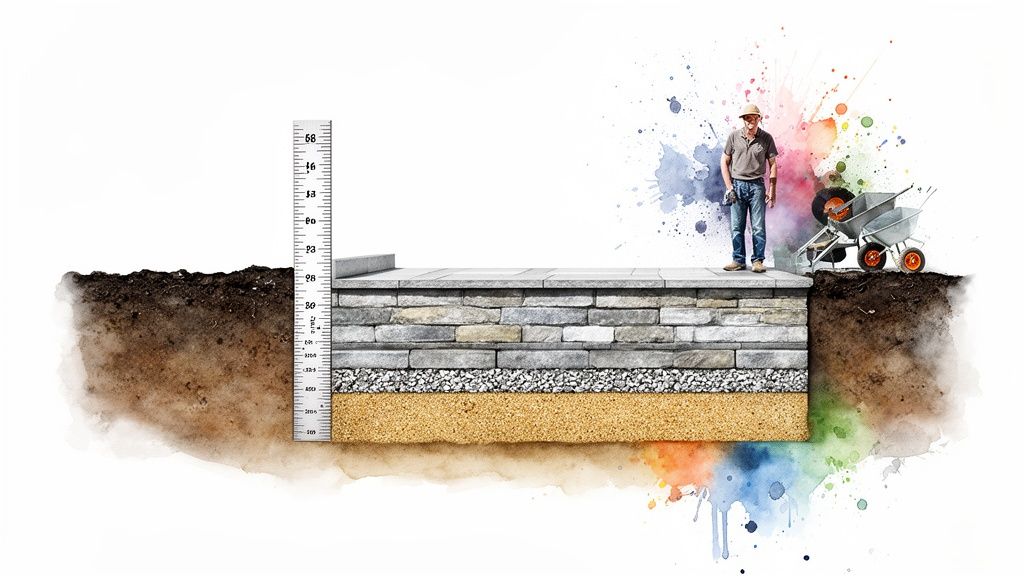
The true test of a stone patio isn’t the beautiful stone you walk on; it’s the robust foundation you can’t see. This unseen work is the single biggest reason one contractor’s bid may be thousands higher than another. This is the make-or-break step that ensures your patio lasts for decades, not just a few years.
A professional estimate will detail the site preparation and base work, not just a vague line item like "ground prep." It will specify the exact excavation depth and the type and thickness of the compacted aggregate base. This isn't just technical jargon—it's the formula for a patio that won't fail.
Why California Soil Dictates Your Patio's Base
Here in California, a one-size-fits-all approach to patio foundations is a recipe for disaster. The varied soil conditions across the Monterey Bay Area, for example, dictate how a patio must be constructed. A legitimate estimate will reflect a deep understanding of these local ground rules.
The sandy soils on coastal lots in Monterey and Carmel require a different approach than the heavy, expansive clay common in Salinas or Carmel Valley. That clay soil is a patio killer; it swells when wet and shrinks when dry, a relentless cycle that will heave and crack a patio built on a weak foundation.
A knowledgeable contractor will account for this by specifying:
- Excavation Depth: For tricky clay soil, they might need to excavate 8-12 inches. In sandy soil, the depth will be different but should be clearly stated.
- Base Material: The quote must list the type of crushed rock or aggregate they’ll use, compacted in layers for stability and drainage.
- Compaction Method: Your estimate should mention using a professional-grade plate compactor to ensure the base is solid and won't settle.
The High Cost of a Weak Foundation
When an estimate is vague about the foundation, consider it a massive red flag. A contractor looking to cut corners might just scrape off a few inches of topsoil and throw down uncompacted gravel. It’s cheaper and faster for them but guarantees premature failure and costly repairs for you. A strong patio requires substructure expertise for outdoor living spaces.
A licensed, experienced mason understands that the base is the most critical part of the job. Their estimate will reflect the cost of doing it right—proof they’re building a patio for a lifetime, not a temporary fix. For a deeper look, our advanced guide to hardscaping is a valuable resource.
Understanding Material and Supply Costs in Your Estimate
A single, vague line item labeled "materials" on a patio estimate is a major warning sign. This allows a contractor to substitute cheaper products later, boosting their profit at your expense. A professional proposal will break down every single material used in your project.
This transparency is crucial for the long-term durability and beauty of your patio. This is especially true in coastal communities like Pebble Beach or Pacific Grove, where salt air can degrade inferior materials. Demanding this detail is the only way to accurately compare bids and ensure you get what you paid for.
Breaking Down the Stone Specification
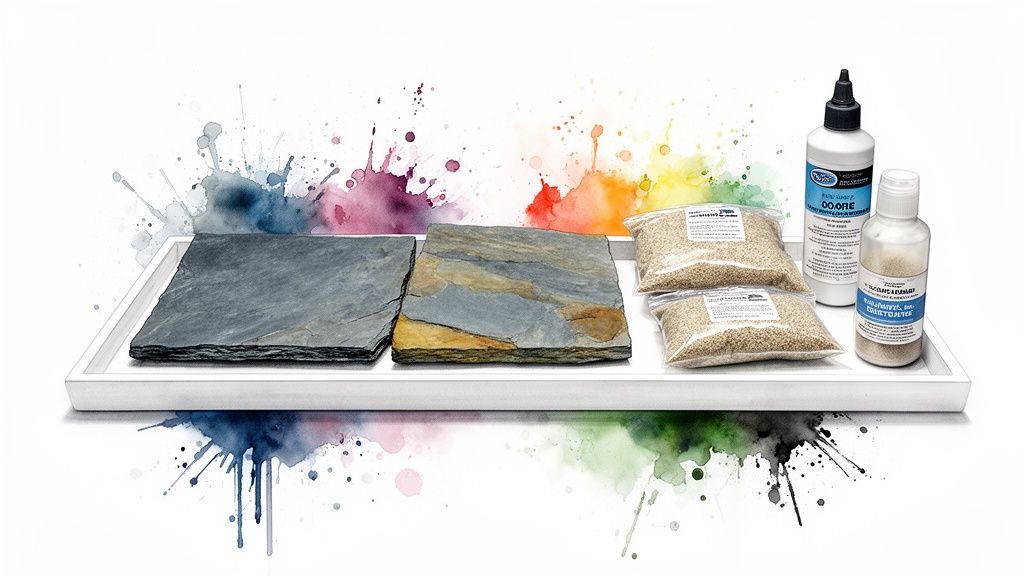
The star of the show is the stone itself, and your estimate needs to be specific. A legitimate quote will clearly identify:
- Stone Type and Name: Is it Pennsylvania Bluestone, Arizona Flagstone, or another variety? Each has a unique look, durability, and price.
- Stone Thickness: A minimum thickness of 1.5 to 2 inches is the industry standard for patios that can handle foot traffic without cracking.
- Origin or Quarry: Knowing the stone's source is a good indicator of its quality and authenticity.
- Total Square Footage: This number should match your project's dimensions, with a separate line for waste material (typically 10-15%).
A seasoned mason includes this detail because it directly impacts your patio's longevity and appearance. This is non-negotiable information for a real stone patio estimate in California.
A Checklist for Essential Patio Supplies
A great patio is more than just stone; it's a system of materials working together. These "other" supplies can account for a significant portion of the project cost and must be itemized. If they're missing, it’s a sign the bid is incomplete, which helps in analyzing why masonry quotes vary so much.
- Jointing Material: Will they use basic sand or superior polymeric sand, which hardens to block weeds and prevent washout?
- Mortar or Grout: For a wet-laid patio, the specific type and brand of mortar should be listed.
- Edge Restraints: What will hold the patio together? Options include plastic, steel, or a poured concrete toe.
- Sealants: If sealing the stone is recommended, the exact product should be named.
- Reinforcement: Any required rebar or wire mesh for concrete bases should be itemized.
By insisting on an itemized list of every material, you empower yourself to make an informed decision. This protects your investment and ensures your patio is built with quality components that will last in the California climate.
Investing in Labor and True Craftsmanship
The labor line item on a patio estimate represents more than just a crew's time. It's your direct investment in the skill, experience, and structural integrity of your project. A professional quote will break down what this covers, going far beyond a simple hourly rate.
This section must account for every hands-on task, from demolition and hauling to the meticulous process of setting each stone. It also must reflect the project's complexity; a herringbone pattern or integrated stone steps demand far more skill than a simple square patio.
The Value of Experienced Masons
A higher labor cost often points directly to a more experienced, professional masonry crew. A seasoned craftsman doesn't just lay stone; they understand the critical details of building a patio engineered to last for decades. Their expertise is what saves you from expensive repairs.
An experienced team knows how to manage a job site efficiently, cut stone with minimal waste, and set each piece for maximum stability. This is the difference between simple assembly and true artistry. This concept is explored further in the real costs homeowners often don't see in fireplace estimates.
What Labor Costs Should Include in an Estimate
A detailed labor breakdown shows the contractor has thought through your project from start to finish. It is a non-negotiable part of a legitimate stone patio estimate in California. Labor can represent a significant portion of the total bill, often ranging from $11 to $15 per square foot or more depending on complexity.
Ensure your proposal clearly outlines these tasks:
- Demolition and Removal: Breaking up and disposing of any old concrete, pavers, or landscaping.
- Site Preparation: The physical work of excavation, grading for proper slope, and compacting the base materials.
- Stone Setting and Cutting: The artisan skill required to custom-cut and lay each stone correctly.
- Jointing and Finishing: The labor to apply polymeric sand or mortar between stones, locking everything together.
- Cleanup and Hauling: Final site cleanup and removal of all construction debris.
Paying for quality labor is buying peace of mind. It’s your guarantee that the patio is built correctly the first time by a licensed, insured, and skilled team.
Planning for Water Drainage and Structural Safety
In California, from atmospheric rivers hitting the Monterey Bay coast to downpours in the Carmel Valley hills, water is a powerful force. An amateur patio job that ignores drainage is a direct threat to your home’s foundation. This is why any legitimate estimate must include a clear, detailed drainage plan.
It's not an optional extra; it's a fundamental part of the patio's structure. If a contractor just scribbles a line about "grading," it suggests they lack the experience to build something that will last in our climate.
What to Look for in a Drainage Plan
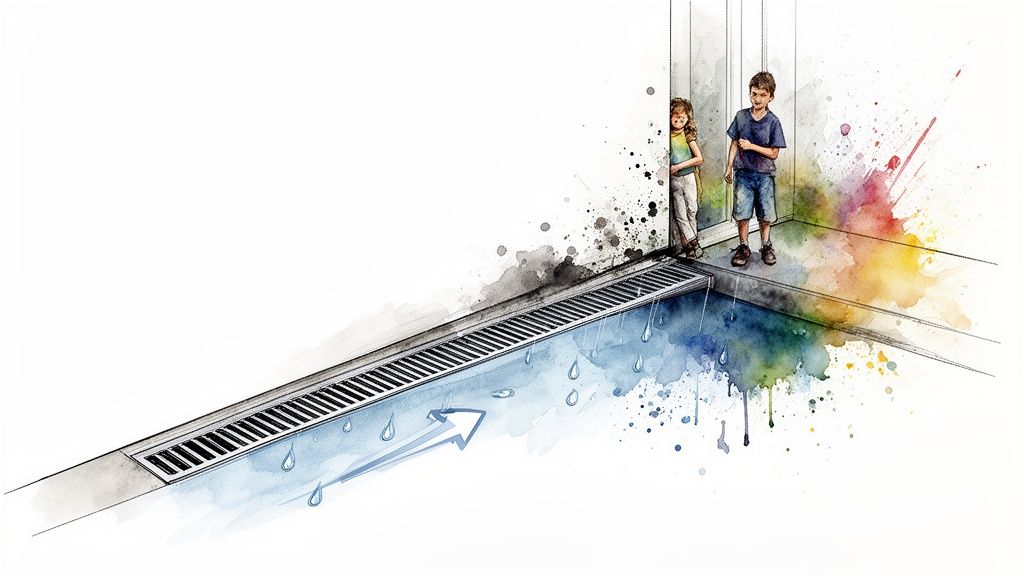
A proper drainage plan does more than prevent puddles. It’s a system designed to protect your property from erosion and your foundation from water damage. This is especially crucial for sloped lots found throughout Pebble Beach and Carmel Valley.
Your real stone patio estimate in California must specify the contractor’s methods. This proves they have assessed your property and proposed a custom solution. A well-crafted drainage plan is the hallmark of a true professional.
Make sure the proposal itemizes these key elements:
- Specified Patio Slope: The estimate must state the patio will be graded away from your home's foundation, typically a minimum of a quarter-inch drop per foot.
- Type and Placement of Drains: It should name the type of drains (e.g., channel drains, area drains) and show their planned locations.
- Water Redirection Strategy: The plan must explain where the collected water will go, such as a garden bed or storm drain connection.
Beyond Drains: Structural Reinforcement
If your new patio is on a hillside or built into a retaining wall, structural safety is the top priority. The estimate must address any extra reinforcement needed to keep the patio stable and compliant with California building codes.
Look for specific line items related to long-term stability:
- Poured Concrete Footings: Essential for supporting steps, seating walls, or the edge of a patio on a slope.
- Reinforcement Details: Mention of steel rebar or wire mesh inside any concrete base to prevent cracking.
- Geotextile Fabric: A special fabric laid under the base rock to stabilize the soil and prevent the base from sinking.
Skipping these details is asking for trouble. A patio without proper drainage and structural support is doomed to fail, leaving you with a huge repair bill.
Verifying Permits, Timelines, and Contractor Credentials
The final pages of an estimate are your legal and financial safety nets. This section is where a professional contractor demonstrates their accountability. A solid proposal will detail everything from permits and timelines to the contractor's official credentials.
Overlooking these details can leave you exposed to project delays, surprise costs, and legal issues. A transparent contractor puts this all on the table from the start.
Essential Contractor Credentials to Verify
Before signing anything, you must verify the contractor's credentials. In California, this is non-negotiable, as the state actively pursues unlicensed operators.
Your estimate should clearly state:
- CSLB License Number: For a stone patio, you need a C-29 Masonry license. Verify the number on the CSLB website to ensure it's active.
- Proof of General Liability Insurance: This protects your property from accidental damage during construction.
- Proof of Worker's Compensation Insurance: This is crucial. If an uninsured worker is injured on your property, you could be held liable for their medical bills.
It's critical to understand why you need a licensed masonry contractor, even for smaller jobs in California.
Project Management and Legal Protections
Once you've verified their credentials, review the project management details. This part of the contract governs how the work will be executed. A detailed timeline and a fair payment schedule are signs of a well-organized professional.
Look for these items in the contract:
- Permitting Responsibility: The estimate should clarify who is responsible for pulling permits. A professional contractor almost always handles this.
- Project Timeline: The document should provide a realistic start date and a target completion date.
- Payment Schedule: Look for a schedule that ties payments to specific milestones. Never pay a large amount upfront.
- Written Warranty: A good mason stands behind their work. The contract should include a written warranty covering workmanship for one to five years.
These final checks are what turn a quote into a protective agreement. It ensures your stone patio estimate in California is legitimate and your project is safe, compliant, and built to last.
Frequently Asked Questions (FAQs)
1. Why do my stone patio estimates vary so much in price?
Prices vary due to differences in stone quality, foundation depth, drainage systems, and the skill level of the masons. A very low bid often indicates shortcuts in unseen areas, like the base preparation, which can lead to premature failure.
2. Does my stone patio need a permit in California?
It depends on your local municipality and the project's scope. In Monterey County, permits are often required for larger patios, those attached to a house, or projects involving retaining walls. A professional contractor will know the local codes and handle the permitting process for you.
3. What kind of warranty should a stone patio estimate include?
Look for a written warranty covering workmanship for at least one to five years. This protects you against installation errors like sinking stones or cracking mortar joints. Ensure the warranty specifically covers labor and installation.
4. How important is a detailed drainage plan in the estimate?
It is absolutely critical. Without a proper drainage plan, water can damage your home's foundation and cause the patio to shift or erode. The estimate must detail the patio's slope and the type and placement of any drains.
5. What should I verify before hiring a masonry contractor in California?
Always verify their C-29 Masonry license on the California State License Board (CSLB) website. You should also ask for current certificates of both general liability and worker’s compensation insurance to protect yourself and your property.
A detailed, transparent estimate is the foundation of a successful project. By understanding what to look for, you can protect your investment and ensure your new patio is built to last in the unique conditions of Monterey County. For expert guidance, always consult a licensed and insured masonry professional.
