You’ve just received three quotes for your new fireplace, and the numbers are all over the map. One is $15,000, another is $25,000, and a third comes in at a staggering $40,000. Homeowners consistently ask us: “Why are contractor bids all over the place? Isn’t a fireplace just stacking stone?”
The truth is that a surprisingly low fireplace quote is often a red flag for an incomplete or, worse, unsafe project. The real costs—the ones that ensure your fireplace works properly and doesn't pose a risk to your home—are almost always tucked away in the structural and safety work that vague bids conveniently leave out.
Why Are Fireplace Quotes So Inconsistent?
The number one question we hear from homeowners in Monterey and Carmel is, “Why are these bids so different?” The frustration is understandable. The problem starts with the misconception that a masonry fireplace is just a decorative feature built by stacking stone.
In reality, a code-compliant fireplace is a complex engineered system. The beautiful stone you see is just the final layer. Behind it are a dozen crucial decisions about structure, ventilation, and fire safety that dictate the final cost and performance.
A Recipe for Confusion and Risk
Recent insights show that homeowners receive wildly inconsistent bids—with contractors offering no plans, unclear timelines, or incomplete specifications. This happens often with fireplaces because few explain the technical layers required for safe, code-compliant construction.
That lowball bid might look tempting, but it’s likely missing non-negotiable elements required for safety and longevity.
These hidden necessities often include:
- A Real Structural Foundation: A full masonry fireplace can easily weigh over six tons. It needs its own dedicated concrete footing to support that weight and prevent it from settling, cracking, or damaging your home's foundation, especially on Monterey County's unique soils.
- Engineered Smoke Management: The smoke chamber, flue liner, and chimney cap aren't just parts. They form a carefully designed system that must create the right draft to pull smoke up and out, keeping it from spilling into your living room.
- Proper Fire-Rated Materials: Standard brick and mortar can't handle the intense heat. You need specialized components like firebrick and high-temperature refractory mortar to contain the fire and prevent it from spreading into your home's structure.
Choosing the "cheapest" option might mean you're unknowingly cutting out the very things that make a fireplace safe.
The Hidden Anatomy of a Masonry Fireplace
It's easy to fall in love with the look of a beautiful stone fireplace, but what you see is just the beginning. A cheap quote often only accounts for the visible stone, completely skipping over the critical engineering that keeps your home safe and the fireplace running efficiently.
This is where homeowners get into trouble. Understanding what's behind the stone is the secret to reading any fireplace quote like a pro. Once you know what goes into a properly built structure, you'll see why cutting corners on the parts you can't see is a gamble you never want to take.
The Foundation: Where Safety Starts
A true masonry fireplace is a heavyweight, often tipping the scales at several thousand pounds. It needs its own dedicated structural foundation—a reinforced concrete footing that goes down into the ground. This foundation carries the immense weight, preventing the fireplace from shifting or cracking over time.
This is one of the biggest costs left out of bare-bones quotes. Especially in places like Monterey County, with our unique soil and seismic codes, a properly engineered foundation isn’t optional. If a bid doesn’t mention the foundation, it’s not for a real masonry fireplace.
The Firebox: The Heart of the Heat
The firebox is where the action happens, and it's built from highly specialized materials. This is no place for standard bricks and mortar.
- Firebrick: These aren't your average patio bricks. They are dense, heavy, and kiln-fired to withstand the intense, repeated heating and cooling cycles of a fire without falling apart.
- Refractory Mortar: This is a special high-temperature cement that holds the firebrick together. Regular mortar would crumble and fail under the heat, compromising the safety of the entire fireplace.
A trustworthy quote will be specific, naming the type and heat rating of the firebrick and mortar. Vague terms like "brick interior" are a major red flag, as it could mean the contractor is using cheaper, substandard materials that create a serious fire hazard.
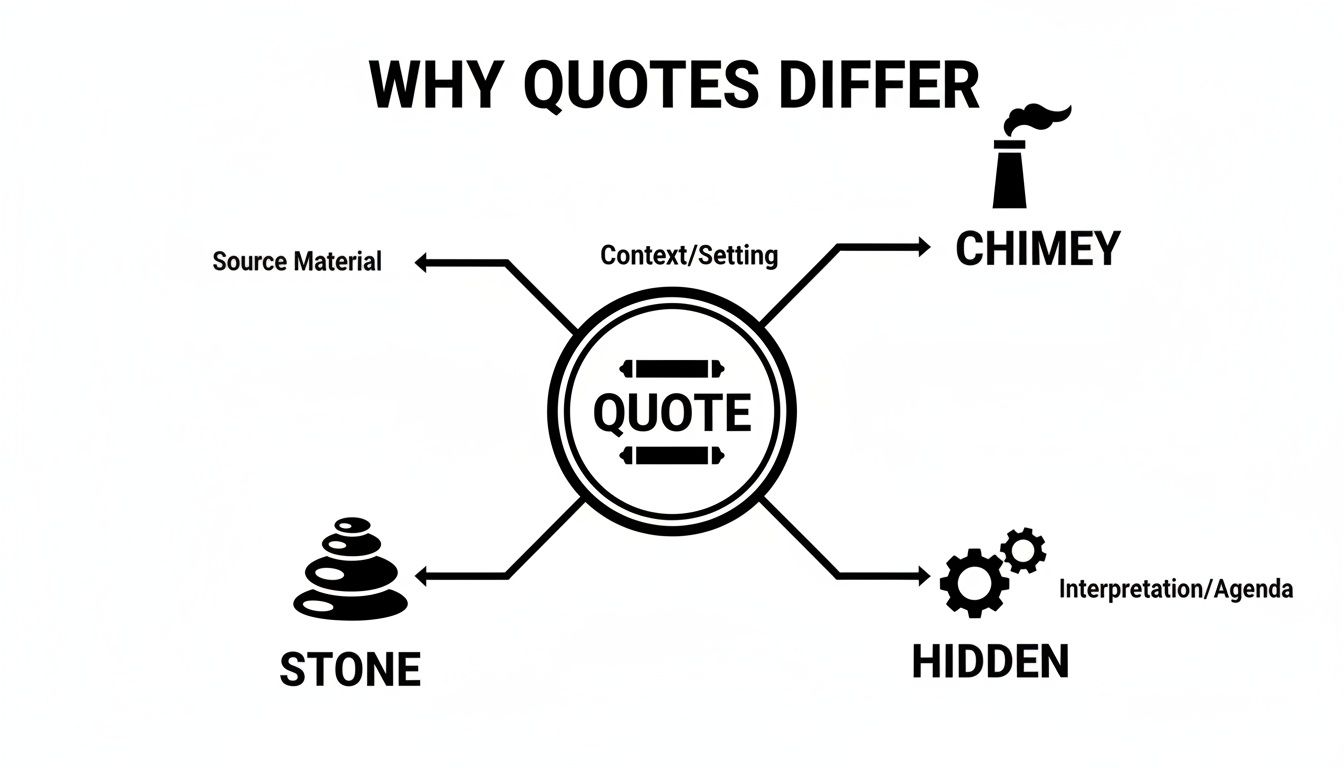
As the image shows, the final price is a blend of the beautiful aesthetics you see and the critical, invisible engineering you don't.
The Smoke Chamber and Flue: The Engine of the Draft
Getting smoke out of your living room requires more than just a hole in the roof. The system that pulls smoke up and away is a work of precise engineering.
The smoke chamber is the funnel-shaped space above the firebox that guides smoke into the chimney. Its angle and smooth interior finish are critical for creating a strong, steady draft.
From there, the smoke travels up the flue, which is the main passage inside the chimney. This passageway must be lined with a code-approved material—usually clay tiles or stainless steel—to contain the heat and corrosive gases.
Veneer vs. Structural Masonry: What's the Difference?
Here’s a big one where quotes can be misleading. Many fail to clarify whether they are quoting for a cosmetic stone veneer or a full-depth structural masonry fireplace. A veneer is a thin layer of stone applied over a structural wall, while a full-depth fireplace is built from solid masonry from the ground up.
Unclear bids often let homeowners think they’re getting a solid masonry fireplace when the price actually reflects a much lighter, less substantial veneer. You can learn more about the different types of stone veneers and facings in our detailed guide.
What this actually means for you is… A fireplace isn't a single item; it’s a system of a dozen structural, thermal, and safety components. When a contractor doesn’t break these down, you can't compare bids honestly. You might end up choosing a "cheaper" option that leaves out the very parts designed to keep your family safe from fire.
How to Decode Your Contractor's Quote
There's nothing more frustrating than getting a vague, one-line quote for a project as complex as a fireplace. This is your moment to take charge by asking the right questions—the kind that separates a true professional from someone just winging it.
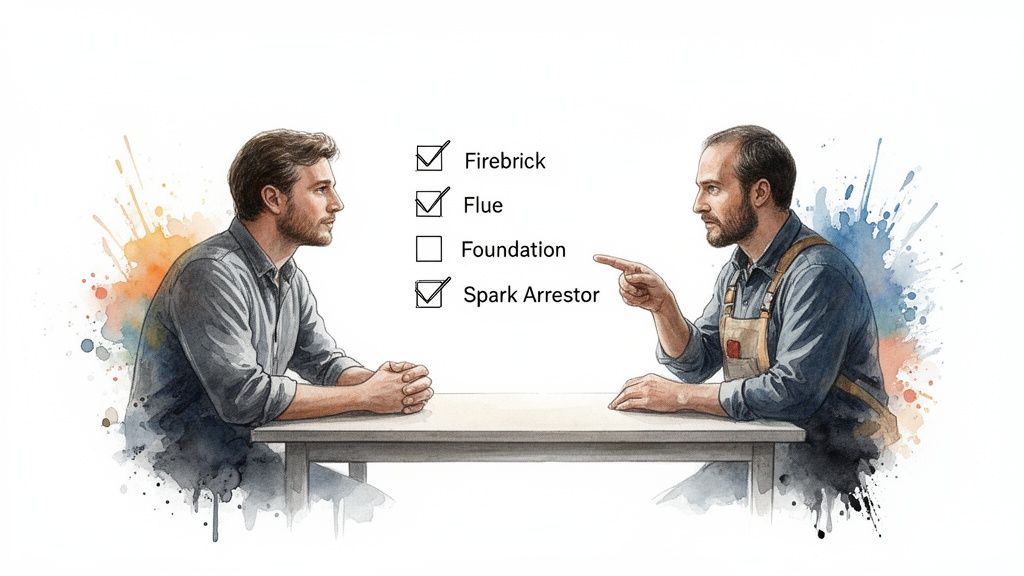
A seasoned contractor will welcome a detailed conversation; they’ll be proud to walk you through their process. To compare bids with confidence, you have to look past the final price and demand a line-by-line breakdown. The nitty-gritty details are where you’ll find the truth about a contractor’s knowledge and commitment to safety.
A Closer Look at the Key Components
When you get a quote, think of it as a blueprint. If crucial parts are missing from the plan, you can bet they’ll be missing from the final build, too. A thorough, professional quote is a sign of meticulous planning and your best guarantee that you’re investing in a structure that’s safe, sound, and built to last.
Your Fireplace Bid Comparison Checklist
Before you sign on the dotted line, use this checklist to put contractor quotes head-to-head. It’s designed to make sure every critical component is accounted for, giving you a true apples-to-apples comparison.
| Component or Specification | Contractor A Quote Details | Contractor B Quote Details | Why It Matters for Safety and Performance |
|---|---|---|---|
| Foundation/Footing Details | Enter specs from quote | Enter specs from quote | Prevents cracking and structural failure from the weight of the masonry. |
| Veneer vs. Full-Depth Masonry | Enter type specified | Enter type specified | Determines structural integrity, longevity, and overall cost. |
| Firebrick and Flue Specs | Enter specs from quote | Enter specs from quote | Ensures the firebox and chimney can withstand extreme temperatures without deteriorating. |
| Draft Design Method (e.g., Rumford) | Is it mentioned? Yes/No | Is it mentioned? Yes/No | Dictates the shape of the firebox and smoke chamber for optimal smoke draw. |
| Venting & Spark Arrestor | Is it included? Yes/No | Is it included? Yes/No | A mandatory safety feature to prevent embers from escaping and starting a fire. |
| Permits & Inspections | Enter details on who handles | Enter details on who handles | Guarantees the project is built to local code and has been verified by a city inspector. |
| Warranty Details | Enter warranty terms | Enter warranty terms | Clarifies what the contractor covers for both materials and labor after the job is done. |
This table forces a level of detail that protects you. Asking better questions helps you win better work and avoid mismatched expectations, especially when integrating a fireplace with features from a new stone patio builder.
Monterey County Codes, Permits, and Coastal Factors
Building a fireplace is one thing, but building one in Monterey County is a whole different ballgame. Our unique coastal environment and California's rigorous building codes add layers of complexity that a generic, low-cost quote simply won't cover.
A quote that ignores these local details isn't just incomplete—it's a trap. For homeowners in Salinas, Carmel, and Pebble Beach, these local rules are baseline requirements that directly impact the cost of materials, labor, and project timelines.
Navigating Local Permits and Seismic Codes
Before anyone digs a foundation, your project must clear the local permitting process. This means submitting detailed plans for approval. The cost of drawing up plans, paying permit fees, and scheduling inspections are often the first things missing from a suspiciously low bid.
On top of that, every bit of masonry must meet strict seismic codes. Your fireplace foundation needs specific reinforcement, and the chimney structure must be built to handle ground movement safely. A bid that doesn't mention seismic reinforcement is ignoring a fundamental safety requirement.
Selecting Materials for Coastal Durability
The salty, moist air that makes Pacific Grove and Carmel so beautiful is tough on building materials. A contractor who uses standard, inland-grade materials is building a short expiration date for your fireplace.
To ensure your investment lasts, a professional quote must call for materials designed to fight off corrosion and moisture:
- Rust-Resistant Metals: All metal parts—the damper, flue cap, and spark arrestor—must be high-grade stainless steel.
- Salt-Tolerant Mortar: We use special mortar mixes that prevent efflorescence (chalky white salt deposits) and deterioration in the sea air.
These materials cost more upfront but save you from expensive repairs when cheaper options inevitably fail.
Wildfire-Resistant Construction Is Non-Negotiable
If you live in a place like Carmel Valley, wildfire safety isn't just a good idea—it's the law. California's building codes for homes in Wildland-Urban Interface (WUI) zones are among the strictest anywhere.
In a high-fire-risk zone, a fireplace isn't legal without specific safety features. You need proper clearances from combustibles and a legally required spark arrestor.
These aren't add-ons you can negotiate away. They are non-negotiable requirements for keeping your home safe. This is why hiring a licensed, bonded, and insured contractor who knows local codes is your best defense against expensive mistakes. Learn more about Central Coast licensing rules and how to hire a contractor in 2026 to protect your investment.
The Long-Term Costs of a Poorly Built Fireplace
Getting a fireplace quote that seems too good to be true is a major red flag. It’s a down payment on a long list of future problems. The truth about fireplace quotes is that the costs homeowners don’t see are the ones that pop up years later, turning a "bargain" into a constant headache.
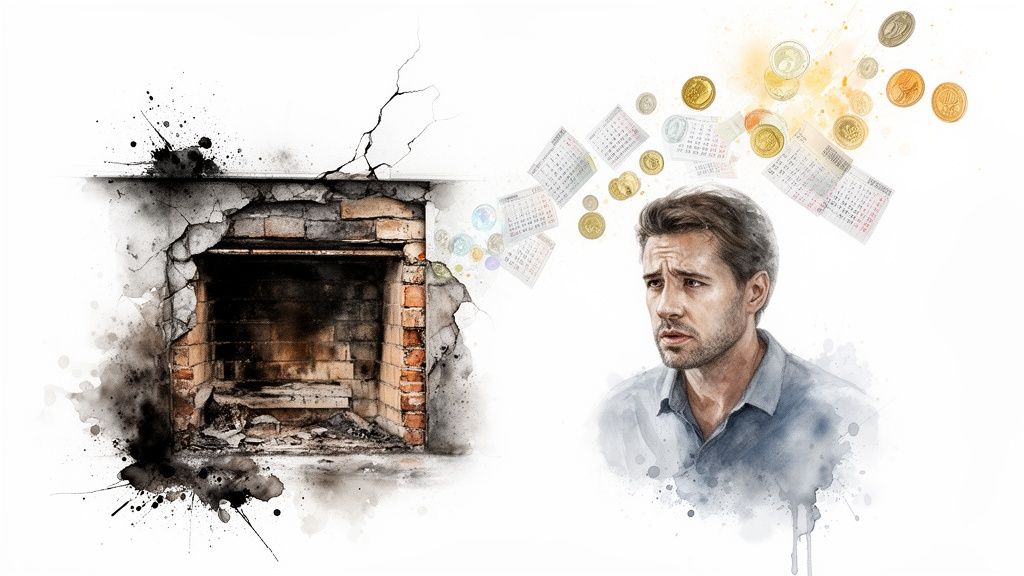
The first issues you'll notice are usually performance-related. An improperly designed smoke chamber will cause smoke to pour back into your home. Cheap materials also fail fast, meaning you’ll be stuck patching crumbling mortar and replacing cracked firebricks.
The Price of Structural and Safety Failures
Beyond daily frustrations, the truly massive hidden costs are tied to structural failures. When a contractor skips a proper foundation, the sheer weight of the masonry can cause the entire chimney to settle, crack, and even pull away from the house.
These major structural problems are where homeowners get hit with enormous, unquoted expenses. Fixing a cracked flue liner or rebuilding a chimney can run into thousands of dollars. According to one industry report, just removing a failed fireplace and chimney can cost between $3,000 to $6,000, erasing any money you thought you saved upfront (HomeGuide).
Annual Maintenance and Inefficiency Costs
Even if you dodge a catastrophic failure, a subpar build will nickel-and-dime you every year. A poorly sealed damper or inefficient design lets heated air from your home pour right up the chimney, driving up your utility bills.
A well-built fireplace, in contrast, is an investment in efficiency and peace of mind. Your annual inspections become simple, preventative tasks—not emergency calls to fix something that just broke.
The Bottom Line: Investing in expert craftsmanship from the start is the best way to avoid the crushing long-term costs of a cheap fireplace. Using the right materials and following building codes is the only way to guarantee a fireplace that works safely and looks beautiful for generations.
Frequently Asked Questions About Fireplace Costs
Why is a masonry fireplace quote so much higher than for a pre-fab unit?
A true masonry fireplace requires a dedicated concrete foundation, a custom-built firebox and smoke chamber, and a full structural chimney. A pre-fabricated unit is a manufactured metal box that only needs simple framing and venting, which significantly reduces labor and material costs.
Does a standard quote include the hearth and mantel?
Often, no. A basic quote usually covers only the firebox and chimney structure. Be sure to ask for the hearth, mantel, and surrounding stone or tile finish to be itemized separately so you know the full cost.
What is the biggest hidden cost in a fireplace quote?
The foundation is almost always the biggest hidden cost. A full masonry fireplace is incredibly heavy and requires its own engineered concrete footing to support the weight safely, especially with California’s seismic codes. If a bid doesn't detail the foundation, it’s a major red flag.
Are fireplace permits expensive in Monterey County?
Permit costs vary by city, but you should budget several hundred to over a thousand dollars for permit fees and inspections. A licensed local contractor working in Carmel or Salinas can give you a precise number and handle the entire submission process.
Why shouldn’t I buy the stone veneer myself to save money?
Sourcing your own materials can create installation problems and will almost certainly void your contractor's workmanship warranty. Professionals have trusted suppliers and can guarantee the quality and durability of the stone, ensuring you are covered if any material fails.
A proper fireplace is a significant investment in your home's safety and value. It's critical to work with a licensed, bonded, and insured masonry professional who understands Monterey County's unique climate and building codes. If you’re unsure whether a fireplace bid is complete or safe, we’re happy to walk through the components so you know exactly what you’re paying for—before construction ever begins.
