
It's the question every property manager and general contractor asks when bids land on their desk: why do commercial masonry quotes vary so much between contractors? It’s not uncommon to see a difference of thousands, even tens of thousands, of dollars for the same job.
The answer isn't just about materials or labor. Commercial masonry isn’t like hiring someone for a backyard patio; it involves complex codes, schedules, structural engineering, and coordination with other trades. The real difference in quotes comes down to a contractor’s experience, their level of insurance, and whether they're truly equipped to handle the risks unique to commercial-scale projects. Honestly, a surprisingly low bid is often a red flag that a contractor is unprepared for what the job actually demands.
Why Commercial Projects Are a Different League
Staring at two vastly different bids is baffling. Is the high-priced contractor overcharging, or is the low-ball offer an incredible deal? The truth is, that price gap often signals a fundamental misunderstanding of what it takes to execute a commercial project successfully.
This isn’t like building a simple residential wall. Commercial masonry is a whole different world, governed by a completely different set of rules. We’re talking about engineered systems, strict adherence to California building codes, and intricate coordination with architects, GCs, and other trades on a busy job site. The stakes are simply higher—a mistake doesn't just look bad, it can lead to failed inspections, massive project delays, and serious liability.
Misconceptions About Contractor Experience
One of the most common—and costly—mistakes business owners make is assuming a good residential mason can easily transition to a commercial job. In reality, commercial masonry requires an engineered approach, permit coordination, and strict safety compliance.
Here's what that really means:
-
Engineered Systems: Commercial projects are based on precise plans from a structural engineer who specifies every detail, from the exact type of rebar to the specific grout mixture. This is especially true for structural elements like retaining walls. You can learn more about the complexities of properly engineered retaining and garden walls in our guide.
-
Safety and Compliance: On a commercial site, OSHA isn't just a suggestion; it's the law. A qualified contractor prices in proper scaffolding, site containment, and crew safety protocols as non-negotiable costs.
-
Permit Coordination: A contractor has to know how to navigate the commercial permitting process in jurisdictions like Monterey or Salinas. It's not a simple over-the-counter affair and requires deep local knowledge.
-
Scheduling and Sequencing: The mason has to work in lockstep with the general contractor's master schedule. One delay can create a domino effect, holding up plumbers, electricians, and framers, costing everyone time and money.
A low quote often comes from someone who hasn’t priced in these realities. Choosing based on price alone often leads to delays, change orders, or failed inspections.
Local Monterey Peninsula Requirements
Here on the Monterey Peninsula, local factors add another critical layer. For any commercial property in Salinas, Monterey, Carmel, or the surrounding areas, our strict seismic and fire-resilience building standards aren’t just best practices—they're mandated by law.
A contractor who isn’t deeply familiar with these local requirements might give you an attractive quote, but it's a quote for a job that will never pass inspection. At Stonecap Masonry, we are licensed, bonded, and familiar with local inspectors and codes—making the process smoother for builders and property managers.
Decoding The Key Cost Drivers In A Masonry Quote
To really get to the bottom of why commercial masonry quotes vary so much between contractors, you need to look past the final number and understand the anatomy of a professional bid. The total price you see is built on four core pillars: the crew's skill, the quality of materials, the necessary equipment, and the operational overhead that keeps a legitimate business running.
Each of these pillars has real, significant costs attached. The catch is that less-experienced or corner-cutting contractors might drastically underestimate them—or just leave them out entirely.
For example, an experienced contractor’s labor rate isn't just a simple hourly wage. It’s a reflection of a highly skilled, reliable crew, and it also covers the hefty costs of workers' compensation insurance, liability coverage, and payroll taxes. This is huge. It means if a mason gets hurt on your property, you're protected from a lawsuit.
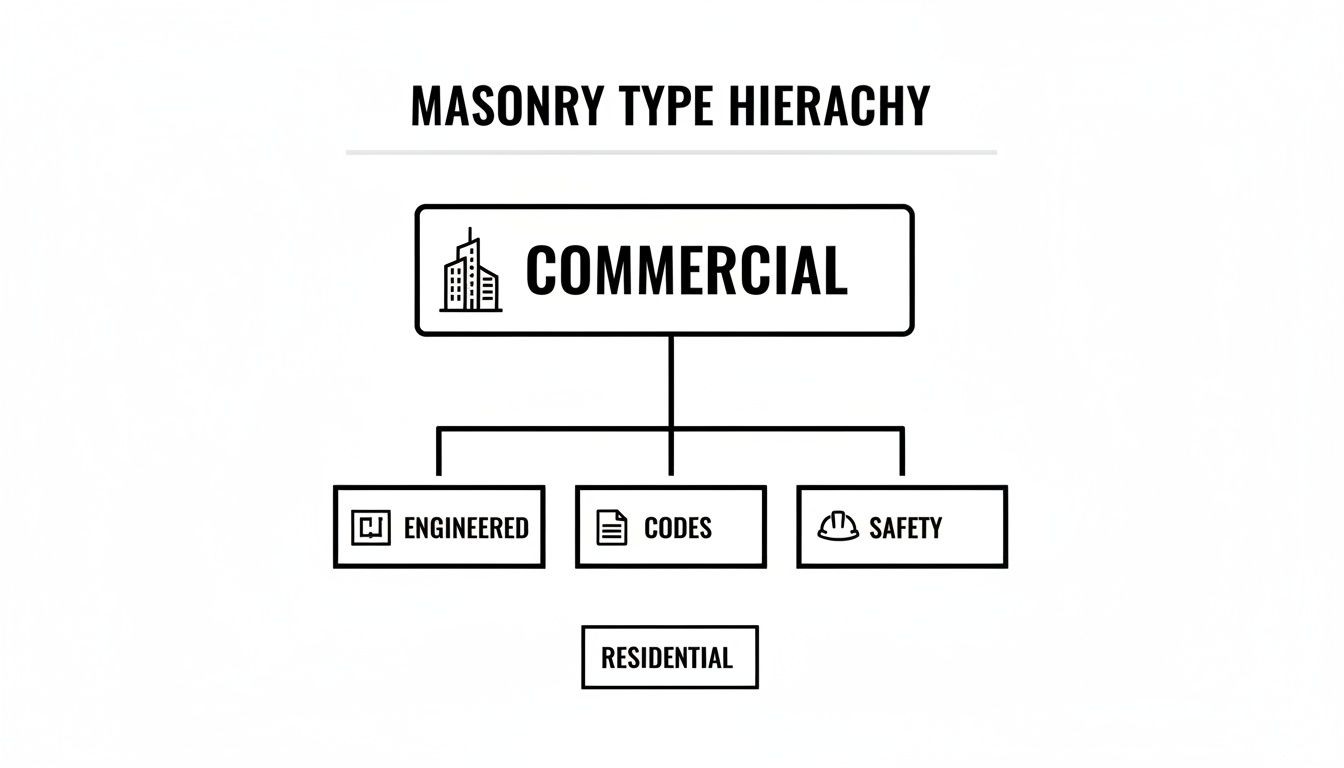
As you can see, commercial masonry isn’t just about stacking blocks. It's built on a foundation of engineered plans, strict building codes, and serious safety protocols. Each of those layers adds necessary costs and complexity to the job.
The Role Of Labor And Expertise
The crew’s skill level is probably the single biggest variable in any masonry quote. A suspiciously low bid often comes from a contractor using less-experienced labor, which is a gamble that puts your project’s quality and timeline on the line.
The construction industry is stretched thin. According to recent data, 38% of construction professionals report labor shortages, which means not all contractors have the skilled crews to handle complex commercial timelines. A trustworthy contractor can staff the project consistently. (Source: Strategic Report).
A professional crew doesn't just lay bricks; they read complex blueprints, execute engineered reinforcement plans, and coordinate seamlessly with other trades. This expertise is a built-in cost that prevents expensive rework and failed inspections down the road.
Beyond the crew on the wall, a contractor's ability to manage the project is another critical labor cost. This includes a project manager who handles scheduling, material orders, and clear communication with the general contractor. Leaving this role out is an easy way to slash a bid's price, but it almost always leads to chaos, delays, and budget blowouts.
Material Quality And Sourcing
Material costs can swing wildly based on quality and availability. With 35% of construction professionals reporting rising material costs, market volatility is a major reason quotes differ. (Source: Strategic Report).
A contractor with solid, long-term relationships with their suppliers can often lock in better pricing and, just as importantly, more reliable delivery schedules. That stability and cost-saving is then reflected in their quote.
Equipment And Overhead Costs
Finally, a professional bid has to account for equipment and the cost of doing business. These aren't optional line items; they’re essential.
- Equipment: This covers everything from scaffolding and forklifts to grout pumps and high-powered masonry saws. An under-equipped contractor will try to make do, creating safety hazards and slowing the whole project down.
- Overhead: These are the non-negotiable costs of running a legal, insured business. It includes licensing fees, bonds, general liability insurance, office staff, and project management software.
These factors help explain why a thorough, professional bid will almost always seem higher at first glance. The fundamental differences in how to estimate construction costs accurately really come down to whether a contractor is accounting for all these crucial elements.
Quote Breakdown: What A Professional Bid Includes
A vague proposal is a common source of frustration for clients. A professional quote isn't just a price—it's a transparent plan. It should include a clear schedule, scope breakdown, materials list, and mobilization plan.
| Component | Vague (Low) Quote | Professional (Comprehensive) Quote |
|---|---|---|
| Labor | "Labor to install brick" | Detailed breakdown of crew size, hourly rates, project management, and supervision fees. Includes proof of workers' compensation insurance. |
| Materials | "Brick and mortar" | Specifics on block/brick type, manufacturer, quantity, rebar schedule, grout mix design, and material waste allowance (e.g., 5-10%). |
| Equipment | "Equipment rental" | Itemized list: Scaffolding (type and duration), forklift rental, grout pump, saws, and mixers. Includes fuel and maintenance costs. |
| Overhead & Insurance | (Not Mentioned) | Clearly stated overhead percentage. Includes copies of general liability insurance and contractor's license/bond information. |
| Permits & Fees | "Permits included" | Specifies which permits are covered and lists allowances for city inspection fees, special inspection costs, and engineering reviews. |
| Timeline | (Not Mentioned) | A clear project schedule with start date, key milestones, and estimated completion, showing an understanding of project sequencing. |
As you can see, the professional quote provides the transparency you need to trust that the contractor has thought through every detail of your project.
The Hidden Costs of an Inexperienced Contractor
Let's be honest, when you’re looking at multiple bids, the lowest price always grabs your attention. But in the world of commercial masonry, that lowball offer is often a Trojan horse, hiding a host of expensive problems that can derail your entire project. The initial "savings" quickly vanish when you're faced with the real-world fallout of hiring the wrong team.
On a commercial site, masonry is a foundational piece of the puzzle. The framers, plumbers, and electricians are all waiting for the structural block walls to go up. An inexperienced mason who can't coordinate with the GC can bring the whole jobsite to a grinding halt. Every day of delay is a day you're not open for business, and that costs real money.
The Financial Fallout of Failed Inspections
One of the most painful—and expensive—lessons a property owner can learn is the cost of a failed inspection. This is where an inexperienced contractor's lack of knowledge really hurts. They might not understand the incredibly strict building codes we have here in California, especially the seismic reinforcement standards that are non-negotiable for commercial buildings in Monterey County.
When an inspector puts a red tag on your wall, the cheap bid you were so happy about suddenly explodes. You're now paying for demolition, new materials, re-work labor, and re-inspection fees. The attempt to save a little upfront becomes a massive financial headache. This is why a contractor’s proven experience with local codes in Salinas, Carmel, and Pacific Grove is something you simply can't compromise on.
When a Low Bid Means High Risk
The leap from residential to commercial masonry is about more than just scale; it's about risk. We're not just building a decorative patio wall; we're erecting engineered structural systems that have to guarantee public safety. An inexperienced contractor might not have the skill to interpret complex blueprints correctly or carry the proper insurance for a job of this magnitude.
A low bid is often a direct reflection of a contractor's lack of proper insurance. Hiring an uninsured or underinsured mason for a commercial job is a massive gamble. If an accident occurs, the financial and legal liability could fall directly on you.
This is exactly why a professional bid from an established, licensed contractor will look different. It accounts for the essential costs of general liability and workers' compensation insurance, which are your shields against disaster. The quote you get from a seasoned masonry partner is an investment in a predictable timeline, guaranteed safety, and uncompromised quality.
How Local Monterey Bay Factors Influence Your Quote
A commercial masonry quote in Monterey County isn't just about adding up labor and materials. It's a direct reflection of whether a contractor truly understands how to build for our unique—and demanding—local environment. From the seismic fault lines running beneath our feet to the salty coastal air, a dozen regional factors can directly impact your project's scope, complexity, and final price tag.
So, when you're wondering why do commercial masonry quotes vary so much between contractors, the answer often comes down to their grasp of these local nuances. A suspiciously low bid from an out-of-towner might look tempting, but it’s almost certainly missing the critical engineering and material upgrades required by law here on the Peninsula.
Navigating California’s Strict Seismic Codes
Building in California means building with earthquakes in mind. Our state building codes are some of the toughest in the world for a good reason—they’re designed to keep buildings standing and people safe. For a commercial masonry project, this isn't a mere suggestion; it's a complex and non-negotiable set of rules.
These seismic codes demand specific reinforcement techniques that naturally add to the material and labor costs. A professional, honest bid will always account for them.
- Engineered Rebar Schedules: This isn’t just sticking some steel bars in a wall. It’s a precise, engineered plan for placing reinforcement to create a unified structure that can flex instead of crumbling.
- Specialized Grout and Mortar Mixes: Codes often call out specific mix designs with higher strength ratings to make sure every single block is bonded correctly and powerfully.
- Seismic Anchors and Connectors: These are the critical pieces of hardware that tie masonry walls securely to the foundation and roof, preventing them from pulling apart during an earthquake.
If a contractor’s bid is vague about these details, it’s a huge red flag. They're either inexperienced or planning to cut corners.
Wildfire Resilience and Material Mandates
In fire-prone communities like Carmel Valley or the hills of Pebble Beach, wildfire resilience is another massive cost driver. Local ordinances and insurance companies are getting stricter, mandating non-combustible materials for any new construction or major renovation. This has a direct impact on masonry.
While stone, brick, and concrete are naturally fire-resistant, building to modern wildfire standards is a specialty. It means knowing how to properly install veneers and design hardscapes that serve as defensible space. You can read more about how fire zones are changing stone patio design in our recent guide.
The Impact of Coastal Weather and Local Soils
Finally, you can't ignore our coastal climate and tricky soil conditions. The constant salt spray in places like Pacific Grove and Monterey will eat away at inferior materials. This forces us to use corrosion-resistant wall ties and higher-grade sealants to prevent long-term degradation.
On top of that, the soils here are all over the map—from the sandy ground near the coast to the expansive clay you find out in Salinas. Each type demands a different approach to foundation engineering. A contractor with real local experience will factor in proper soil compaction, base preparation, and drainage to prevent cracks and structural failure.
Your Practical Checklist for Comparing Commercial Bids
When you’re staring at a stack of masonry bids, it's tempting to let your eyes drift straight to the bottom line. But that’s the single biggest mistake you can make. A professional quote is a blueprint for a successful project, while a vague, cheap one is often a map to delays and costly change orders.
This checklist will help you cut through the noise and evaluate quotes like a seasoned pro, so you can spot the difference between a real partner and a potential problem.

So, why do commercial masonry quotes vary so much between contractors? It usually comes down to what's not included. A truly experienced mason prices in every detail needed for a safe, durable, and code-compliant job.
Step 1: Verify the Essentials—License and Insurance
Before you even glance at the pricing, check their credentials. This is a simple, non-negotiable first step that filters out unqualified—and often illegal—operators right away.
- CSLB C-29 License: First, make sure their California State License Board C-29 Masonry license is active and in good standing. This is your proof they’ve met the state’s minimum standards for skill and experience.
- General Liability Insurance: Ask for their certificate of insurance. This is what protects your property from any accidental damage caused by their team during the project.
- Workers' Compensation Insurance: This one is absolutely critical. It covers their crew if someone gets hurt on your job site, protecting you from potentially ruinous lawsuits.
Don’t just take their word for it. Always ask for a copy of their license and insurance certificates. This simple five-minute check can save your business from enormous financial and legal headaches down the road.
Hiring an unlicensed contractor for a commercial project is a huge gamble. California's enforcement actions against unlicensed contractors are serious, and you could be held liable if anything goes wrong.
Step 2: Scrutinize the Scope of Work
With the basics confirmed, it's time to dive into the proposal itself. The Scope of Work (SOW) needs to be incredibly specific, leaving zero room for interpretation. A vague SOW is a massive red flag.
Look for objective indicators of commercial readiness, such as a bid that explicitly details:
- Site Prep: Does the quote cover excavation, grading, and compacting the base? You can’t build a solid wall on a shoddy foundation.
- Structural Details: Does it reference the engineering plans? It should mention specifics like rebar schedules, grout mixes, and any required structural inspections.
- Material Specs: What exactly are they using? The bid should name the type, manufacturer, and quantity of block, stone, or brick.
- Cleanup: Does the price include daily site cleanup and the final removal of all debris and equipment? You don't want to be left with a mess.
If a quote just says "build block wall for $X," it’s not a real bid; it's a guess. A professional proposal reads like a detailed instruction manual.
Step 3: Demand a Clear Project Timeline
A price without a schedule is just a number on a page. A true commercial mason knows their work has to sync up with other trades—plumbers, electricians, framers—and they plan for it. Their proposal should include a clear, realistic timeline with major milestones.
This schedule shows they have a solid game plan and respect your master schedule. With current labor shortages, you need a partner who can staff the job properly and keep the entire project moving forward without a hitch. If you're ready to see what a professional, detailed bid looks like, feel free to request a quote from our experienced team.
Choosing Your Trusted Masonry Partner
When you get a stack of commercial masonry quotes, you'll quickly notice they can be all over the map. Those price differences reveal how that company handles risk, their commitment to quality, and whether they truly understand California's tough building codes.
Think of it this way: a detailed, transparent bid isn't just a piece of paper. It’s the first real sign you’ve found a professional partner who knows how to deliver your project safely, on time, and without cutting corners. Stonecap Masonry offers professional, detailed commercial bids with timelines and scope clarity, directly addressing the trust and transparency gaps in the industry.
A thorough quote gives you a clear roadmap. You want the contractor whose bid shows they've dug into the specifics of your project, from seismic engineering needs to sourcing the right local materials. That level of detail is your best defense against surprises like labor shortages or supply chain headaches.
Aligning Price with Professionalism
Picking the right partner means looking past the bottom-line number and digging into the substance behind it. You need to evaluate what you're actually getting for that price. If you’re unsure what to look for, guides on how to find the best retaining wall contractors offer solid principles that apply to any type of commercial masonry work.
For anyone managing a project here on the Monterey Bay—whether in Salinas, Carmel, or anywhere in between—choosing a licensed and bonded professional is non-negotiable. It's the only real way to guarantee the long-term safety and durability of your investment. This has become even more important recently, as Central Coast licensing rules are tightening.
A trustworthy contractor invests in the right insurance, hires skilled labor, and has a solid project management system in place to protect your interests. When it comes to your commercial property, always bring in a licensed expert to get the job done right.
Frequently Asked Questions About Masonry Quotes
Getting wildly different quotes for the same commercial masonry job can be confusing. Here are some straightforward answers to the questions we hear most often from business owners and GCs trying to make sense of the numbers.
Should I automatically go for the lowest bid?
No. A shockingly low bid is usually a warning sign, not a bargain. It often means something critical is missing, like proper insurance, an understanding of the project scope, or the use of quality materials. Those "savings" upfront almost always turn into expensive change orders and delays.
What's the most important thing to ask for besides the quote itself?
Always ask for proof of their California C-29 Masonry license and current certificates for both general liability and workers' compensation insurance. These documents are your first line of defense, proving you’re dealing with a legitimate, qualified professional who can legally and safely perform the work.
How much detail should I expect in a professional masonry quote?
A serious commercial masonry quote should be incredibly detailed. It should break down costs for labor, materials, and equipment. It must also include a clear scope of work, a realistic project timeline with key milestones, and straightforward payment terms.
Why does local Monterey County experience matter so much?
Local experience is critical for navigating our region's strict seismic building codes, specific wildfire-resistant material requirements, and coastal weather conditions. A contractor who knows the local planning departments and inspectors can get permits pushed through faster and build structures designed to last in our specific environment.
What if I get two quotes that are thousands of dollars apart?
When you see a huge gap in pricing, compare the bids side-by-side. The difference is almost always hiding in what the cheaper quote leaves out. Look for discrepancies in the scope of work, material quality, or allowances for site prep, engineering reviews, and cleanup.
Figuring out commercial masonry bids is about looking past the bottom-line number and focusing on long-term value. Especially here in Monterey County, where local codes and environmental factors are so critical, partnering with an experienced, licensed, and insured professional is the only way to truly protect your investment.
If you have a commercial project and want a clear, comprehensive proposal from a trusted local expert, contact Stonecap Masonry Inc. for a consultation. You can learn more about our work at https://stonecapmasonry.com.
