You’ve seen it happen. You get three quotes for a new patio, and the numbers are all over the map. The truth is, that final price has very little to do with the pretty pavers on top and everything to do with the complex, invisible system underneath.
A low bid often looks tempting, but it’s a sign that critical steps like deep base preparation or proper drainage are being skipped. A professional quote is an honest reflection of the craftsmanship, materials, and engineering needed to build something that lasts.
Why Do Hardscape Quotes Vary So Drastically?
Homeowners from Salinas to Carmel constantly ask, “Why did I get one quote for $12,000 and another for $40,000?” This massive price gap often leaves homeowners feeling like contractors are pulling numbers out of thin air.
But the real difference isn't the price—it's what you're actually getting. A hardscape project is custom construction built on your unique property, with quirks like the shifting sandy soils of Pebble Beach or the heavy clay in Carmel Valley.
It's Not Price vs. Price; It's Scope vs. Scope
When quotes are that far apart, you aren't comparing the same project. One contractor is likely quoting a simple, surface-level job, while the other is quoting a fully engineered system designed to look beautiful for decades.
This is why you must stop comparing prices and start comparing scopes. A professional scope of work will always account for the crucial details:
- Excavation Depth: How deep will the crew dig? A shallow base is a recipe for failure.
- Base Preparation: How many layers of compacted aggregate will they install?
- Drainage Plan: What's the strategy for handling our winter rains and preventing erosion?
- Material Quality: Are these cheap big-box store pavers, or are they rated for our coastal weather?
To make this crystal clear, let's look at what that $12,000 quote and that $40,000 quote really represent.
The Truth Behind Hardscape Pricing: What Your Money Really Buys
| Feature | The 'Low Bid' Quote ($12k) | The Professional Quote ($40k) |
|---|---|---|
| Foundation | 4-inch shallow base of uncompacted gravel. Prone to sinking and shifting within 1-2 years. | 8-12 inch engineered base of compacted aggregate layers. Built to last for decades. |
| Drainage | None. Water pools, erodes the base, and can cause foundation issues for your home. | Integrated system with proper grading, drain channels, and permeable layers. Protects your investment. |
| Materials | Lower-grade, thin pavers from a big-box store. Susceptible to cracking and fading. | Premium, locally sourced stone or high-density pavers. Chosen for durability and regional aesthetics. |
| Labor & Skill | Unlicensed, uninsured day laborers. No guarantee of quality or safety. | Licensed, insured, and certified craftsmen who are experts in local soil conditions and building codes. |
| Permits & Engineering | "Not needed." Bypasses local regulations, putting all the risk on you, the homeowner. | Fully permitted and engineered plans. Ensures the project is safe, legal, and built to code. |
| Warranty | A "tail-light warranty"—it's gone as soon as they drive away. No recourse for failures. | A comprehensive workmanship warranty. The contractor stands behind their work. |
As you can see, the low bid isn't a bargain—it's a liability. The professional quote represents a complete, long-term solution.
Labor and Materials: The True Cost of Hardscaping
Sticker shock is real, but it’s usually because homeowners only think about the cost of the stone. The reality is that specialized labor is the biggest chunk of the investment.
In fact, industry data shows that labor can easily account for 50-60% of the total budget for a hardscape project (Stonecap Masonry Strategic Report, 2024). A higher quote reflects a contractor's commitment to building a safe, durable structure that complies with all local codes. Knowing how to hire contractors in the Monterey Bay area is the single most important thing you can do to safeguard your investment.
The Unseen Foundation: Base Preparation and Why It Matters
A beautiful patio is only as good as the ground it’s built on. What you can't see is the most critical part of the entire project.
A surprisingly low bid is almost always a red flag that a contractor is cutting corners on this crucial prep work. It might look good for a year or two, but it’s a recipe for settling, cracking, and drainage nightmares.
This diagram breaks down how to think about pricing—moving past a simple number to really understand what you're paying for.
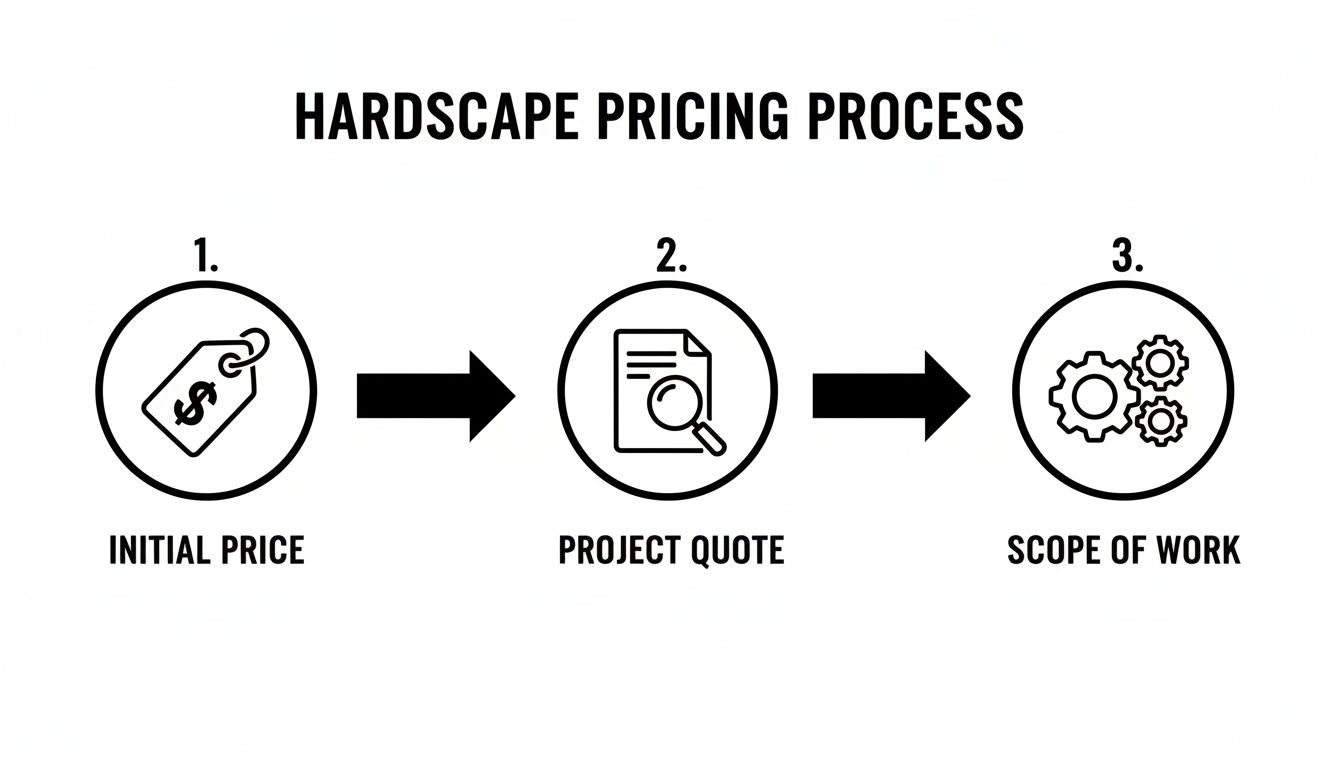
As you can see, a quote is much more than a price tag. It's the blueprint for quality, and the scope of work is where you find the real, lasting value.
Building a Base for Longevity in Monterey Bay
Here in the Monterey Bay area, we deal with everything from the sandy soils of Pebble Beach to the heavy clay in Salinas. Because of our unique coastal geology, proper base preparation isn't just a good idea—it's non-negotiable.
So, what does that actually involve?
- Deep Excavation: A professional crew isn’t just scraping off the sod. We’re excavating anywhere from 8 to 12 inches deep to remove unstable topsoil.
- Proper Grading: We meticulously grade the excavated area to make sure water flows away from your house, preventing expensive moisture problems.
- Mechanical Compaction: The soil is compacted with heavy machinery to create a firm subgrade that won’t shift and sink over time.
- Layered Aggregate Base: We install multiple layers of specific types of gravel, compacting each one to create a strong, interlocking base.
This is the hard, unseen work that separates a project that lasts a few years from one that becomes a lifelong investment. For projects like retaining walls that protect your property, this foundation is about structural safety.
How Proper Drainage Prevents Costly Water Damage
In the world of hardscaping, water is the silent enemy. A beautifully laid patio can be completely undone by poorly managed water.
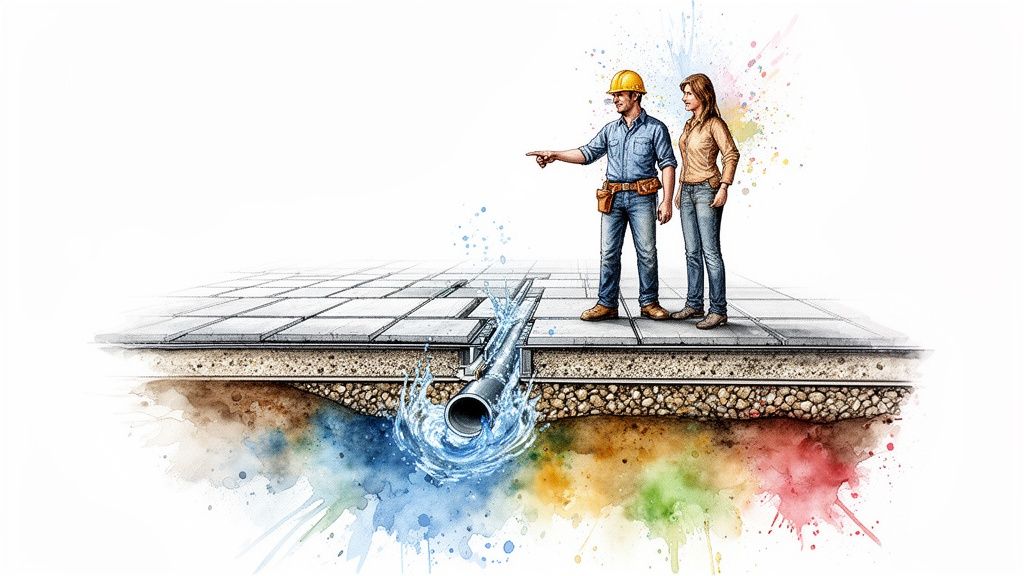
Without a proper plan, water from Monterey’s winter rains will saturate the soil beneath your hardscape. This erodes the carefully compacted base, causing pavers to sink, shift, and heave.
Even worse, standing water can pool against your home’s foundation, leading to cracks, leaks, and thousands in structural damage. A cheap bid often ignores this, leaving you vulnerable.
Essential Drainage Solutions for Coastal Homes
A licensed masonry contractor approaches water management with a strategic plan tailored to your property. They don’t just see a patio; they see the entire ecosystem of your yard.
This professional assessment is what determines the right solution for your specific needs:
- Precise Grading: The simplest step is ensuring the hardscape has a subtle, almost invisible slope to direct water away from your home.
- Permeable Pavers: These materials allow water to pass right through the surface and into the aggregate base below, minimizing runoff.
- French Drains: For properties in places like Carmel Valley with heavy clay soil, a French drain is essential for collecting and redirecting subsurface water.
A professional quote that includes a detailed drainage plan is not an inflated price; it’s a transparent investment in preventing catastrophic failure. Ignoring drainage is one of the costliest mistakes a homeowner can make.
Decoding Material Quality and Master Craftsmanship
Once all that crucial, unseen groundwork is done, we get to the part you’ll actually see. This is another area where the truth behind hardscape pricing homeowners often misunderstand comes into focus.
The materials you select are a huge driver of your project's final price tag and its ability to last. Generic pavers from a big-box store might look okay for a season, but they often crack or fade under our relentless Monterey sun.
Why Craftsmanship Is Worth the Investment
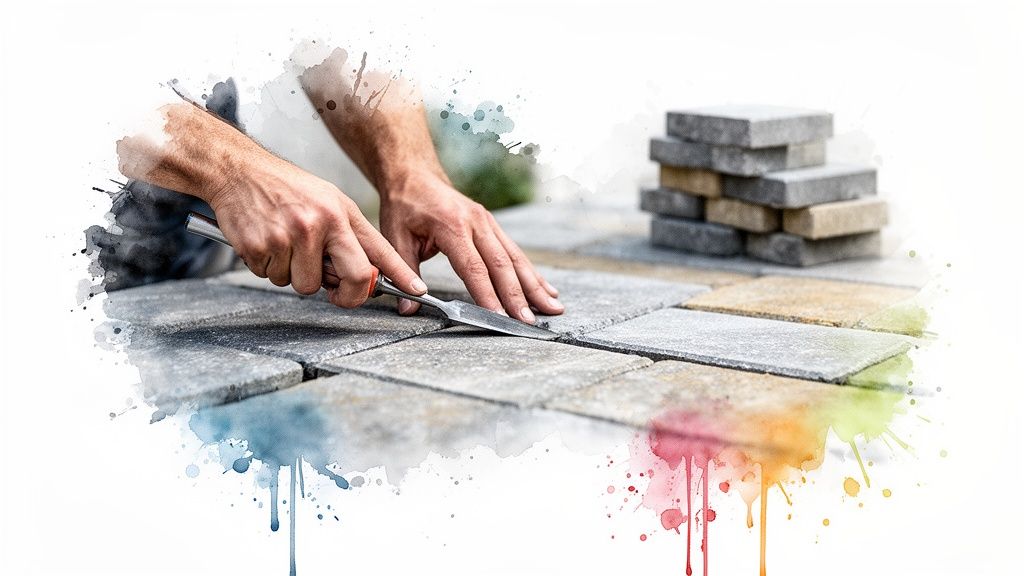
Even more important than the materials is the skill of the person installing them. Master craftsmanship separates a bunch of stones on the ground from a seamless, structurally sound work of art.
This is where that expertise really shines through:
- Precise Cuts and Tight Joints: An expert mason makes detailed cuts to fit stones together like a puzzle, creating a tight, interlocking surface.
- Seamless Pattern Integration: True craftsmanship means the pattern flows beautifully across the entire patio or walkway, which requires planning and foresight.
- Level and Stable Surfaces: A master craftsman ensures the finished surface is perfectly smooth and level, preventing dangerous trip hazards.
Connecting Design Choices to Your Budget
Every design decision has a direct line to the final cost and the durability of your project. For example, a simple rectangular patio will always be more budget-friendly than a sweeping circular patio crafted from hand-cut natural flagstone.
A transparent, detailed quote should break down not just the cost of the stone, but also the specialized labor needed to install it perfectly. Investing in a skilled stone patio builder means your hardscape won't just look better—it will stand the test of time.
How to Confidently Evaluate Your Hardscape Bids
Getting a few different quotes can feel confusing. The secret isn't just to look at the bottom line; it's about digging into the scope of work each contractor is proposing.
A professional bid is more than a price tag; it’s the blueprint for your project. When contractors don't explain these factors, homeowners often assume cost differences equal dishonesty.
What Every Professional Bid Must Include
Any contractor worth their salt will give you a clear, detailed, and comprehensive bid. If you get a vague, one-line estimate, that’s a huge red flag.
Here’s what you should demand to see in any bid you’re seriously considering:
- A Detailed Scope of Work: The quote should spell out every single step, from excavation to cleanup.
- Material Specifications: It needs to list the exact type, brand, and quality of the materials—no generic terms.
- Base Preparation Depth: The quote must state the exact excavation depth and the final, compacted thickness of the aggregate base.
- A Clear Drainage Plan: How will they handle water? The bid should explain the strategy.
- A Realistic Timeline: You should see an estimated start date and a reasonable projection for completion.
- A Fair Payment Schedule: Payments should be tied to progress. Never pay for the whole job upfront.
Shifting from Price Comparison to Scope Comparison
Once you have a detailed bid, ask questions that reveal the contractor's expertise. Recent insights show that homeowners often receive wildly inconsistent bids, some lacking drawings or timelines, fueling confusion (Stonecap Masonry Strategic Report, 2024).
Use these questions to vet potential contractors:
- "Can you walk me through your base preparation process for my specific soil type?" (Their answer should show they understand our local Monterey Bay soils.)
- "How will your drainage plan prevent settling, cracking, or water damage on my property?"
- "What materials do you use and why are they right for our coastal climate?"
- "Can you provide your contractor's license number and proof of general liability and worker's compensation insurance?" (Always verify the license with the CSLB.)
A confident, skilled contractor will welcome these questions. This shifts the conversation from “price comparison” to “scope comparison.”
Frequently Asked Questions About Hardscape Pricing
Why does a simple patio cost so much?
The price reflects the extensive subsurface work required, not just the visible pavers. This includes deep excavation, grading for drainage, and building a multi-layered, compacted base designed to last for decades in our local Monterey County soil.
What are the biggest red flags in a hardscape quote?
Vague descriptions are a major red flag. A bid should specify the depth of the base, the exact materials used, and the drainage plan. Demands for large cash payments upfront or an unwillingness to provide a license number are also serious warning signs.
Can I save money by buying materials myself?
This usually costs more in the long run. Professionals get trade pricing on higher-quality materials and know the correct quantities to order, avoiding shortages or costly overages. A contractor also cannot warranty work done with customer-supplied materials.
Does my retaining wall need a permit in Monterey County?
Most likely, yes. In California, retaining walls over a certain height (usually three or four feet) require engineered plans and a city permit. This is a crucial safety step a licensed contractor will manage for you.
How does local soil in Carmel or Salinas affect my price?
Clay soils in Salinas and sandy soils near the Carmel coast require different base preparation techniques. A professional quote includes the specific labor and materials needed to build a stable foundation that won't fail due to local conditions.
Understanding the full scope of work is key to a successful project. If you are a homeowner in the Monterey Bay area looking for a transparent estimate that explains the why behind the price, consult a licensed masonry professional. We believe transparency isn’t a sales tactic—it’s an educational service that builds trust.
