
Before the Rains: A Retaining Wall Inspection Checklist for Monterey County Properties
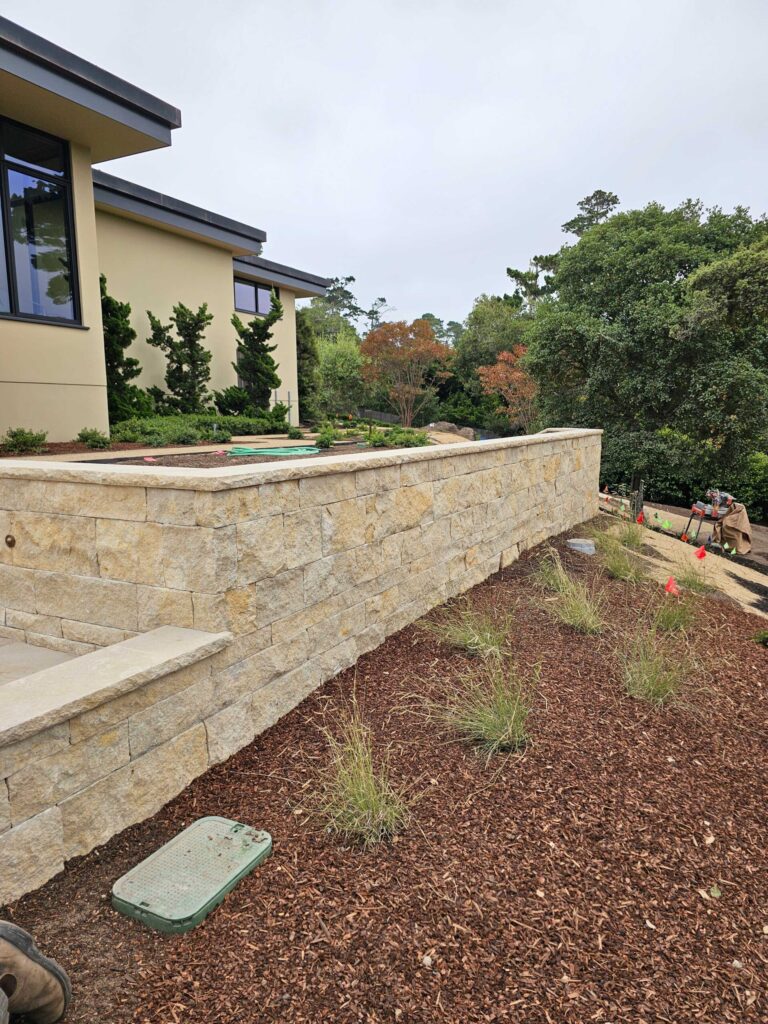
Direct Answer: Before the wet season, check five things on your retaining wall: plumb, the corner joints, bulging in the middle, weep holes, and water staining. Photograph everything with dates. Most people never look closely at their retaining wall until something gives. Usually that happens in January or February, after weeks of rain, when a […]
What the Chimney Above a Masonry Fireplace Actually Has to Do
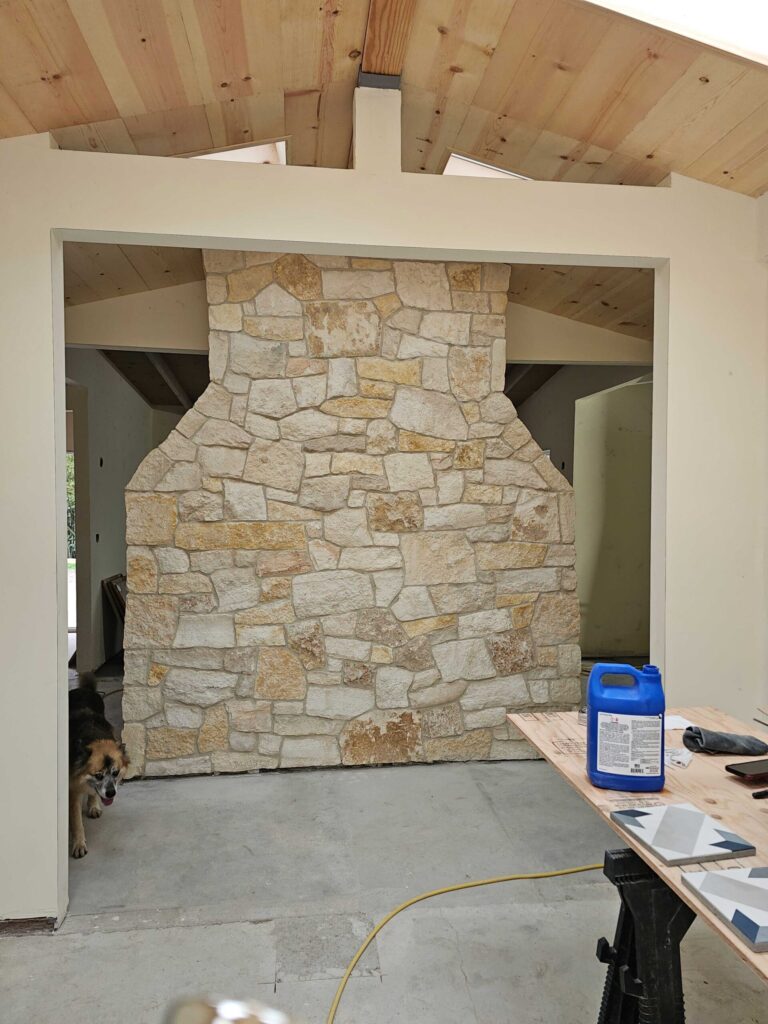
Direct Answer: A masonry chimney does three jobs: it pulls combustion gases out, carries several tons of load down to a footing, and shields the flue from weather. All three are code-governed. Most homeowners I talk with about a fireplace want to talk about the stone. The facing, the mantel height, the color of the […]
How Long a Masonry Fireplace Build Takes on the Monterey Peninsula
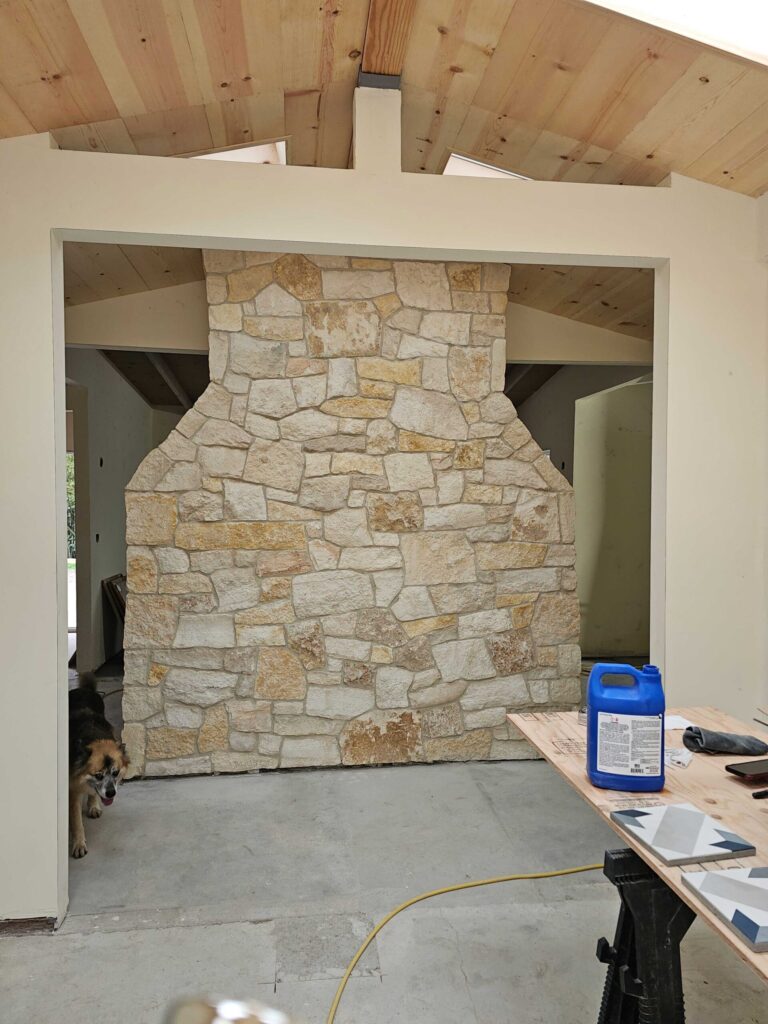
Direct Answer: Most masonry fireplace builds on the Monterey Peninsula run two to four months door to door. Actual construction days are often three to six weeks. Design, materials, permit review, and cure time fill the rest. By the time most people call me, they have already decided to build. They are not asking how […]
What a Strong El Niño Winter Does to a Wall Built Without Drainage
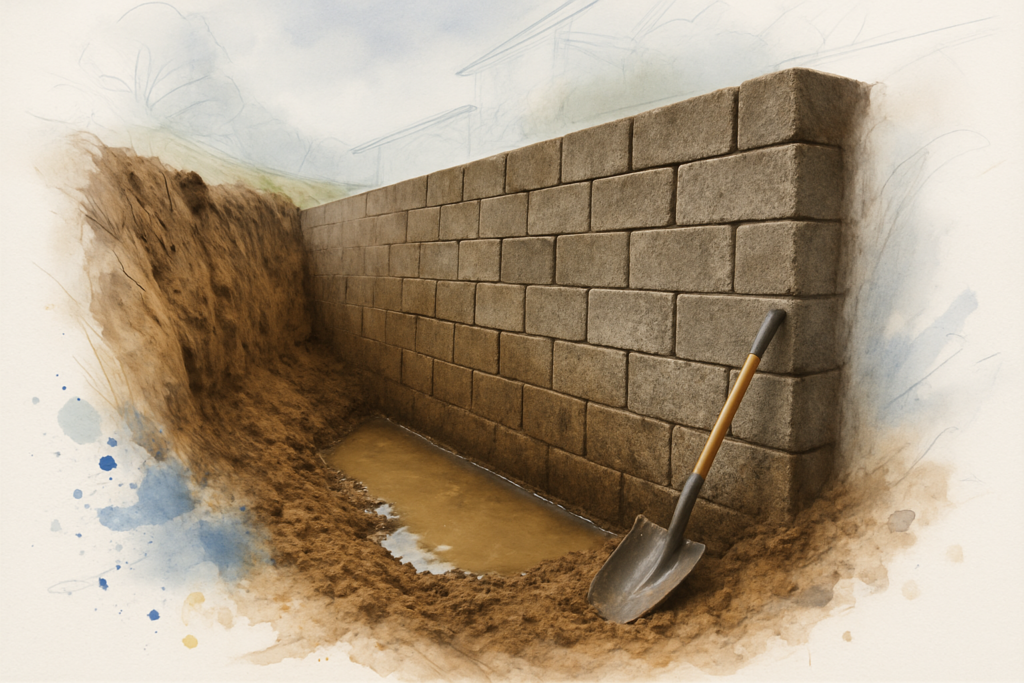
Direct Answer: Saturated backfill with nowhere to drain builds hydrostatic pressure at the base of the wall. The wall rotates outward or slides at the footing, and that movement never reverses. Most of the failed walls I get called out to look at did not fail during a storm. They failed over four or five […]
How Salt Air Changes the Way Mortar Joints Fail on the Peninsula
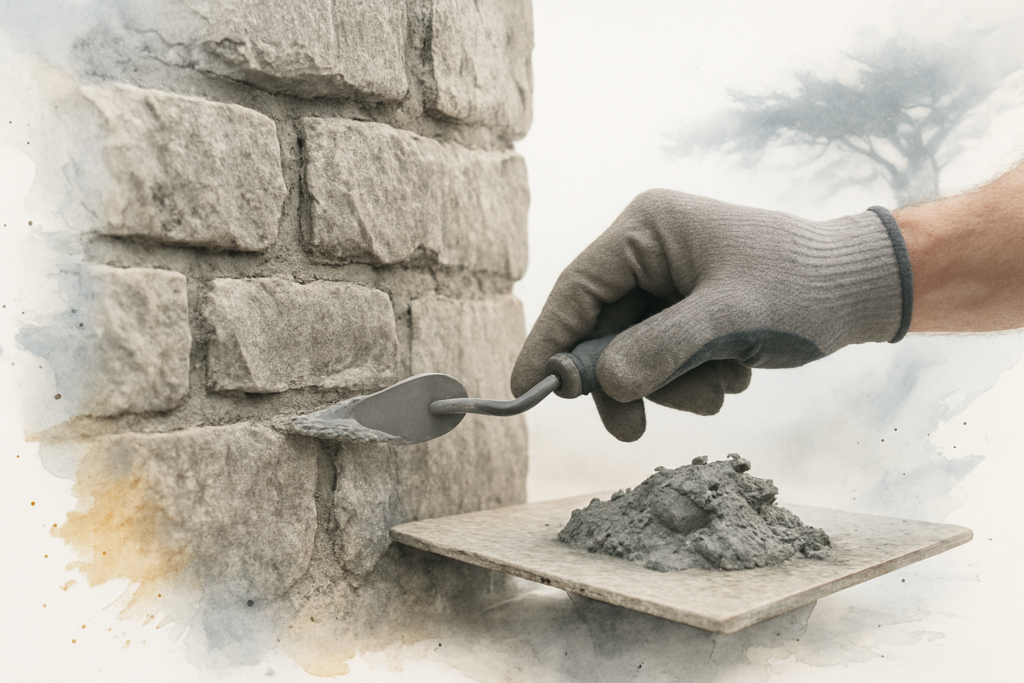
Direct Answer: Salt from ocean air pulls moisture into mortar joints and keeps them damp, so coastal joints crumble and recede faster than inland ones. The fix is repointing with a correctly matched, breathable mortar. You run a finger along the mortar between the stones and it comes away chalky. The joints sit deeper than […]
The Masonry Decisions That Shape an Outdoor Kitchen Before Construction Starts
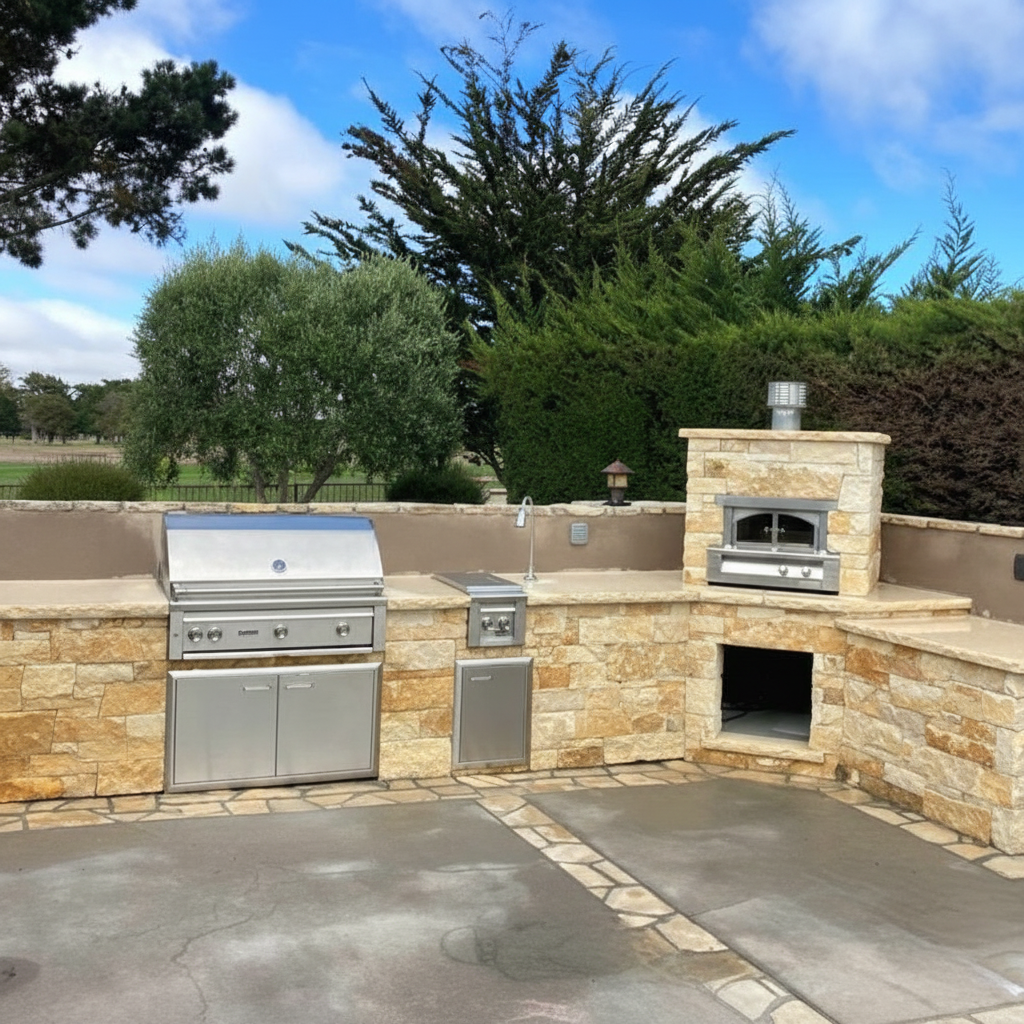
Direct Answer: Outdoor masonry kitchen planning starts with appliance sizes, gas rough-in timing, and countertop material. The block base is built around those choices, not fitted to them afterward. Most outdoor kitchen projects start the same way. A homeowner calls and says something close to what a Pebble Beach client wrote us last spring: they […]
What Drives the Cost of a Masonry Repair (Beyond the Obvious)
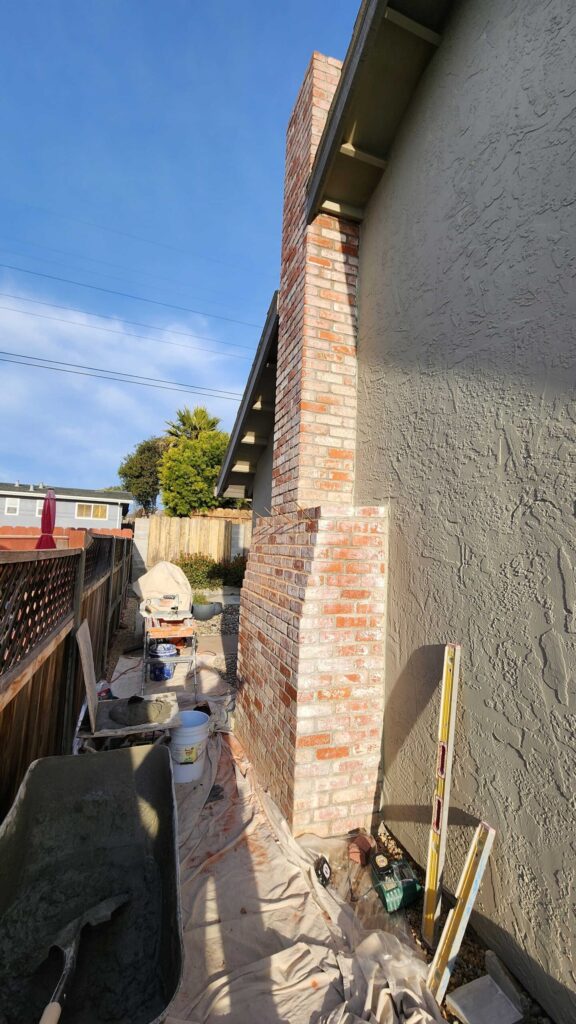
Direct Answer: Masonry repair cost is driven less by materials than by hidden scope, site access, mortar matching, and how much inspection the job needs. Two bids differ because each mason assumed a different scope. You had two masons look at the same crumbling wall. One quoted a few thousand. The other quoted three times […]
The Drainage Layer a Retaining Wall Cannot Work Without
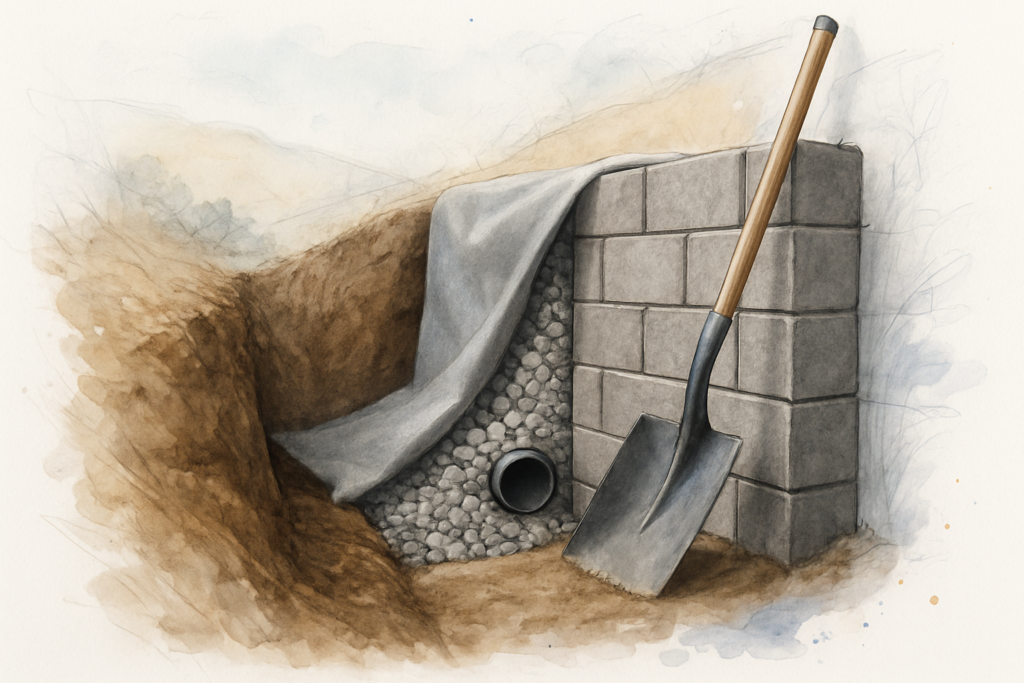
Direct Answer: Most retaining walls fail because water builds up behind them. A working wall needs a gravel drainage layer, filter fabric over that gravel, and weep holes near the base so water can escape. Most of the failed retaining walls I look at in Monterey County were not built with bad stone or bad […]
Why Two Masonry Bids for the Same Job Can Be Thousands Apart

Direct Answer: Most price gaps in masonry bids come from things you cannot see: base depth, drainage, mortar spec, permits, and whether the contractor carries insurance and workers’ comp. A homeowner near Moss Landing reached out to us about a damaged block retaining wall last winter. Before scheduling a site visit, they asked us to […]
When a Commercial Block Wall Needs More Than a Patch
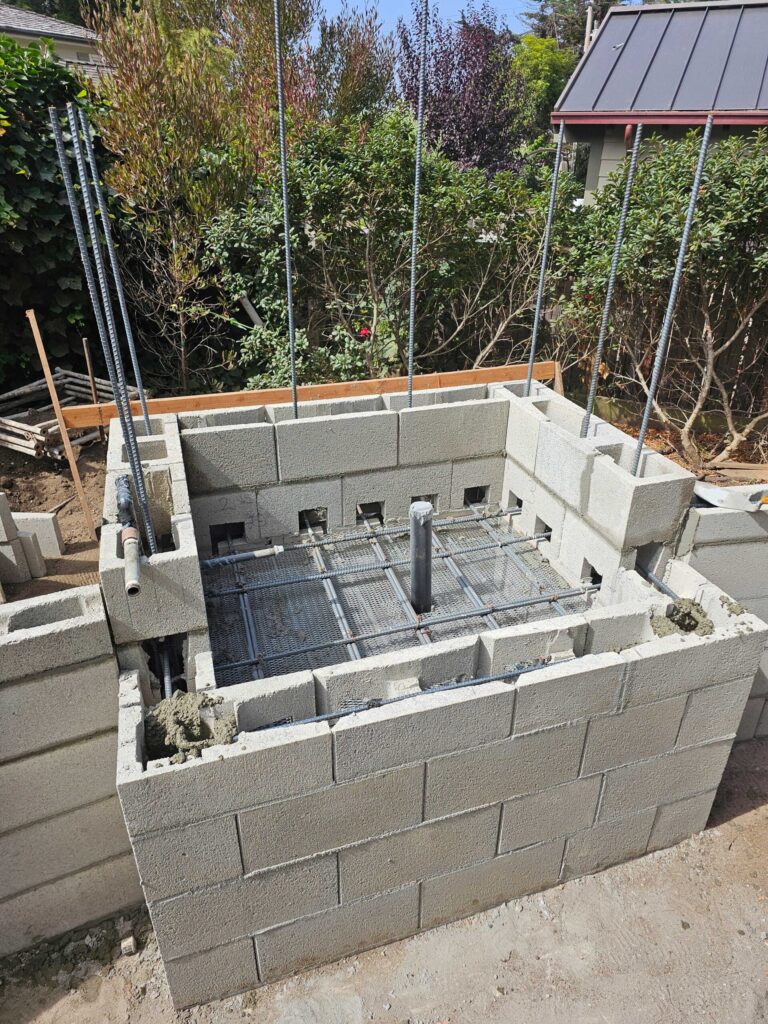
Direct Answer: A commercial block wall needs more than a patch when cracks run horizontally along mortar joints, the wall bulges or leans, or block is displaced. Those signs point to structural causes, not surface damage. Most block wall problems get noticed on a walk-through. A property manager sees a crack that was not there […]
