
It's one of the most common questions from homeowners around Monterey Bay: “If the job is small, why do I need a licensed masonry contractor?” The short answer is yes, you almost certainly do. California law is clear, and for good reason—safety and structural integrity don't take a backseat just because a project seems minor.
This misconception is often fueled by a poorly understood “$500 exemption,” which many people assume applies to most small repairs. Hiring a licensed professional isn't about red tape; it's about protecting your home, your investment, and your family.
The Myth of the "Small Job" Exemption
A persistent myth floats around about the "handyman exemption" in California. Many people think it's a blanket exception that lets them hire anyone for a quick fix on a retaining wall or a few loose bricks on the patio.
This is a dangerous assumption. While the state does have a minor work exemption, it's far more limited than most realize. Recent insights show that homeowners are frustrated with rising contractor costs and misunderstand the $500 exemption, assuming it allows unlicensed work in most small projects.
This simple guide can help you figure out what's required for your project.
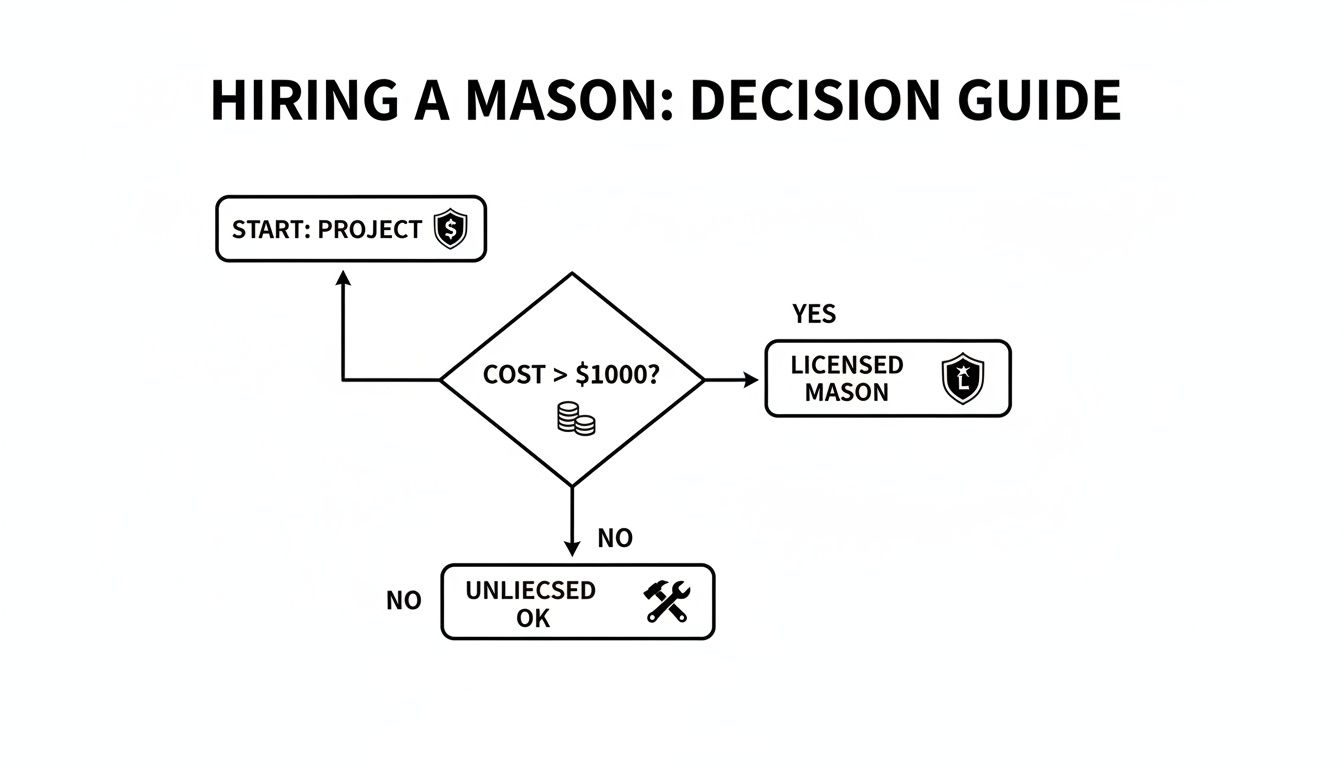
It really boils down to one thing: the total cost of the project, which includes both the labor and all the materials.
Understanding the $500 Threshold
The law is black and white. The Contractors State License Board (CSLB) requires a contractor's license for any construction-related project where the total cost of labor and materials is $500 or more.
The $500 limit includes both labor and all materials, even if you buy the materials yourself. Most legitimate masonry projects—even repairing a set of stone steps or a small section of a patio in Carmel—will easily exceed this amount once you factor in quality materials and skilled labor.
What this actually means for you is that even a task that seems small on the surface can have big implications. A licensed pro is required because the work touches on critical areas like:
- Structural Integrity: A retaining wall that's "patched" incorrectly can give way under pressure, causing a landslide or serious injury.
- Fire Safety: An improperly repaired firebox or chimney isn't just a cosmetic issue; it's a major fire hazard.
- Liability and Insurance: If something goes wrong with unlicensed work, your homeowner's insurance might refuse to cover the damage.
At the end of the day, masonry is a specialty trade. The integrity of the work matters, whether it's a massive commercial build or a simple repair on your front walkway.
Licensed vs Unlicensed Masonry Work at a Glance
Navigating the rules can feel complicated, but the differences between hiring a licensed professional and an unlicensed worker are stark. This table breaks down what you're really getting—or giving up—with each choice.
| Factor | Licensed C-29 Mason | Unlicensed Individual |
|---|---|---|
| Legal Compliance | Legally authorized to perform jobs over $500 and pull permits. | Can only legally work on projects under $500 total. |
| Insurance | Required to carry liability insurance and workers' compensation. | No insurance requirements. You are liable for injuries and damages. |
| Bonding | Must have a $25,000 contractor's bond to protect consumers. | No bond, offering you zero financial recourse for faulty work. |
| Accountability | Accountable to the CSLB; can face license suspension or revocation. | Operates outside the system; often disappears if problems arise. |
| Building Codes | Understands and adheres to local and state building codes. | Likely unaware of code requirements, leading to failed inspections. |
| Warranty | Typically offers a warranty or guarantee on their craftsmanship. | No warranty. You're on your own if the work fails. |
Choosing a licensed C-29 mason isn't just about following the rules—it's about ensuring your project is built to last, fully insured, and backed by a professional who is accountable for their work. The initial savings from hiring an unlicensed individual often evaporate the moment something goes wrong.
What California Law Actually Says About Your Masonry Project
When we talk about "small jobs," it's easy to assume the rules get a little fuzzy. But in California, the law is designed to protect homeowners from shoddy work, financial nightmares, and unsafe construction. For masonry projects, this protection is built around the C-29 license.
This isn't your average handyman permit. The C-29 Masonry license, issued by the CSLB, is a serious credential given only to contractors who have proven expertise in working with brick, block, stone, and concrete.
The C-29 Masonry License Explained
A C-29 license means the mason is legally authorized to build and repair the very structures that give your property its strength and character. This includes foundational work to the fine details of a stone patio.
A licensed C-29 mason has the green light for projects like:
- Structural Elements: Think retaining walls holding back a hillside, concrete foundations, or the brickwork that's part of your home's structure.
- Safety-Critical Features: This includes fireplaces and chimneys, where a small mistake can have devastating consequences.
- Outdoor Living Spaces: Patios, stone steps, and walkways built to last in the unique coastal climate of Monterey and Pacific Grove.
Getting this license is no walk in the park. A mason must prove at least four years of hands-on, journey-level experience. They also have to pass tough exams on the trade and California business law, clear a background check, and carry a $25,000 bond and liability insurance.
More Than Just a License
This process ensures the person building your project knows more than just how to stack stones. A licensed mason understands local soil conditions in Salinas, how to manage water drainage, and the specific building codes for communities from Carmel to Pebble Beach. That expertise is your best defense against the costly mess unvetted work can leave behind.
To dig deeper into what this specialization involves, our guide on what a hardscape contractor can do has more specifics. Beyond the license, California law also sets standards for project agreements, and learning how to create a contract protects everyone involved.
The Hidden Costs of Hiring an Unlicensed Worker
That "great deal" from an unlicensed worker can quickly turn into your biggest regret. The low price is a smokescreen for serious financial and legal landmines that land squarely on you. When you step outside the licensed system, you forfeit every protection California law provides.
First and foremost is personal liability. If an unlicensed worker gets hurt building a stone patio on your property in Monterey or Carmel, you might be considered their employer. This nightmare scenario could leave you on the hook for their medical bills, lost wages, and disability payments.
Insurance and Resale Complications
Your homeowner's insurance policy is another major vulnerability. These policies assume any work is performed by qualified, licensed professionals. If a poorly built retaining wall from an unlicensed worker collapses and damages your house, your insurance company has every right to deny the claim entirely.
Suddenly, you’re paying out-of-pocket for all repairs and damages. The "savings" from that cheap bid are gone in an instant, often costing many times more than if you'd hired a licensed mason from the start.
Unlicensed work creates a permanent black mark on your property's record. When it comes time to sell your home, any unpermitted or improperly documented repairs can derail the entire process, forcing you to either make costly corrections or slash your asking price.
These problems bleed into your property's future value. When you sell, unpermitted work becomes a giant red flag for buyers. If you're curious about what goes into a legitimate professional quote, learning about the truth behind hardscape pricing can shed light on why licensed bids include these essential protections.
The True Financial Fallout
The financial chain reaction from one "small" unlicensed job can be staggering. Here’s a breakdown of the hidden costs that can blindside a homeowner.
Potential Financial Fallout from Unlicensed Masonry
| Risk Category | Potential Financial Impact on Homeowner |
|---|---|
| Worker Injury | You could be liable for all medical bills and lost wages. |
| Faulty Workmanship | You will pay 100% to tear out and redo the failed project correctly. |
| Property Damage | Your insurance may deny claims, leaving you to cover all repair costs. |
| CSLB Fines | You may face fines for hiring an unlicensed contractor for work over the legal limit. |
| Selling Your Home | You may need to pay for costly repairs or lower your home’s price to attract buyers. |
Choosing a licensed professional isn't an extra cost—it's the only sound financial decision. It shields you from liability, ensures your project is covered by insurance, and protects the value of your biggest asset.
Why Structural Integrity Matters in Every Repair
It’s easy to dismiss a small crack in your walkway or a few wobbly bricks as minor cosmetic issues. But these are often warning signs of bigger problems hiding just out of sight. A licensed professional proves their worth by understanding the craft of masonry.
An unlicensed handyman will likely focus only on what they can see, slapping on a quick patch that fails quickly. A licensed C-29 mason is trained to think like a detective; they don’t just see the crack, they look for the cause.
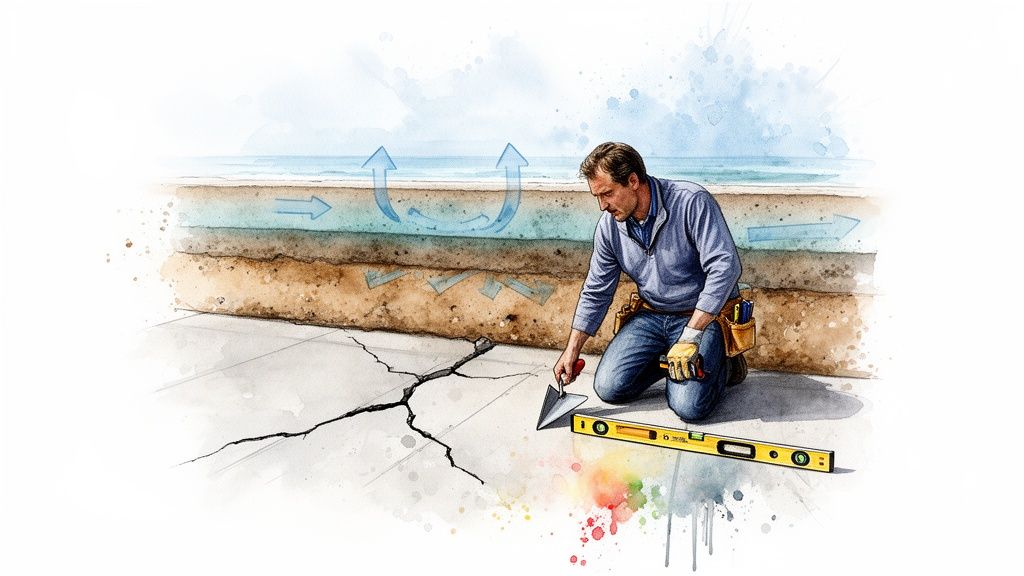
Looking Beneath the Surface
A cheap, unlicensed fix is like painting the tip of the iceberg and hoping no one notices the unstable chunk of ice underneath. It’s only a matter of time before the original problem returns, usually worse the second time.
A licensed mason in California knows how to hunt for the true culprits behind masonry failure. Here in the Monterey Bay area, we see the same issues pop up time and again:
- Poor Soil Compaction: The ground in places like Salinas and Carmel Valley can be tricky. If the base under a patio wasn't properly compacted, it will eventually shift and settle, causing cracks.
- Inadequate Water Management: Water is the enemy of masonry. If drainage is poor, water will pool, erode the base, and—in colder months—freeze and expand, prying your mortar and stone apart.
- Using the Wrong Materials: A pro knows that the mortar mix that works in a dry inland climate will fail miserably in the salt-heavy air of Monterey. They choose materials designed to stand up to our unique coastal environment.
Building a Lasting Solution
This diagnostic approach is exactly why “small jobs” still require a licensed mason in California. A true professional isn’t just patching a hole; they are re-engineering a small part of your property to ensure it lasts. They fix the real problem, so you aren't paying for the same repair over and over.
A licensed mason’s goal is to make sure their repair is the last one you’ll need for that issue. Their work blends structural science with old-school craftsmanship, ensuring the fix is as strong—or even stronger—than the original construction.
This focus on long-term integrity separates pros from amateurs. The same principles that go into a massive commercial wall also apply to fixing your front steps, a concept detailed in our guide on commercial masonry requirements in California. Hiring a licensed professional means you're investing in a permanent solution.
Navigating Permits and Local Monterey Bay Codes
Living in beautiful coastal communities like Carmel, Pebble Beach, and Salinas comes with its own set of rules. This adds a critical layer of complexity to any masonry project. Many homeowners are surprised to discover that a project they thought was minor actually requires a building permit.
This is where hiring a licensed contractor becomes a legal necessity. An unlicensed worker cannot legally pull a permit for you. If a handyman tells you that you need to get the permit, consider that a major red flag.
A licensed C-29 mason is your expert guide through this maze. They work with the specific regulations in Monterey County every day and know exactly when a permit is needed, saving you from fines and headaches.
When Permits Are Unavoidable
Local rules are there to keep you and your property safe, especially with our region's unique challenges like coastal weather and seismic activity. This is a huge reason why “small jobs” still require a licensed mason in California.
Here are a few common projects that almost always require a permit:
Retaining Walls: Any wall holding back soil over a certain height—often as low as three or four feet—needs a permit and engineered plans to ensure it can handle the pressure.
Fireplaces and Chimneys: This is non-negotiable. Any repair, rebuild, or modification to these structures falls under strict fire safety codes designed to protect your home.
Patios and Hardscapes: Even some small hardscape repairs fall under C-29 expertise. Depending on their size and location, many new hardscape installations will trigger permit requirements to ensure they're sound. See more about what hardscape contractors can and can't do in our detailed post.
Fire Safety in High-Risk Zones
If you live in a wildfire-prone area like Carmel Valley, the building codes get even tighter. Here, using the right fire-resistant materials for your patio, retaining wall, or home exterior isn’t just a suggestion—it's a mandate. These rules are designed to create defensible space.
A licensed professional ensures every material and construction method meets these vital fire safety standards. They handle the entire permitting process, ensuring your project is completed safely and legally.
How to Confidently Verify a Masonry Contractor
Hiring the right professional for your masonry project shouldn’t feel like a gamble. With the right tools, you can confidently vet any contractor. The best place to start is with California’s official resource: the Contractors State License Board (CSLB).
The CSLB website has a simple, instant license check tool that lets you search by name, business name, or license number. This step is non-negotiable and takes just a few minutes.

What to Look for on the CSLB Website
When you pull up a contractor’s record, don't just give it a quick glance. You need to dig in and confirm a few key details to make sure they're fully compliant and that you're protected.
Here’s your checklist for a proper CSLB verification:
- Active License Status: Is the license current? Make sure it isn't suspended, expired, or revoked. The classification you're looking for is C-29 for masonry work.
- Bonding Information: Check that they have an active $25,000 contractor's bond. This bond is a critical safety net for you if the work isn't finished or is done poorly.
- Workers' Compensation Insurance: The record must show they have a current workers' comp policy or are officially exempt. If they have a crew, this insurance is mandatory and protects you from liability.
Key Questions to Ask Every Contractor
Once you've confirmed their license online, talk to them directly. How they answer a few straightforward questions will tell you volumes about their professionalism. A skilled hardscape contractor should be able to walk you through the specifics of their trade with ease.
Always ask for a copy of their certificate of liability insurance and insist on a detailed, written contract before work begins. A true professional expects these questions and will happily provide the documentation to earn your trust.
FAQs About California Masonry Licensing
1. Does the $500 "Handyman Exemption" cover my small patio repair?
Rarely for masonry. The $500 limit includes both labor and all materials, a threshold even small stone or brick jobs can quickly surpass. More importantly, if the project is structural, requires a permit, or affects safety, you need a licensed C-29 mason regardless of the cost.
2. What happens if an unlicensed worker gets hurt on my property?
This is a scenario no homeowner wants. You could be legally considered their employer and held liable for their medical bills and lost wages. Your homeowner's insurance will almost certainly deny the claim, leaving you completely exposed.
3. Can I buy the materials myself to keep the job under the $500 limit?
Unfortunately, no. The state looks at the total project value, which is the fair market cost of labor plus materials, regardless of who buys them. Trying to split the costs this way does not get you around the law if the total value is over the threshold.
4. Why does a simple chimney crack need a licensed mason?
What looks "simple" can be a warning sign of a deeper problem like a failing flue liner or water damage. A licensed professional is trained to spot the difference and assess the entire chimney system for fire safety. An untrained person could easily miss a critical hazard. Learn more about what a license really tells you in our guide.
5. Why is a license so important for a small retaining wall repair?
Even small retaining walls handle immense pressure from soil and water. An improper repair can lead to a catastrophic failure, causing property damage or injury. A licensed mason understands the engineering required to ensure the repair is structurally sound and compliant with local codes in Monterey County.
Ultimately, hiring a licensed C-29 mason isn't just about following the law—it's the smartest way to protect your investment, your family's safety, and the quality of the work itself. Here in Monterey County, with our unique coastal climate and soil conditions, that choice is even more critical. If you have questions about California masonry licensing rules, we encourage you to consult a licensed professional to avoid costly misunderstandings.
