A brick patio with a fire pit is more than a backyard upgrade—it’s the heart of your home's outdoor life. This classic project extends your living space, creating an inviting spot perfect for gathering on cool Monterey Bay evenings. A well-built patio provides a durable, timeless foundation for years of memories.
Transform Your Backyard with a Brick Patio and Fire Pit
Imagine stepping onto a beautifully laid brick patio, where a warm, crackling fire pit awaits. This isn't just a cosmetic addition; it’s a new way to enjoy your home. For homeowners from Carmel to Salinas, creating these dedicated outdoor living spaces has become a top priority.
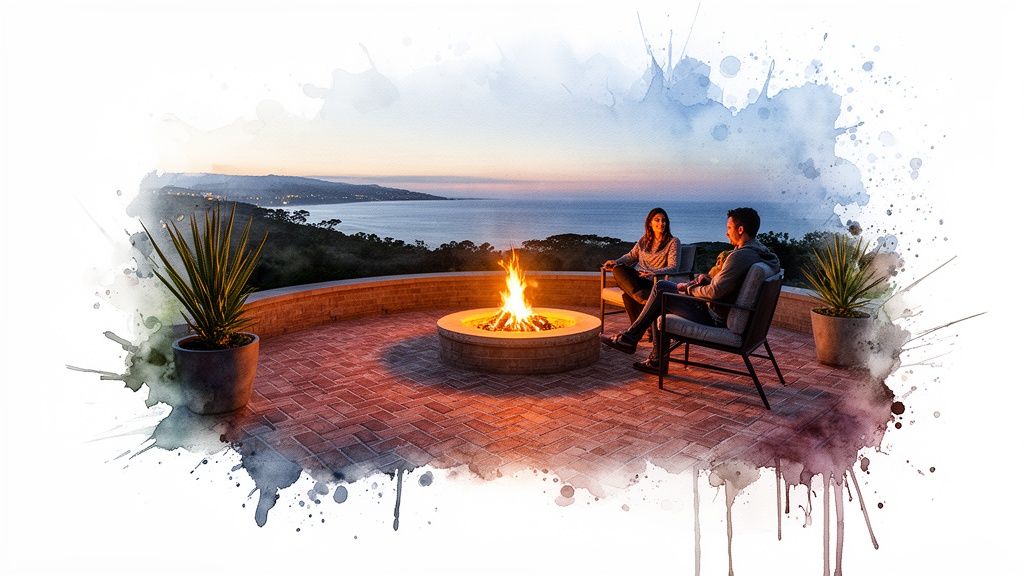
A professionally installed brick patio offers a solid, timeless foundation that stands up to our coastal weather. The fire pit becomes a natural magnet for family and friends. It’s a rare project that enhances your lifestyle and adds significant value to your property.
A Growing Trend in Outdoor Living
This desire for functional outdoor spaces is a national trend. In fact, a 2023 survey by the National Association of Home Builders (NAHB) found that patios are the most-wanted outdoor feature for homebuyers. (Source: NAHB) This shows a clear shift toward making our yards true extensions of our homes.
Homeowners want a versatile space for morning coffee, a sunny spot to work, and the perfect setting for evening entertainment. A brick patio with a fire pit meets every one of those needs with classic style and durability.
Why Professional Planning is Everything
Achieving a perfect result requires more than laying bricks and hoping for the best. True craftsmanship ensures a patio is safe, beautiful, and structurally sound for decades. This comes down to careful planning and getting key details right from the start.
- Foundation and Drainage: The base is everything, especially with the varied soil types across Monterey County. An improper foundation leads to a patio that shifts, cracks, or pools water after rain.
- Safety and Code Compliance: Any structure with fire involves strict local codes. Setbacks from your house and material choices are critical, especially in high fire-risk zones like Carmel Valley.
- Material Selection: The right brick for the patio surface is different from the fire-rated brick needed for the fire pit itself. One must handle foot traffic and coastal air, while the other must withstand intense heat without failing.
Hiring a licensed, bonded, and insured masonry contractor is the only way to ensure these critical details are handled correctly. A professional ensures your project is built with structural integrity, from the unseen base to the final brick. After that, figuring out how to arrange patio furniture is the final touch.
Laying the Groundwork for Your Project
A durable brick patio with a fire pit begins with a solid plan. This isn't just about aesthetics; it's about creating a space that is safe, functional, and perfectly suited to your property. Getting this phase right prevents costly headaches down the line.
First, define the space's purpose. Are you planning large backyard barbecues or quiet family nights roasting marshmallows? Knowing how you'll use the patio dictates its size, shape, and connection to your home.
Choosing the Best Location
Picking the right spot is more important than most people realize, especially in the Monterey Bay area. You must consider factors like coastal winds, which can be strong in Monterey and Pacific Grove. Smart positioning can shield your fire pit, making evenings more comfortable.
Convenience is also key. Placing the patio just outside a main door makes it a natural extension of your home. Easy access for food and drinks means you will use the space more often.
Navigating Local Codes and Setbacks
This step is non-negotiable. California, and Monterey County specifically, enforces strict building codes and safety regulations. Fire pits have setback rules defining the minimum distance from your house, property lines, and flammable structures like fences.
These regulations exist for safety, especially in fire-conscious communities from Carmel Valley to Salinas. A professional mason knows these local codes and ensures your project is built safely and legally. The last thing you want is a fine or an order to tear out a non-compliant structure.
Creating a Smart and Effective Design
With a location selected, you can focus on the design. The best layouts complement your home’s architecture and the natural flow of your landscape. Using tools like Exayard landscape takeoff software can help map everything out and estimate materials accurately.
Here are a few popular design approaches:
- Circular Patios: A classic for a reason. A round fire pit in the center of a circular patio naturally encourages conversation and pulls people together.
- Square or Rectangular Designs: These layouts offer a more modern, structured feel. A square pit can become a stunning centerpiece, helping to define separate zones for seating and dining.
- Integrated Seating: A low masonry seating wall adds permanent, weatherproof seating while clearly defining the patio’s edge. This adds both function and a sense of enclosure.
A common DIY mistake is failing to plan for adequate space around the fire pit. You need enough room to pull back chairs and walk safely. A good mason plans for how you'll live in the space, not just for the structure itself. For inspiration, browse a gallery of completed patios and walkways to see how different designs look in real homes.
Picking Materials for Durability and Safety
The secret to a long-lasting brick patio and fire pit is choosing the right materials. Your selections for the patio surface, the fire pit's core, and the unseen base determine its longevity. This is especially true here in the Monterey Bay, where sun, salt, and moisture are constant factors.
Getting this right prevents wobbly pavers, weed-filled cracks, or a fire pit that crumbles after a few seasons. The materials you don't see—like the compacted gravel base and joint sand—are just as critical as the bricks on top.
Choosing Your Patio Bricks
For the patio floor, you have two main options: classic clay pavers or modern concrete pavers. Both can look great, but they perform very differently in our coastal climate.
Clay Pavers: The traditional choice for good reason. Fired in a kiln, they are incredibly dense and absorb little moisture—a major benefit against the salty air in Monterey and Pacific Grove. Their color is baked through, so they won't fade in the California sun.
Concrete Pavers: The main advantage here is variety in shape, color, and texture. However, the color is often a surface layer that can fade or wear away. They are also more porous than clay, making them more susceptible to stains without a quality sealer.
For most local projects, we recommend high-quality clay pavers. They simply hold up better and maintain their appearance longer against our regional weather.
Fire Pit Materials: The Two-Layer Rule
Building a fire pit is a two-part job: the heat-resistant interior and the decorative exterior. You cannot use the same material for both.
The inside of the fire pit—the firebox—must be built with firebrick. This is a critical safety requirement, not a suggestion. These dense bricks are engineered to handle extreme temperatures without cracking or exploding.
For the exterior veneer, you can choose a brick that complements your home and patio. This is where you tie the design together, knowing the core is built for absolute safety. Many homeowners are exploring a range of hardscape choices for fire season that are both beautiful and fire-resistant.
To help you decide, here is a comparison of common material options.
Comparing Materials for Your Project
Choosing the right material is a balance of aesthetics, budget, and long-term performance. Here’s how the main options compare for projects in our coastal environment.
| Material | Best For | Pros | Cons |
|---|---|---|---|
| Clay Brick Pavers | Patios, walkways, and fire pit exteriors in coastal climates. | Extremely durable, colorfast, low moisture absorption, classic look. | Higher initial cost, fewer style options than concrete. |
| Concrete Pavers | Patios and walkways where budget and design variety are priorities. | Wide range of styles and colors, lower cost. | Color can fade, more porous (prone to staining), can effloresce. |
| Firebrick | The interior of any fire pit or outdoor fireplace. | Withstands extreme temperatures, ensures safety and structural integrity. | Brittle, not for structural loads, more expensive than standard brick. |
| Natural Stone | High-end patios and fire pit caps for a unique, organic look. | Each piece is unique, incredibly durable, natural texture. | Most expensive option, complex installation due to irregular shapes. |
For a classic, long-lasting project, a clay paver patio with a matching brick veneer over a firebrick core is an excellent choice.
The Unseen Foundation
A beautiful brick patio will fail without a proper foundation. The professional work done before a single brick is laid makes all the difference in structural integrity.
Here’s what’s happening beneath the surface:
- Landscape Fabric: Placed over excavated soil, this barrier is your first defense against weeds pushing up from below.
- Compacted Gravel Base: A thick, 4 to 6-inch layer of crushed gravel is compacted until rock solid. This provides a stable, free-draining platform that won't shift.
- Paver Sand: A one-inch layer of coarse sand creates a setting bed, allowing for precise leveling of each paver.
- Polymeric Sand: Swept into the joints after installation, this sand hardens when wet. It locks the pavers together, prevents weeds from above, and deters ants.
The Master Mason's Construction Process
A beautiful brick patio with a fire pit is built with craftsmanship in every layer. The skill is in the meticulous prep work and structural integrity hidden from view. This is where a professional’s touch separates a project that lasts for decades from one that fails in a few seasons.
It starts with understanding local ground conditions. In Monterey County, soils vary from sandy lots in Pebble Beach to heavy clay near Salinas. A skilled mason never uses a one-size-fits-all approach.
The Critical Importance of Site Preparation
Every successful masonry project begins with proper excavation. We clear all organic material—grass, roots, and topsoil—which would otherwise decompose and cause the patio to sink. The excavation depth depends on the soil type and the required thickness of the gravel base.
Once cleared, we build a rock-solid foundation. This is the single most important part of constructing a brick patio that will stand the test of time. A mason who rushes this step sets the homeowner up for future problems like cracked mortar and shifting pavers.
Laying and Compacting the Gravel Base
After excavation, we install a heavy layer of crushed gravel, typically 4 to 6 inches deep. We lay it in layers, compacting each one with a heavy plate compactor until it’s solid. This base provides a stable platform and allows for drainage, preventing water damage.
For homeowners in Pacific Grove or Carmel Valley, this stable, non-combustible surface also contributes to fire-resilient defensible space. According to Headwaters Economics, creating non-combustible zones around a home is a key strategy for reducing wildfire risk. (Source: Headwaters Economics)
The Art of Laying Bricks
With the foundation set, the artistry begins. We screed a one-inch layer of coarse sand perfectly level over the compacted gravel. This "setting bed" allows the mason to adjust each brick for a perfectly flat surface.
The chosen pattern, like a running bond or herringbone, adds to the patio's overall strength by interlocking the pavers. We also grade a subtle slope of one-quarter inch per foot to ensure rainwater flows away from your home’s foundation.
This diagram breaks down the essential layers of a professionally built brick patio.
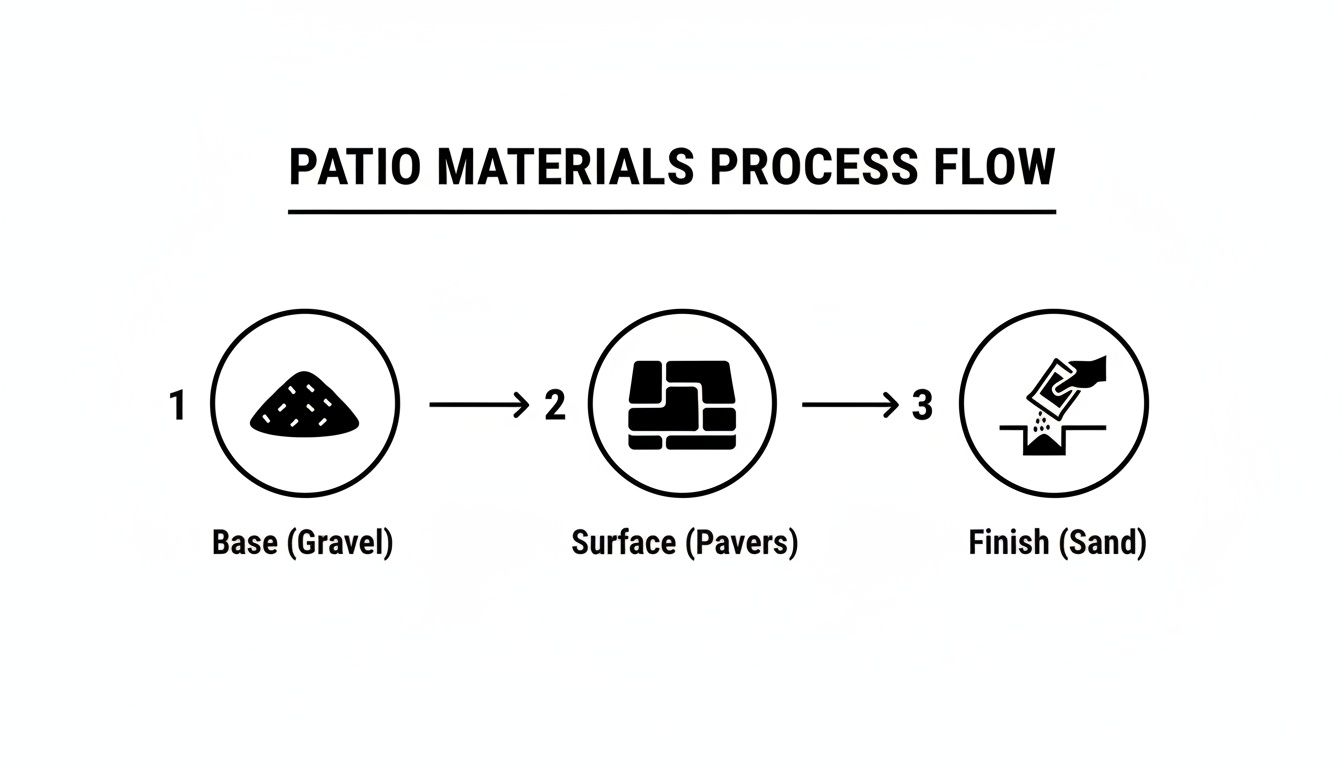
As you can see, it's about a strong base, a quality surface, and a secure finish.
Building a Safe and Structural Fire Pit
The fire pit requires specialized knowledge. It must be built on the same compacted base as the patio to prevent settling. The inner wall, exposed to intense heat, is always built with fire-rated refractory bricks, while the exterior veneer can match the patio.
A common DIY mistake is using standard concrete blocks for the entire structure. This is dangerous, as materials not rated for high heat can trap moisture, turn it to steam, and potentially crack or explode. A professional ensures the fire pit is both beautiful and fundamentally safe.
Finishing Touches That Lock It All Together
The final steps tie the project together. We install a durable edge restraint around the perimeter to keep bricks from spreading over time. This is typically a hidden plastic or metal border.
Finally, we sweep polymeric sand into the joints. When misted with water, it hardens to form a strong but flexible bond. This critical step locks the system together, stops weeds, and keeps ants out. Learn more in our advanced guide to hardscaping.
Budgeting and Choosing the Right Professional
Let's talk about the investment for your brick patio and fire pit. The final cost is based on project size, design complexity, material choices, and existing site conditions. Understanding these factors will help you budget effectively.
A multi-level patio with a custom gas-insert fire pit is a different scope than a simple 10×10 square with a wood-burning ring. A sloped yard in Carmel Valley needing excavation and a retaining wall will cost more than a flat, clear space in Salinas.
Why Do Masonry Quotes Vary So Much?
Homeowners are often frustrated by widely varying quotes for the same job. The difference usually comes down to the contractor's construction methods and commitment to quality. A low bid often means corners are being cut where you can't see them, like skimping on the gravel base or skipping proper edge restraints.
An experienced, licensed mason prices a job to build it once and build it right. They account for proper soil compaction, top-quality materials, and skilled labor. We explain this in detail in our guide on why masonry quotes vary so much between contractors.
The Risks of Hiring Unlicensed Contractors
In California, hiring an unlicensed contractor is a massive gamble. They often operate without the necessary insurance, bonding, or knowledge of local building codes. If an accident occurs or the structure fails, the financial and legal liability falls on you.
The California State License Board (CSLB) actively pursues unlicensed operators, but homeowners must do their due diligence first. An unlicensed worker might take your deposit and disappear or perform shoddy work that must be redone. This is a common homeowner pain point, where initial savings lead to greater long-term costs. (Source: Stonecap Masonry Inc. Strategic Report, 2024)
The Value of a Licensed, Bonded, and Insured Professional
Hiring a licensed, bonded, and insured masonry contractor is your project's insurance policy. It provides peace of mind and protects your investment.
Here’s what you're paying for:
- Accountability: A licensed pro is accountable to the state for their work quality and business practices.
- Protection: Bonding and insurance shield you from liability and ensure the job will be completed.
- Expertise: A true mason understands Central Coast soil, local permit requirements, and uses techniques that guarantee longevity.
Partnering with a qualified professional is the only way to ensure your new brick patio with a fire pit is beautiful, safe, and built to last.
Maintaining Your Outdoor Oasis
You have a beautiful new brick patio and fire pit. While built to be durable, a little routine care will keep your investment looking fantastic for decades. This simple maintenance protects the heart of your backyard.
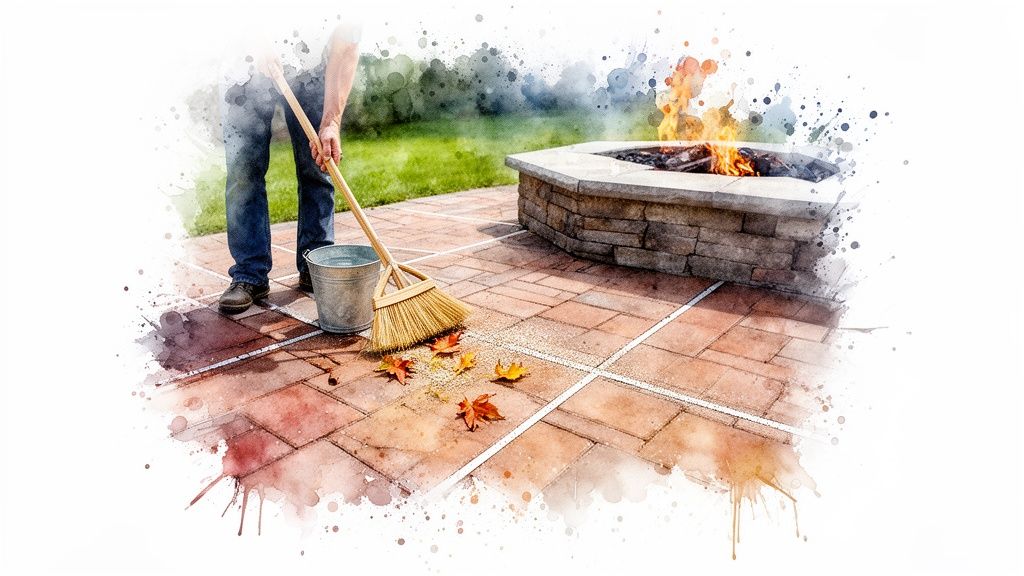
Simple Sweeping and Inspection
Staying on top of upkeep is easier than fixing bigger problems later. A quick sweep to clear leaves and dirt prevents stains and stops moss from growing, a common issue in the damp coastal air around Monterey and Pacific Grove.
While cleaning, give everything a quick inspection. Look for:
- Crumbling Mortar: Check the joints on seating walls or the fire pit. Patching small cracks early prevents water intrusion.
- Wobbly Bricks: A loose paver indicates the base may be settling or the joint sand needs replenishment.
- Weeds: A weed popping through a joint means the polymeric sand barrier has a weak spot. Pull the weed and top off the joint.
Smart Fire Pit Care
Proper fire pit care is about safety and longevity. Always let ashes cool completely—at least 24 hours—before removing them with a metal shovel and bucket. Never leave hot embers unattended.
Avoid using a high-pressure power washer or harsh, acidic cleaners on your brick patio. These can damage the paver surface and blast out the crucial joint sand, leading to wobbly bricks and weed growth. A gentle scrub with a pH-neutral cleaner is all you need.
Frequently Asked Questions About Brick Patios with Fire Pits
1. Do I need a permit for a brick patio with a fire pit in Monterey County?
Yes, most likely. While a simple ground-level patio may not require one, adding a permanent fire structure usually does. Each city, from Carmel to Salinas, has specific rules about setbacks from property lines and structures, and a licensed contractor will manage this process for you.
2. What is the best brick for a patio near the coast?
High-quality clay pavers are the best choice for our coastal environment in Monterey and Pebble Beach. They resist salty air and hold their color better than concrete pavers under the California sun. Professional sealing is recommended to further protect your investment.
3. How do I make a fire pit safer in a high fire-risk area like Carmel Valley?
Safety is the top priority. Your fire pit must be built from non-combustible materials, with a firebrick-lined interior. It should be placed at least 10-15 feet from any flammable structures, and you should always use a spark screen.
4. What is a realistic timeline for this type of project?
A standard-sized brick patio with an integrated fire pit typically takes between one and three weeks to complete. This includes excavation, base preparation, masonry work, and finishing touches. A professional contractor will provide a clear, reliable schedule.
5. Can I add a gas line to my fire pit later?
While technically possible, retrofitting a gas line later is much more expensive and complex. If you think you might ever want a gas fire pit, it's best to have it built "gas-ready" from the start. Discuss this with your mason during the design phase to save time and money.
A well-built brick patio and fire pit is a lasting investment in your home and lifestyle. Given the unique soil conditions and strict safety codes in Monterey County, consulting a licensed masonry professional is the smartest first move. Their expertise ensures your project has the structural integrity to endure our coastal climate.
