As fire season becomes a year-round concern across Monterey Bay, homeowners are rethinking their outdoor spaces with safety in mind. For many, generic advice about patios found online overlooks a critical local reality: the unique fire-weather cycles affecting Salinas, Carmel Valley, and the coastal communities. The right hardscape choices Salinas residents are making for fire season not only enhance a home's beauty but create an essential, non-combustible buffer against wildfire threats.
This guide moves beyond aesthetics to focus on function and resilience. We will explore the top hardscape solutions local homeowners are adopting, emphasizing non-combustible materials that offer peace of mind without sacrificing style. A recent Headwaters Economics report found that building with fire-resistant materials can be cost-neutral or even save money compared to traditional construction, making these upgrades a wise and timely investment (Headwaters Economics).
1. Natural Stone Patios & Pavers
For Salinas and Monterey Bay residents, replacing combustible wood decks with natural stone patios or pavers is one of the most effective hardscape choices for improving fire safety. Materials like granite, slate, and bluestone are inherently non-combustible. This means they won't ignite from flying embers, which are responsible for the majority of home losses during wildfires.
Beyond safety, these hardscapes provide durable, low-maintenance surfaces that enhance property value and create functional outdoor living areas. A well-designed stone patio serves as the core of a defensible space strategy, preventing flames from reaching your home’s structure.
Why It Works for Salinas Homeowners
Natural stone is a proven, long-term investment that directly addresses the environmental challenges of Monterey County. Unlike wood, it doesn't rot in the coastal fog near Pacific Grove or become a fuel source during the dry, windy fire season in inland areas like Carmel Valley. This dual-purpose solution delivers both aesthetic beauty and practical protection.
Actionable Tips for Implementation
- Prioritize Base Preparation: The leading cause of paver and patio failure is an inadequate base. Ensure your licensed, bonded, and insured masonry contractor excavates properly and installs a compacted base of aggregate to prevent sinking and shifting.
- Create Defensible Space: Position your patio to create a minimum 5-foot non-combustible zone immediately around your home. Extend this hardscape out to at least 30 feet where possible, integrating it with gravel pathways or other fire-wise groundcovers.
- Manage Water Runoff: A proper slope of 1-2% is critical to direct water away from your foundation. For properties concerned with stormwater, permeable pavers are an excellent option to reduce runoff while maintaining fire resilience.
- Select for Climate: In coastal areas like Pebble Beach and Carmel, choose salt-resistant stones such as granite or certain types of slate that can withstand the moist, salty air without degrading. Learn more about how fire-zone requirements are impacting stone patio design.
2. Permeable & Non-Permeable Hardscape Systems
Engineering your hardscape for both fire resilience and water management is a critical two-part strategy for homeowners in Salinas and surrounding coastal communities. Choosing between permeable systems (like permeable pavers) and non-permeable systems (like traditional concrete) allows you to create a robust, non-combustible surface. These systems address specific property needs, from preventing winter runoff to halting the spread of embers.
Permeable systems are excellent for managing Monterey County’s seasonal rains by allowing water to filter through the surface, reducing erosion and replenishing groundwater. Both system types create a solid fuel break with minimal gaps for vegetation to grow, directly supporting a home's defensible space. This makes them smart hardscape choices Salinas residents are making for fire season.
Why It Works for Salinas Homeowners
The Monterey Bay area’s microclimates present unique challenges, with coastal fog in Pacific Grove and dry, windy fire seasons inland. Permeable systems are ideal for areas prone to moisture, as they prevent standing water. Non-permeable surfaces offer maximum durability for high-traffic zones like driveways, allowing for a tailored, fire-safe solution.
Actionable Tips for Implementation
- Consult a Local Expert: A licensed contractor experienced with Salinas's soil types and drainage patterns is essential. Proper installation, especially the aggregate base layer, determines the system's longevity and effectiveness.
- Segment for Function: Designate specific zones for each system. Use permeable pavers for patios and walkways where foot traffic is lighter, and opt for solid, non-permeable concrete for driveways that bear heavy loads.
- Plan for Water Flow: Ensure any hardscape system is sloped correctly to direct water away from your home’s foundation. This prevents structural moisture issues while maintaining fire safety.
- Install Proper Edging: Use durable edging and a geotextile fabric layer beneath permeable systems. This crucial step prevents the base layers from migrating and maintains structural integrity. Explore more expert advice in The Advanced Guide to Hardscaping in 2026.
3. Stone Retaining Walls & Terracing
For Salinas homeowners with sloped properties, stone retaining walls and terracing are powerful, dual-purpose hardscape choices for fire season. These structural features manage soil erosion while simultaneously creating non-combustible barriers. Constructed from natural stone or segmental blocks, these walls break up continuous slopes of flammable vegetation, effectively stopping a ground fire from climbing uphill toward a home.
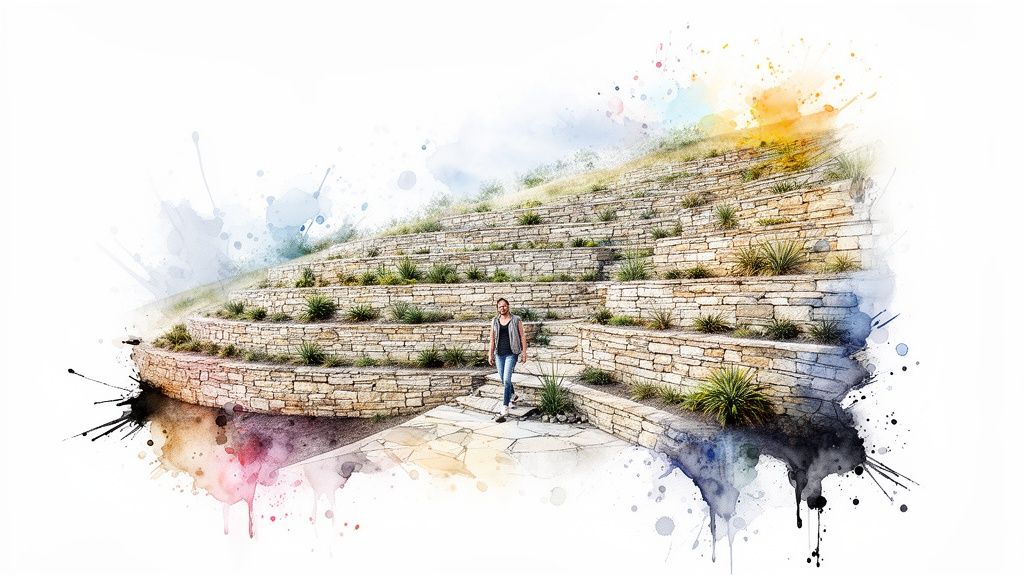
This approach is particularly critical in hilly areas like Carmel Valley, where a single, unbroken hillside covered in dry grass can act as a wick for wildfire. By installing terraces, homeowners can create level, defensible zones for fire-wise plantings or gravel beds, disrupting the fire’s path.
Why It Works for Salinas Homeowners
The varied topography of Monterey County, from the steep canyons of Carmel Valley to the rolling hills around Salinas, makes slope management a key safety concern. Stone retaining walls provide a permanent, non-combustible solution that addresses both landslide risk during winter rains and fire risk during the dry season.
Actionable Tips for Implementation
- Hire a Structural Masonry Expert: Retaining walls are structural projects that require deep expertise. Always hire a licensed, bonded, and insured masonry contractor experienced in engineered walls, as failure can be catastrophic and costly.
- Engineer for Safety: Any wall over four feet in height typically requires an engineer's approval to ensure it can handle soil pressure, especially in California's seismic zones.
- Prioritize Drainage: Proper drainage is non-negotiable. Ensure your plan includes weep holes, a perforated drain pipe, and gravel backfill to prevent water pressure from compromising the wall’s integrity.
- Establish a Solid Foundation: A compacted gravel base is essential for long-term stability. An improperly prepared base is a leading cause of wall failure, a detail you can learn more about when you understand what goes into hardscape pricing.
4. Outdoor Fireplaces & Fire Pits
A well-built outdoor fireplace or fire pit can be a safe, non-combustible focal point for outdoor living for homeowners in Salinas and the Monterey Bay region. Constructed from fireproof materials like stone or brick, these features provide warmth and ambiance without the risk of portable, flimsy models. A professionally installed masonry fire feature is a permanent, fire-resilient asset.
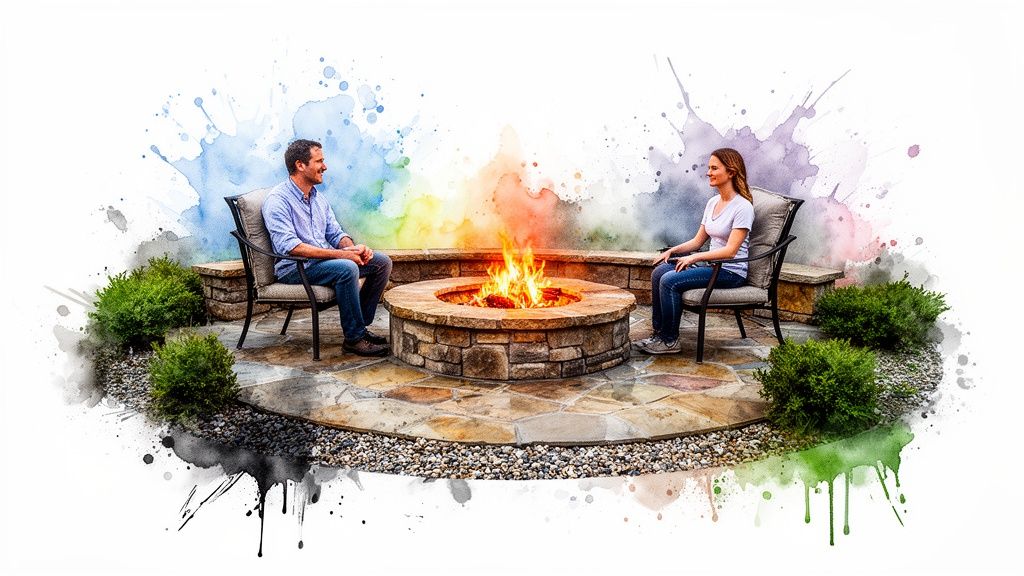
Instead of being a liability, these hardscape choices for Salinas residents become integrated components of a fire-wise landscape. They anchor outdoor living spaces on non-flammable patios and serve as a central gathering spot, far from the home's vulnerable siding and eaves. This strategic placement helps define and maintain critical defensible space.
Why It Works for Salinas Homeowners
A permanent masonry fire feature addresses the desire for outdoor entertainment while adhering to safety principles required in fire-prone areas like Carmel Valley. Unlike a temporary fire pit placed on a dry lawn, a code-compliant fireplace is engineered for safety. Proper clearances and construction contain embers and heat, making it a responsible addition to any Monterey County backyard.
Actionable Tips for Implementation
- Hire a Licensed Specialist: Always work with a licensed masonry contractor who has verifiable experience building code-compliant fire features. This ensures proper structural integrity and adherence to local fire codes.
- Verify Codes and Clearances: Before design, confirm local requirements. Most jurisdictions, from Salinas to Pebble Beach, mandate a clearance of at least 10 feet from any combustible structure, fence, or overhanging tree branches.
- Design for Wind and Weather: In coastal areas like Pacific Grove and Carmel, wind patterns must be considered in the design. This ensures smoke is directed away from seating areas and the home.
- Integrate with Your Hardscape: Plan your fire feature as part of a larger, cohesive hardscape design. It should be situated on a non-combustible stone or paver patio, not on a flammable wood deck. Learn more about how modern fireplace trends are making Central Coast homes safer.
5. Gravel, Decomposed Granite & Fire-Safe Ground Covers
For homeowners seeking a cost-effective and functional fire-resistant ground cover, materials like gravel and decomposed granite (DG) are essential hardscape choices. Replacing flammable wood mulch with these inorganic options immediately eliminates a common pathway for embers to reach your home. This strategy is a cornerstone of creating CAL FIRE-compliant defensible space, particularly within the critical 0-5 foot "Ember-Resistant Zone."
Beyond their safety benefits, these materials help suppress weed growth, improve drainage, and reduce landscape maintenance. Using gravel or DG to create clear zones between structures, patios, and surrounding vegetation is a practical way to enhance wildfire resilience.
Why It Works for Salinas Homeowners
Gravel and decomposed granite directly address the need for low-fuel zones in Monterey County's diverse microclimates. In windy inland areas like Carmel Valley, these materials stay in place better than light mulch and won't ignite. For coastal properties in Pacific Grove, they offer excellent drainage and prevent the moisture-related decay associated with organic ground covers.
Actionable Tips for Implementation
- Install a Proper Base: To prevent weeds and ensure longevity, first lay down high-quality landscape fabric. This base layer also helps separate the gravel from the soil, improving stability.
- Apply to an Effective Depth: A depth of 2 to 4 inches is ideal for most applications. This provides sufficient coverage to suppress weeds and create a substantial non-combustible layer.
- Use Edging for Containment: Install metal edging or low stone borders to keep gravel and DG from scattering onto lawns or other landscaped areas. This maintains clean lines and prevents material loss.
- Maintain Regularly During Fire Season: Rake the surfaces monthly to remove fallen leaves, pine needles, and other organic debris. This simple task ensures your ground cover remains a non-combustible fuel break.
6. Stone Walkways & Accessible Pathways
For many Salinas and Monterey Bay residents, particularly those planning to age in place, hardscape choices must balance fire safety with daily accessibility. Stone walkways and pathways achieve both goals perfectly. By replacing flammable mulch or overgrown grass paths with non-combustible materials like natural stone or pavers, homeowners create crucial firebreaks that stop ground fires.
These pathways do more than just improve fire resilience; they provide safe, stable, and accessible routes from driveways to entrances, patios, and gardens. For households with mobility concerns, this integration of universal design with fire-wise landscaping is not just a convenience. It is a vital safety enhancement that supports long-term independence at home.
Why It Works for Salinas Homeowners
In a region with diverse needs, from the coastal flats of Pacific Grove to the rolling hills of Carmel Valley, accessible pathways serve multiple functions. They prevent slips and falls on surfaces made slick by coastal fog. They also establish clear, defensible routes for both residents and emergency responders during a wildfire event.
Actionable Tips for Implementation
- Prioritize a Non-Slip Surface: In moist coastal areas, polished stone can become hazardous. Opt for naturally textured materials like flagstone or pavers with a brushed finish to ensure secure footing.
- Design for Accessibility: Ensure pathways are a minimum of 3 to 4 feet wide to comfortably accommodate walkers or wheelchairs. A gentle, consistent slope is critical for proper water drainage and ease of movement.
- Incorporate Safety Features: Install low-voltage landscape lighting along pathways to improve nighttime visibility. Proper edging with a contrasting stone color or material can also help define the path’s borders.
- Hire an Experienced Contractor: Building a pathway that is both accessible and durable requires expertise. Work with a licensed professional hardscape contractor can help who understands local codes, proper base preparation, and the principles of universal design.
7. Concrete & Reinforced Masonry Slabs
For Salinas and Monterey Bay homeowners, installing concrete pads or reinforced masonry slabs is a foundational strategy for fire resilience. These engineered hardscapes serve as non-combustible bases that protect structures from ground-level fire exposure. By replacing flammable grass or mulch right next to a home, these slabs prevent embers and ground fires from reaching vulnerable siding and foundations.
Beyond their protective function, these durable platforms are perfect for outdoor kitchens, sheds, or as a solid base for stone patios. In areas like the Salinas hills, a reinforced concrete slab can create a level, fire-safe living space where one didn't exist before. This makes them one of the most practical hardscape choices Salinas residents are making for fire season.
Why It Works for Salinas Homeowners
Concrete and masonry slabs directly address the dual challenges of fire risk and varied soil conditions in Monterey County. They create an unambiguous, non-combustible perimeter that meets modern defensible space requirements. Unlike simple gravel, a solid slab provides a stable, permanent barrier that won't erode or shift on sloped properties.
Actionable Tips for Implementation
- Consult a Professional: Always hire a licensed masonry contractor with proven expertise in concrete and foundations. An expert ensures the slab is engineered correctly for local soil and seismic conditions.
- Plan for Drainage: A properly designed slab must have a slope to direct water away from your home's foundation, preventing moisture issues.
- Don't Skip the Engineering: For hillside properties or areas with unstable soil common around Salinas, obtaining a soil report is essential. This data informs the proper reinforcement and thickness needed.
- Allow for Curing: A new concrete slab needs adequate time to cure and reach its full strength, typically 7-14 days minimum before it can be built upon or subjected to heavy use. A useful guide for determining your needs is available for concrete pouring calculations.
Frequently Asked Questions (FAQ)
1. What is the most important hardscape choice for fire safety in Salinas?
Replacing any combustible material within the first five feet of your home with a non-combustible option like a stone patio or gravel is the single most effective step. This "Ember-Resistant Zone" is critical for preventing embers from igniting your house.
2. Are permeable pavers a good fire-safe option for Monterey County?
Yes, permeable pavers are an excellent choice. They are non-combustible, create a solid fuel break, and help manage stormwater runoff from seasonal rains, which is a common concern in coastal and hillside areas.
3. Does a stone retaining wall really help with wildfire defense?
Absolutely. On sloped properties common in Carmel Valley, a stone retaining wall acts as a firebreak. It stops a ground fire from climbing uphill and breaks up continuous flammable vegetation.
4. Can I have an outdoor fire pit in a high-fire-risk area?
A professionally built, permanent masonry fire pit located on a non-combustible stone patio and away from structures is generally a safe option. It's crucial to follow all local codes for clearance and construction to ensure it contains embers properly.
5. Is decomposed granite (DG) better than wood mulch for fire safety?
Yes, decomposed granite is far superior to wood mulch for fire safety. DG is a non-combustible mineral material that will not ignite from embers, whereas wood mulch is a common fuel source that can spread fire directly to your home's foundation.
Choosing the right materials and, more importantly, the right installation partner is paramount. A licensed professional ensures your project is built not just to look good, but to perform under pressure, meeting all local building codes and structural requirements. Making these smart hardscape choices is one of the most impactful steps you can take to safeguard your family and your home in Monterey County.
