Imagine stepping out your back door into a space that feels just as comfortable and lived-in as your family room. That’s the vision taking hold across Monterey Bay, from the classic coastal homes in Carmel to the sprawling properties of Pebble Beach. The backyard isn't just a patch of grass anymore; it's being transformed into a true extension of the home, perfect for unwinding after a long day or entertaining friends.
This guide explores how to create durable, beautiful outdoor living spaces tailored for our unique Central Coast lifestyle.
Why Outdoor Living Spaces Are Redefining Monterey Bay Homes
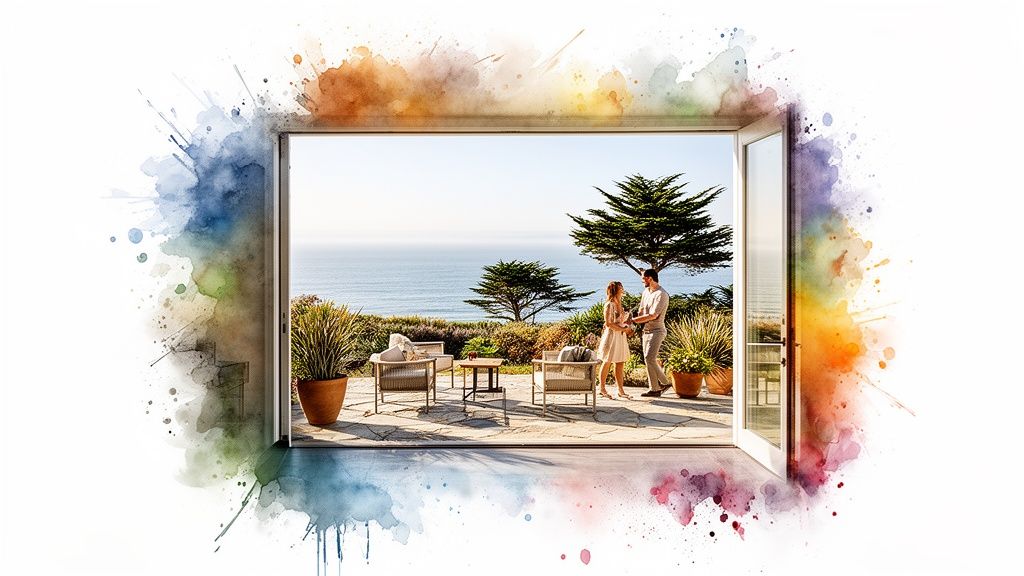
The pull towards creating beautiful and resilient outdoor living spaces is changing how we see our properties. Homeowners in Salinas, Monterey, and Pacific Grove are all looking to invest in features that truly embrace our unique coastal lifestyle. This is about crafting functional, beautiful areas that flow naturally from the inside out.
And it’s not just a local phenomenon. This is part of a massive global shift. The market for outdoor living structures is expected to boom, growing from USD 3.3 billion in 2025 to a staggering USD 6.2 billion by 2035. This kind of growth signals a worldwide desire to make patios and backyards a central part of home life.
The Foundation Of A Lasting Outdoor Oasis
At the core of any outdoor living space that stands the test of time is one thing: expert masonry. Quality craftsmanship is the only way to build structures that can handle the specific challenges we face here in Monterey County.
- Coastal Weather: That salty air we love is tough on materials. Everything needs to be durable and properly sealed.
- Local Soil Conditions: We have to get the base preparation just right to prevent shifting and cracking down the road.
- Wildfire Risks: In our fire-prone region, using non-combustible materials like stone and concrete isn't just a good idea—it's essential for safety.
A great example of this trend is the rise of outdoor kitchens, which add a whole new layer of function and fun to a backyard. For a deep dive into what goes into these projects, check out this ultimate guide to outdoor kitchen installations.
Planning Your Perfect Space
The best outdoor living areas are born from careful planning, long before the first stone is ever laid. It all starts with thinking through your lifestyle, your budget, and the specific quirks of your property. Maybe you're dreaming of a simple stone patio for quiet mornings with a cup of coffee, or perhaps a full outdoor kitchen is more your style for hosting big family gatherings.
Whatever your vision, working with a licensed masonry professional is the key to getting it right. A good mason does more than just build; they guide you through material choices, design options, and the maze of local building codes. They ensure your dream becomes a safe, beautiful, and structurally sound reality. To see just how much value a project like this can add, take a look at our article on trends that make stone patios a top home upgrade.
Exploring Your Options For Masonry Outdoor Living Spaces
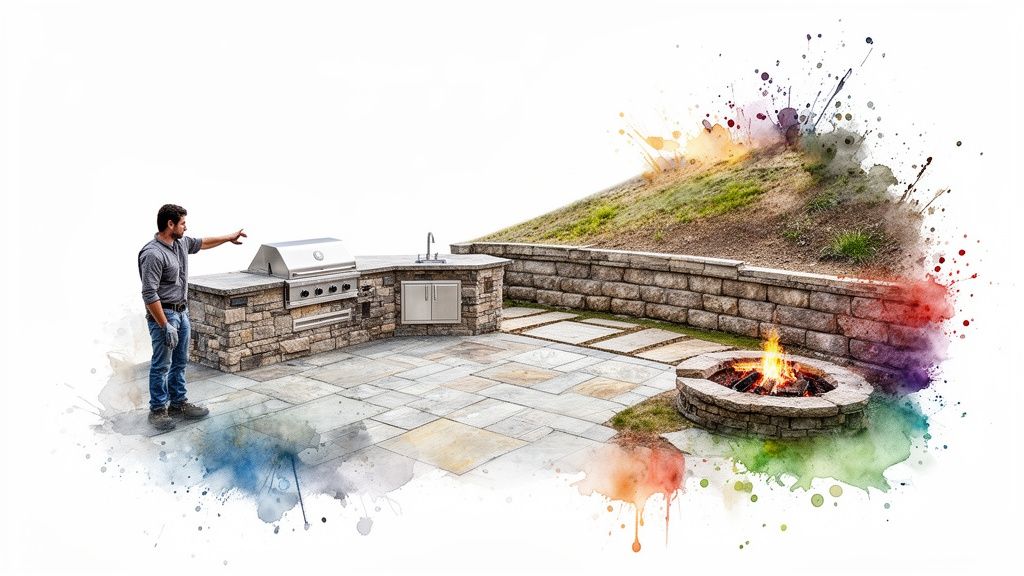
When you start dreaming up your perfect outdoor space, it helps to know what's possible. Every feature, from the ground up, plays a specific role—whether it's creating a spot for family dinners or a warm nook for those cool coastal evenings. Knowing your options is the first step toward designing a backyard that truly feels like an extension of your Monterey Bay home.
A great outdoor area isn't just a random collection of cool things. It's a thoughtfully designed system where every element works together, turning a patch of lawn into your family’s favorite "room."
Stone Patios and Walkways: The Foundation of Your Space
Think of the patio as the heart of your outdoor world. It's the stage where everything else happens—the dining table, the grill, the fire pit. That's why getting its construction right from the start is absolutely crucial. Here in Monterey County, with our unique soil conditions, proper base preparation is non-negotiable if you want to avoid shifting and cracking down the road.
Walkways are the veins that connect it all, guiding people smoothly from the driveway to the patio or from your back door out to the garden. Both need to be built with materials that can handle constant foot traffic and our coastal climate.
You've got two main choices when it comes to materials:
- Natural Stone: If you're after a timeless, high-end feel for a home in a place like Pebble Beach, nothing beats natural stone. Flagstone or slate gives you an organic look where every single piece is unique, creating a surface that’s truly one-of-a-kind.
- Concrete Pavers: For incredible design flexibility, pavers are a fantastic choice. They come in a huge variety of shapes, colors, and textures, and they're engineered to be incredibly strong and practical, often at a more accessible price point.
Outdoor Kitchens and Barbecue Islands
An outdoor kitchen instantly becomes the social hub of any backyard. It lets you take the cooking—and the party—outside, so you can soak up that perfect California weather instead of being stuck in the house. These are fully functional culinary stations designed for serious entertaining.
Safety is paramount, so these structures are always built from non-combustible materials like stone, brick, or concrete block. A licensed mason will make sure the island is rock-solid and that all gas and electrical lines are installed correctly and up to code. For more ideas, check out our guide to the top outdoor living upgrades every Monterey homeowner wants.
Outdoor Fireplaces and Fire Pits
Nothing makes an outdoor space usable year-round like the warmth and glow of a fire. An outdoor fireplace creates a stunning, dramatic focal point for a cozy seating area, while a fire pit fosters a more casual, communal vibe perfect for roasting marshmallows.
Living in fire-prone areas like Carmel Valley means safety has to be the number one priority. Any fire feature must be constructed by a licensed professional who understands local fire codes. This includes using fire-resistant materials, ensuring proper ventilation, and maintaining safe clearances from your home and other combustible structures.
Having your fire feature built by a C-29 licensed masonry contractor is the only way to ensure it’s a source of enjoyment, not a liability.
Seating and Retaining Walls
Sometimes the most practical elements can also be the most beautiful. Seating walls are a brilliant way to add permanent, built-in seating around a patio or fire pit. They define the space, offer a clean look, and mean you'll always have room for guests without cluttering the patio with chairs.
Retaining walls are often a necessity for dealing with the sloped properties common throughout our hilly region. A professionally built retaining wall can prevent soil erosion, create flat usable areas, and add a powerful architectural element to your landscape.
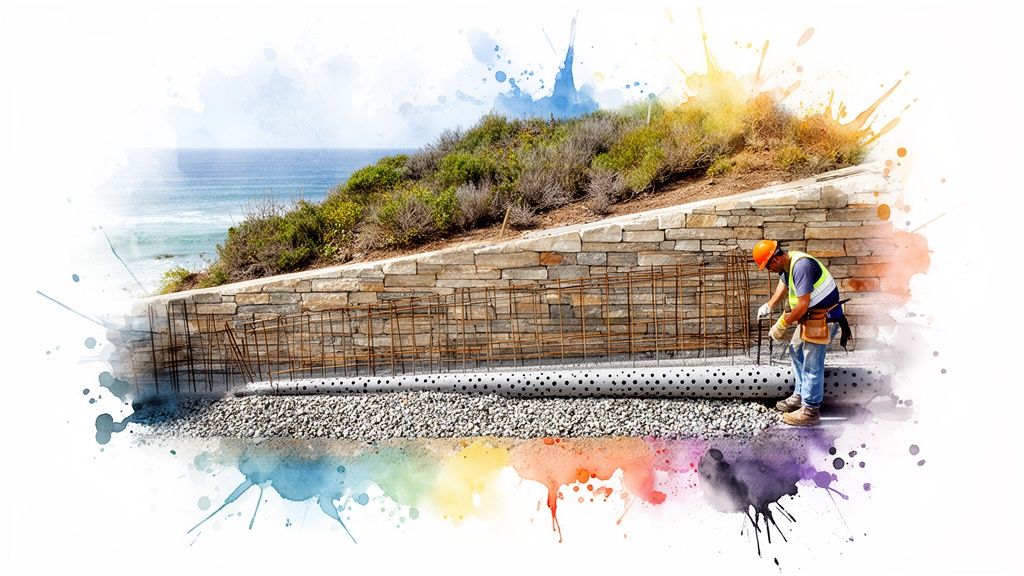
These walls aren't just decorative; they're structural. They have to be properly engineered to handle immense pressure from soil and water, especially with seismic activity in mind. A licensed mason will ensure your wall has a deep foundation and a robust drainage system to protect your property for decades.
Comparing Popular Outdoor Living Features
| Feature Type | Primary Use | Best Suited For | Key Material (Masonry) |
|---|---|---|---|
| Stone Patio | Foundation for dining, lounging, and socializing | Creating the central hub of an outdoor living area | Natural Stone (Flagstone, Slate), Concrete Pavers |
| Outdoor Kitchen | Cooking, food prep, and entertaining guests | Homeowners who love to host and cook outdoors | Stone Veneer, Brick, Concrete Block |
| Fire Pit | Casual, communal warmth and ambiance | Gatherings, conversation, and family-friendly fun | Fire Brick, Stone, Concrete Block |
| Outdoor Fireplace | A dramatic focal point and radiant heat source | Creating a cozy, defined outdoor "living room" | Fire Brick, Stone, Stucco |
| Seating Wall | Permanent, space-saving guest seating | Defining patio edges and maximizing seating capacity | Stone, Cinder Block with Capstones, Brick |
| Retaining Wall | Managing slopes and creating usable flat land | Properties with hills, drainage issues, or tiered gardens | Concrete Block, Stone, Poured Concrete |
Each of these features can be customized to fit your specific needs and aesthetic. The key is choosing the right combination that enhances how you and your family want to live outdoors.
Designing For Durability In The Monterey Bay Climate
It’s one thing to create a beautiful outdoor living space. It’s another to build one that can stand up to the unique challenges we face here in the Monterey Bay area. A gorgeous stone patio that cracks or an outdoor kitchen that starts to shift after just a few seasons is more than a disappointment—it's an expensive problem.
Real durability comes from expert craftsmanship that anticipates our local conditions from day one. That means every single project needs to be engineered to handle coastal moisture, tricky expansive soils, and seismic activity. A licensed C-29 masonry contractor doesn’t just build for today; we build for decades.
Mastering Site Preparation and Drainage
Believe it or not, the most important part of any hardscape project is the work you’ll never see. The soils around Salinas and Carmel Valley are notorious for expanding and contracting as moisture levels change. That movement puts incredible stress on anything built on top.
This is why proper base preparation is non-negotiable. A professional will excavate the site to the right depth, then build up and compact a base of aggregate. This creates a stable, load-bearing platform that also allows water to drain freely, preventing soil movement from wrecking the beautiful stonework above.
Effective drainage is the other half of the puzzle.
- Proper Grading: The surface needs a subtle slope that directs rainwater away from your house.
- Drainage Systems: For yards with significant runoff, we might install channel drains or French drains.
- Permeable Pavers: In some cases, permeable pavers are a great option, allowing water to filter straight through.
Building for Seismic Resilience
This is California; we have to build with earthquakes in mind—period. While nothing can be completely earthquake-proof, properly reinforced masonry offers incredible resilience. A professional mason knows exactly how to build outdoor structures that can absorb and safely dissipate the energy from ground movement.
This means strategically placing steel rebar inside concrete footings and block walls, giving the structure a tough internal skeleton. For retaining walls, this reinforcement is critical, combined with deep footings and the right backfill. These aren't just add-ons; they're fundamental to building a safe, long-lasting structure.
Fire-Resistant Construction for Defensible Space
Wildfire risk is a reality for homeowners all over Monterey County, particularly in places like Carmel Valley. Creating a smart defensible space around your home is crucial, and masonry is your best friend in that effort.
By their very nature, materials like stone, concrete, and brick are non-combustible. Using them for patios, walkways, and seating walls creates a natural firebreak. It can literally stop a ground fire in its tracks by robbing it of fuel before it reaches your house.
This proactive approach to safety is only becoming more important. You can learn more about how fire zones are changing stone patio design and what it means for your home. Hiring a contractor who gets these fire-safety principles is a crucial step in protecting your family and your biggest investment.
Choosing The Right Materials For Your Outdoor Living Spaces
The materials you select for your outdoor living spaces do more than just look good. They set the entire tone, dictate the durability, and determine how much maintenance you'll be doing down the road. An experienced mason is your guide through these choices, making sure your investment is both beautiful and built to handle the unique Monterey Bay climate.
It's a balancing act between the look you want, what your budget allows, and how the material will perform over time. The rustic elegance of a natural stone patio might be the perfect touch for a home in Pebble Beach, for instance, while the sheer versatility of concrete pavers could be a better fit for a busy family space in Salinas.
The Timeless Appeal of Natural Stone
There's something about natural stone, like flagstone or slate, that just can't be replicated. It offers an organic beauty that feels grounded and real. Because no two pieces are ever identical, you get a surface brimming with unique colors, textures, and patterns.
That said, its premium quality comes at a higher price, both for the material itself and for the skilled labor it takes to install it properly. Some types of stone benefit from periodic sealing to fend off stains and moisture, which is especially important in our salty coastal air.
The Versatility of Concrete Pavers
Concrete pavers are the workhorses of the hardscaping world, engineered for both strength and design flexibility. They’re available in a huge variety of colors, shapes, and styles, which means you can create anything from a traditional brick-style patio to a sleek, modern geometric design.
What makes pavers so popular?
- Durability: They're manufactured to handle heavy foot traffic and are incredibly resistant to cracking.
- Repairability: If a single paver ever gets stained or chipped, you can just pop it out and replace it.
- Cost-Effectiveness: Compared to high-end natural stone, pavers are generally a much more budget-friendly option.
The secret to a long-lasting paver patio, however, is the prep work. A meticulously prepared base is absolutely critical to prevent the pavers from sinking or shifting over time.
Poured Concrete for a Modern Finish
If you're after a clean, seamless, and modern look, poured concrete is tough to beat. It’s perfect for creating smooth patios, sleek outdoor kitchen countertops, or minimalist walkways. Concrete can be customized with different colors, textures, and finishes, like a broom finish for better grip or a stamped pattern that mimics the look of natural stone.
Getting a flawless, crack-free finish is an art form. It requires a deep understanding of proper reinforcement, placing control joints to manage expansion, and managing the curing process just right. This is what makes the difference between a surface that cracks in a year and one that lasts for decades.
Recent surveys from groups like the National Association of Home Builders show that natural, sustainable looks—like stone veneers and well-built patios—are what homeowners want most right now. This is part of why homeowners are investing more in high-quality, functional outdoor areas.
Making the Right Choice for Your Property
Ultimately, picking the right materials should be a conversation between you and your mason. A true craftsman will listen to what you're imagining, take a hard look at your property's specific conditions—like drainage and sun exposure—and then guide you to a solution that works for your budget and your lifestyle.
Bringing Your Masonry Project to Life, Step by Step
Seeing a beautiful outdoor living space take shape is an exciting process, but understanding what happens behind the scenes is the key to a stress-free experience. A well-managed project is a methodical, transparent process designed to prevent those classic homeowner headaches like blown timelines or surprise costs.
The real work starts long before the first shovel hits the dirt. We begin with meticulous planning, confirming every last detail. This means locking in material choices, finalizing the exact layout, and making sure the design works with your property’s specific quirks, from the clay soil in Salinas to the salty air along the Pacific Grove coast.
First Things First: Permits and Code Compliance
Before we can start building, we have to tackle the paperwork. For many outdoor features—especially kitchens with utility hookups or larger retaining walls—getting a permit from Monterey County or your local city is non-negotiable. This isn’t just red tape; it's a crucial safety check to ensure your project meets California's strict building codes.
A licensed and insured mason should handle this entire process for you. We prepare and submit the necessary plans and documents, making sure every component of your project is up to code. This step is your protection, shielding you from liability and preventing problems down the road.
From Bare Dirt to a Beautiful Finish
With permits in hand, the physical work can get underway. Building a hardscape is like following a recipe—every step has to happen in the right order for the final result to be perfect.
- Site Prep & Excavation: The crew starts by clearing the area and digging down to the proper depth.
- Building the Foundation: We install and compact a thick layer of aggregate base, which provides the structural support needed to stop the patio or wall from shifting or cracking.
- Structural Work: For a wall, this is when we lay the concrete blocks and install steel reinforcement. For a patio, it’s when we set the edge restraints and prepare the sand bed.
- Laying the Masonry: Our skilled masons meticulously lay each stone, paver, or brick, finally bringing your design to life.
- Finishing Touches: To wrap things up, we fill the joints, apply a sealer if needed, and give the entire site a thorough cleaning.
This whole process—from your initial ideas to the final material selection—is a journey. It’s about balancing your vision with your budget to land on the perfect plan.

What a Smooth Project Feels Like
Throughout every phase, a true professional will keep you in the loop. You should get regular updates and always know who to call with a question. That transparency is everything, especially when you’re making a significant investment in your home.
Before you get too far, it's a great idea to measure your outdoor spaces accurately to help with planning and material estimates. Hiring a licensed C-29 mason is the best way to ensure your project, big or small, is managed professionally from that first conversation to the final walkthrough.
How To Hire A Licensed Masonry Contractor In Monterey County
Choosing the right contractor is probably the biggest decision you'll make for your entire project. The person you hire directly impacts not just how your new patio looks, but whether it's safe, structurally sound, and will actually last for decades.
First things first: only consider contractors who are licensed, bonded, and insured. In California, any construction work totaling $500 or more legally requires a state license. For the kind of work we do, that means they must hold a C-29 Masonry specialty license.
Verifying a Contractor's Credentials
Never just take someone's word that they're licensed. You need to check for yourself. The Contractors State License Board (CSLB) has a free online search tool that makes it incredibly easy. A quick search will confirm their license is active and tell you if there are any public complaints or disciplinary actions on their record.
Hiring someone without a license puts all the liability squarely on your shoulders. These individuals rarely carry the right insurance, meaning if an accident happens or property gets damaged, you could be the one paying for it. California has been increasing enforcement actions against unlicensed contractors, making it a risk not worth taking for homeowners.
What to Look for in a Proposal
A professional’s proposal tells you a lot about how they work. A true professional will give you a detailed, written proposal that clearly lays everything out.
It should include:
- Scope of Work: A clear description of every single task, from the first shovel in the ground to the final cleanup.
- Materials List: The specific types of stone, pavers, mortar, and other materials they plan to use.
- Payment Schedule: A transparent breakdown of costs and exactly when payments are due.
- Project Timeline: A realistic estimate for when the project will start and when you can expect it to be finished.
A detailed, written plan is your best protection against common frustrations like inconsistent quotes, unclear timelines, and poor workmanship. It ensures both you and the contractor are in complete agreement before any work begins. You can learn more by reading our guide on how Central Coast licensing rules are tightening.
Frequently Asked Questions About Outdoor Living Spaces
How much does a new stone patio cost in the Monterey area?
The honest answer is: it varies widely based on size, materials, and site accessibility. A straightforward paver patio is a moderate investment, while intricate natural stone will be higher. A licensed mason can provide a detailed quote after assessing your property's specific soil conditions and your design goals.
Do I need a permit for an outdoor fireplace or kitchen in Carmel?
Yes, almost certainly. Structural additions like outdoor kitchens, fireplaces, and even larger retaining walls typically require a permit. This is particularly true in places like Carmel and Carmel Valley, where local building and fire safety codes are very strict.
What is the best low-maintenance material for a coastal patio?
High-quality concrete pavers and dense natural stones like quartzite are fantastic low-maintenance choices for our salty coastal air. However, the true secret to longevity is proper base preparation. Without a solid foundation, even the best materials will fail.
How can hardscaping improve my property's fire safety?
Using non-combustible materials like stone, pavers, and concrete for your patios and walkways creates "defensible space." This firebreak robs an approaching wildfire of its fuel, slowing or stopping it before it reaches your home. It's a critical safety feature for properties in Carmel Valley and other fire-prone zones.
Why should I hire a C-29 licensed masonry contractor?
A C-29 license is your proof that a contractor has met California's standards for skill, experience, and knowledge in masonry. Hiring a licensed, bonded, and insured professional protects you from liability, ensures the job is done to code, and guarantees the structural integrity of your investment.
Creating an outdoor living space that is not only beautiful but also engineered to last in our unique Monterey Bay environment requires real expertise. A professional can help navigate local soil conditions, coastal weather, and fire safety concerns. To discuss your project, consult a licensed and insured masonry professional. You can contact Stonecap Masonry Inc. at https://stonecapmasonry.com.
