A true masonry fireplace isn't something you just drop into place. It's a permanent, structural part of your home, built from the ground up on-site with brick, stone, or block. This isn't a job for the faint of heart; it requires a rock-solid foundation and expert craftsmanship to ensure it's safe, long-lasting, and functions perfectly.
Understanding the Fundamentals of Fireplace Masonry Construction
A beautifully built masonry fireplace is far more than just a centerpiece for your living room or patio. It’s an intricate system, carefully engineered to contain a fire and pull smoke safely out of your living space. Getting a handle on the essential components is the first move toward a successful build, especially here in the Monterey Bay area where we have to contend with coastal weather and seismic codes.
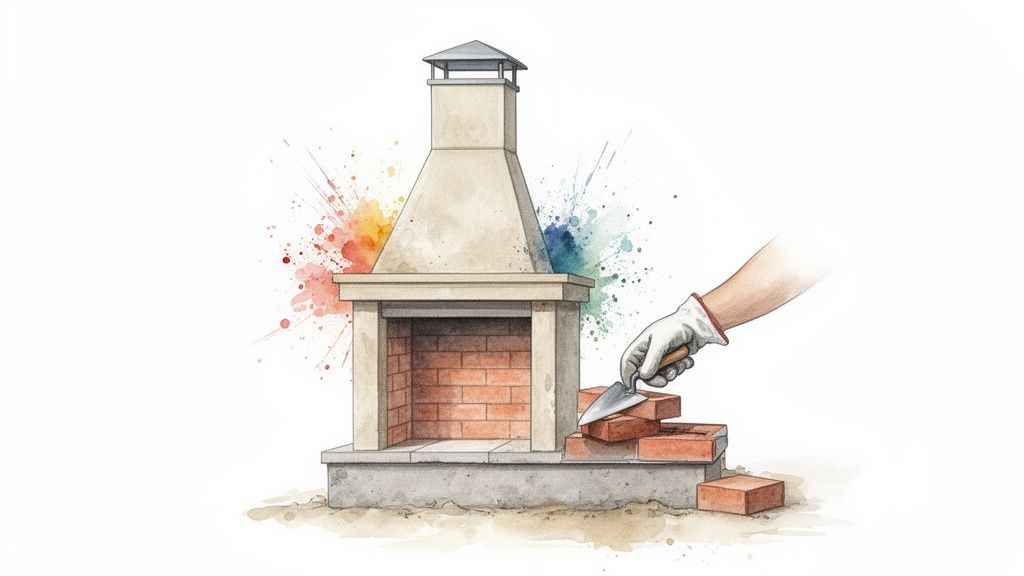
When you see a real masonry fireplace, you're looking at a testament to a mason's skill. Every single piece, from the footings buried underground to the hearth you see, plays a critical role in its safety and performance.
The Anatomy of a Masonry Fireplace
At their core, all masonry fireplaces are built with the same fundamental parts. Each one must work in perfect harmony with the others for the whole system to function properly and safely.
- Foundation and Footings: The entire weight of the fireplace and chimney rests on a reinforced concrete footing. Here in places like Salinas and Carmel Valley, that footing has to be specifically engineered for our local soil conditions and California's demanding seismic regulations.
- Firebox: This is where the fire burns—the chamber that holds the flames. It’s built from special firebrick and a high-temperature refractory mortar, materials designed to handle intense heat without failing.
- Smoke Chamber and Damper: Sitting just above the firebox, the smoke chamber is crucial for proper drafting. It funnels all the smoke and hot gases into the flue, and its smooth, angled walls are critical for keeping smoke out of your room.
- Flue and Chimney: The flue is the vertical channel that vents smoke outside. This flue is contained within the chimney stack, which must extend a specific height above the roofline to meet building codes and ensure the fireplace draws air correctly.
Indoor vs. Outdoor Fireplace Considerations
The core principles of fireplace masonry construction don't change, but the location certainly does. An indoor fireplace is shielded from the weather, but an outdoor one in Pebble Beach or Pacific Grove has to stand up to salt air, driving rain, and constant temperature swings.
This is where material choice becomes paramount. For an outdoor fireplace, you must use weather-resistant stone or brick, along with mortars formulated to resist moisture damage. You also need to plan for proper drainage and a solid weather cap to keep water from causing long-term, expensive problems. This is why hiring a licensed, bonded, and insured contractor who knows our local Monterey County climate is non-negotiable.
Laying the Groundwork for a Lasting Fireplace
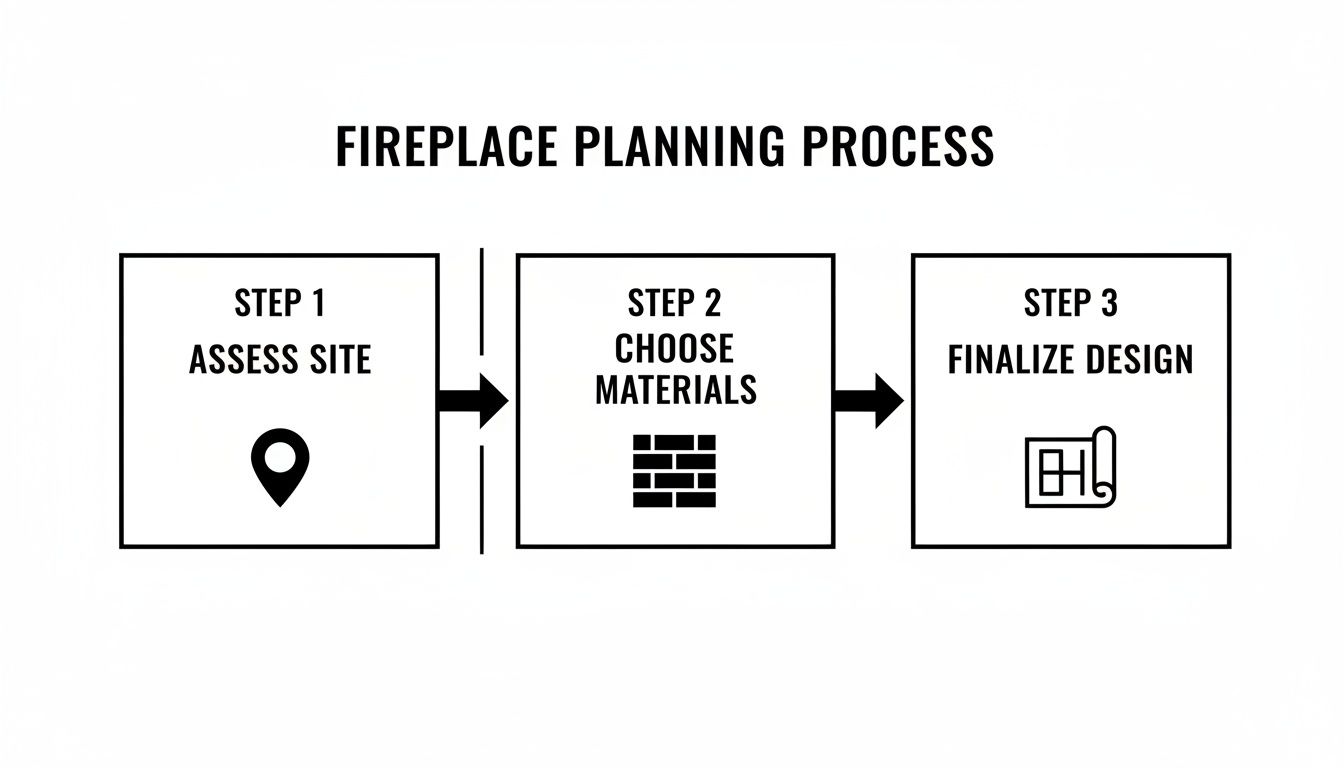
A great fireplace isn't just built; it's meticulously planned. Long before the first brick or stone is laid, the real work begins with translating your vision into a practical, safe, and durable structure. Proper planning in masonry ensures your fireplace not only looks fantastic but functions flawlessly and stands up to the elements for decades.
For homeowners in Monterey County, this initial stage is even more critical. We must account for our unique coastal climate, local soil conditions, and seismic activity. Thinking through these details from the get-go saves a world of headaches and costly fixes down the road.
Site and Foundation: The Unseen Hero
The single most important part of any masonry fireplace is the one you’ll never see: the foundation. A fireplace and chimney can easily weigh several tons, and all that immense weight needs to be supported by an engineered footing that won’t budge. If you skimp here, you're asking for trouble in the form of shifting, cracking, or even complete structural failure.
The soil here in places like Salinas and Carmel Valley can vary wildly, from expansive clay to loose, sandy soil. Each requires a specific footing design to guarantee stability. The foundation itself must be poured with reinforced concrete, built not just to handle the load but to meet California’s strict seismic codes. A proper understanding of concrete footings for supporting your structure is the first step toward a safe build.
Choosing Your Materials Wisely
The stone, brick, or block you choose is what gives your fireplace its character and resilience. It’s a decision that blends your personal taste with practical performance, and each material brings something different to the table.
| Material | Pros | Cons | Best For |
|---|---|---|---|
| Natural Stone | Unmatched natural beauty, durable, each piece is unique. Local varieties like Carmel stone create a sense of place. | Higher material and labor costs, can be challenging to work with, some types are porous. | Creating a rustic, one-of-a-kind focal point, especially for homes in Carmel or Pebble Beach that embrace natural aesthetics. |
| Brick | Classic and versatile look, excellent fire resistance, uniform shape allows for precise and decorative patterns. | Can feel dated if not used in the right architectural context; requires skilled labor for complex bonds. | Traditional homes, achieving clean lines, and projects where a timeless, consistent look is desired. |
| Concrete Block (CMU) | Incredibly strong and fire-safe, cost-effective for the structural core, provides a solid base for veneers. | Purely functional aesthetic; must be covered with a veneer like stone, brick, or stucco. | The hidden structural core of most modern fireplaces, providing strength and safety behind the scenes. |
From a Sketch to a Working Fireplace
Your fireplace should feel like it was always part of your home's design, not an afterthought. A seasoned mason is crucial here. They take your ideas and turn them into a functional blueprint that meets every safety code and clearance requirement, ensuring the hearth dimensions are correct and the mantel is at a safe height.
This is also where quality craftsmanship really proves its worth. A 2023 Houzz survey found that 22% of homeowners renovating their living rooms add or upgrade a fireplace, showing a strong desire for these features. (Houzz, 2023 U.S. Houzz & Home Study). This investment in a home’s character requires a professional touch to ensure it pays off.
Working with a licensed, bonded, and insured professional is your best defense against common issues like vague quotes and shoddy work, which are frequent homeowner complaints (Stonecap Masonry Strategic Report, 2024). It ensures your project starts on a solid, code-compliant footing—the first and most important step in any fireplace masonry construction project. If you're wondering what a professional quote really includes, it's worth understanding the real costs behind fireplace quotes.
The Masonry Construction Process From Start to Finish
Turning a pile of brick or stone into a beautiful, functioning fireplace is where real masonry craftsmanship comes to life. The whole process is methodical, and every single step builds on the one before it. From breaking ground to the final swipe of the trowel, the focus must be on creating a structure that is both rock-solid and completely safe.
A project like this has to be done right; there are no shortcuts. Skipping a step or using the wrong technique can lead to serious headaches, from a chimney that won't draw smoke to dangerous structural failures. A licensed mason follows a proven sequence to get it right the first time.
Digging and Pouring the Footing
Every great masonry fireplace starts with a serious foundation. We begin by excavating the site to the precise depth and dimensions required by local building codes, ensuring the ground below is properly compacted. This is especially true here in places like Monterey and Pacific Grove, where soil conditions can make or break a project's long-term stability.
Next, we build and place a cage of steel rebar inside the excavated area. In California, this reinforcement isn’t optional—it gives the foundation the tensile strength it needs to handle seismic activity. Finally, concrete is poured to create a solid footing that will support the entire fireplace and chimney for generations without shifting or settling.
Building the Firebox and Hearth
Once the foundation has cured, we can start building the parts you'll actually see. The hearth—the floor of the fireplace that extends out into the room—is laid first. It must be built from non-combustible materials and meet specific size requirements to comply with fire codes.
Then, we build the heart of the fireplace: the firebox. This requires specialized materials built to handle incredible heat.
- Firebrick: These are not your average bricks. They are incredibly dense, high-alumina bricks made specifically to endure the thermal shock of a roaring fire without cracking.
- Refractory Mortar: Standard mortar would crumble in a firebox. This high-temperature cement is formulated to hold the firebricks together under extreme heat, keeping the entire structure sound.
The walls of the firebox are carefully angled to push heat out into the room where you can feel it. The craftsmanship here is crucial for both safety and performance.
Forming the Smoke Chamber and Installing the Flue
Sitting directly above the firebox is the smoke chamber. Think of it as a funnel that smoothly channels smoke up into the narrow flue. The walls inside must be parged perfectly smooth and angled just right to create a strong, consistent draft and prevent smoke from swirling back into your living room.
As the chimney gets taller, we install clay flue liners, one section at a time. These liners are essential for protecting the outer brick or stonework from the corrosive byproducts and intense heat of the fire. Every joint between the liners must be perfectly sealed with refractory mortar to ensure no smoke or embers can escape into the chimney cavity. For anyone planning a project this size, it’s helpful to understand how professional masonry quotes are structured to get a clear picture of the labor and materials involved.
Constructing the Chimney and Finishing Details
With the flue in place, the outer chimney structure is built up around it, leaving a required air gap between the flue and the surrounding masonry. For homes in seismic zones like ours, we integrate vertical steel rebar into the chimney walls, tying the entire structure together from the footing all the way to the cap.
The final touches involve pouring the chimney crown—a concrete slab at the very top that seals the structure and prevents water from getting between the flue and the masonry. From there, we install a rain cap to keep out water and animals and a spark arrester to stop embers from landing on your roof. This meticulous attention to detail is what defines a professional build.
Getting It Right With Codes and Permits in Monterey County
Building a beautiful fireplace is one thing, but making sure it’s safe and legal is another entirely. Before laying the first brick, you must get familiar with local building codes and the permit process. Here in Monterey County, that means squaring up with the California Building Code and specific local rules for seismic safety and wildfire risk.
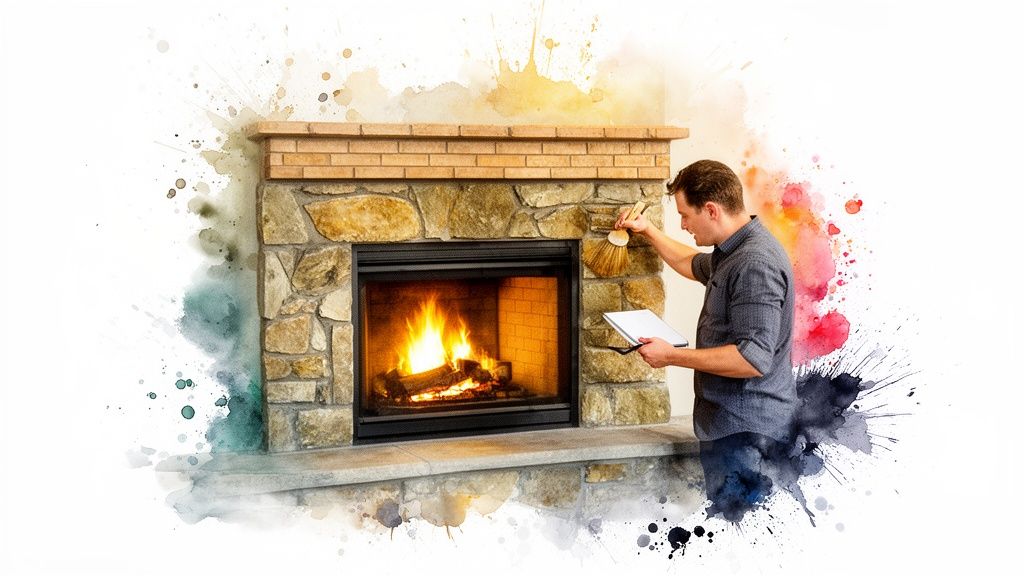
A building permit isn't just red tape; it is your best insurance policy. It triggers inspections at key moments during construction, bringing in a third-party expert to confirm the structure is built correctly. This is critical for protecting your home and your investment.
Core Requirements From the California Building Code
The California Building Code (CBC) is the rulebook for safe construction, and it is especially strict when it comes to fireplaces. A licensed mason knows these standards inside and out, as they are non-negotiable for preventing house fires and ensuring structural integrity.
During an inspection, officials will look closely at a few critical details:
- Hearth Dimensions: The non-combustible area in front of and around the fireplace opening is strictly regulated to keep sparks and hot embers from touching your floors.
- Clearances to Combustibles: The code demands a specific buffer zone between any part of the fireplace and combustible materials like wood framing. Getting this wrong is a major fire hazard.
- Chimney Height: The "10-2-3 rule" is standard here. Your chimney must be at least three feet tall where it exits the roof, and at least two feet higher than anything within ten feet of it to ensure smoke goes up and away.
Monterey County’s Wildfire and Seismic Rules
Living in a place like Carmel Valley or the hills around Salinas comes with its own challenges. Our local building departments have extra rules to deal with wildfires and earthquakes, which is why you can’t just hire any handyman for the job.
For high-fire-risk zones, you’ll likely need a spark arrester on your chimney and be required to use specific non-combustible materials on the exterior. When it comes to seismic safety, the codes demand serious reinforcement, including steel rebar that runs continuously from the foundation all the way through the chimney.
Hiring a licensed contractor is your best defense against non-compliance. An experienced local mason knows how officials in Monterey, Carmel, and Pacific Grove interpret the code, saving you from failed inspections and costly rework.
The Permit and Inspection Timeline
The permit process can feel intimidating, but a professional handles this for you. It starts with submitting detailed plans to the building department for review. Once they issue a permit, construction can begin, with inspections scheduled along the way.
You can expect an inspector to show up at several key stages:
- Foundation and Footing: Before any concrete is poured, an inspector checks the excavation depth and the placement of the steel rebar.
- Throat and Smoke Chamber: This crucial check ensures the parts that draw smoke up the flue are shaped correctly for safe operation.
- Final Inspection: When the last brick is in place, a final walkthrough confirms everything meets code, from the chimney cap down to the hearth clearances.
Trying to bypass this process by hiring an unlicensed worker puts all the liability squarely on you. There's a reason California's CSLB actively pursues enforcement against unlicensed contractors—it’s to protect homeowners from shoddy, dangerous work. Find out more about why you should always hire a licensed masonry contractor for jobs in California, no matter how small the project seems.
Finishing Touches and Long-Term Fireplace Care
With the heavy lifting of the fireplace masonry construction behind you, it’s time for the details that turn a functional structure into the heart of your home. This is where your aesthetic vision comes to life, but it's also the start of a long-term commitment to care and safety. The surround, mantel, and hearth extension are what everyone will see first, giving your fireplace its personality—whether you’re going for a rustic Carmel stone look or the clean lines of classic brickwork.
Essential Fireplace Maintenance
Once your fireplace is finished, routine maintenance isn't just a suggestion—it's absolutely essential for safety. A well-maintained masonry fireplace is a safe one. Neglecting it risks dangerous creosote buildup, structural damage from moisture, and a fireplace that just doesn't work as well as it should.
For any homeowner, understanding how to prevent house fires is non-negotiable, and that starts with your fireplace. Regular inspections and cleanings are your best defense against potential disasters.
Creating Your Annual Care Checklist
A simple, consistent maintenance schedule is the key to keeping your fireplace in top shape for years to come.
Here’s what every homeowner should stay on top of:
- Professional Chimney Sweeping: This is a must-do at least once a year to remove flammable creosote and ensure the flue is clear of any blockages.
- Inspect the Masonry: Visually check the brick or stone for cracks, especially after any seismic activity here in the Monterey Bay area. Keep an eye out for crumbling mortar joints, as they’re an invitation for water damage.
- Check the Firebox: Look inside the firebox for major cracks or deteriorating firebricks. Damaged bricks can compromise the entire structure and must be replaced by a qualified mason.
- Test the Damper: Make sure your damper opens and closes smoothly. A damper that doesn’t seal right will send your heating bills straight up the chimney.
FAQ About Fireplace Masonry Construction
1. How much does a masonry fireplace cost in the Monterey Bay area?
The cost varies significantly based on size, materials, and complexity. A simple outdoor fireplace in Salinas might cost a few thousand dollars, while an intricate, floor-to-ceiling indoor fireplace in Carmel with custom stonework could run into the tens of thousands.
2. What's the difference between a masonry fireplace and a prefabricated one?
A masonry fireplace is a true, handcrafted structure built on-site from brick or stone, making it a permanent part of your home. A prefabricated fireplace is a factory-made metal firebox slotted into a wooden frame, which is a faster but less durable alternative.
3. How long does it take to build a masonry fireplace?
The timeline hinges on the project's scope and the local inspection schedule. A straightforward outdoor fireplace might be done in one to two weeks, while a more complex indoor fireplace with a tall chimney could take several weeks or more.
4. Are masonry fireplaces safe in an earthquake?
Yes, when built correctly to modern California building codes. Proper construction in a seismic zone involves a robust, reinforced concrete foundation and a continuous web of steel rebar running through the entire structure to handle ground movement.
5. Can I convert my wood-burning masonry fireplace to gas?
Yes, in almost all cases, you can convert a traditional wood-burning fireplace to use a gas insert for push-button convenience and better heating efficiency. This is not a DIY job and requires a qualified professional to run the gas line safely and ensure the insert is vented correctly.
A professionally built fireplace is more than just an architectural feature—it's a lasting investment in your home's comfort, value, and safety. For any project in Monterey County, your best course of action is always to work with a licensed masonry professional who understands our unique coastal climate and demanding building codes. Their expertise ensures your vision comes to life with craftsmanship that will truly stand the test of time.