Direct Answer: California’s Zone 0 rules require an ember resistant band in the first five feet around qualifying structures, pushing homeowners to replace mulch and firewood with gravel, stone, or masonry surfaces.
If you have bark mulch beds pressed against your siding, firewood stacked by the back door, or a wood gate that touches the house, California just changed the math on all three. The state adopted its first Zone 0 rules, which cover the first five feet around qualifying structures.
I have spent a lot of time on ladders and on my knees along foundations in Carmel Valley, Pebble Beach, and the oak and pine edges outside Salinas. That five foot band is exactly where embers land, collect, and sit smoldering in mulch.
This article covers three things: what the rules actually say and when they bite, who in Monterey County is covered, and what a noncombustible five foot band looks like when it is built right. No guesses about your specific lot, since that depends on your hazard zone map.
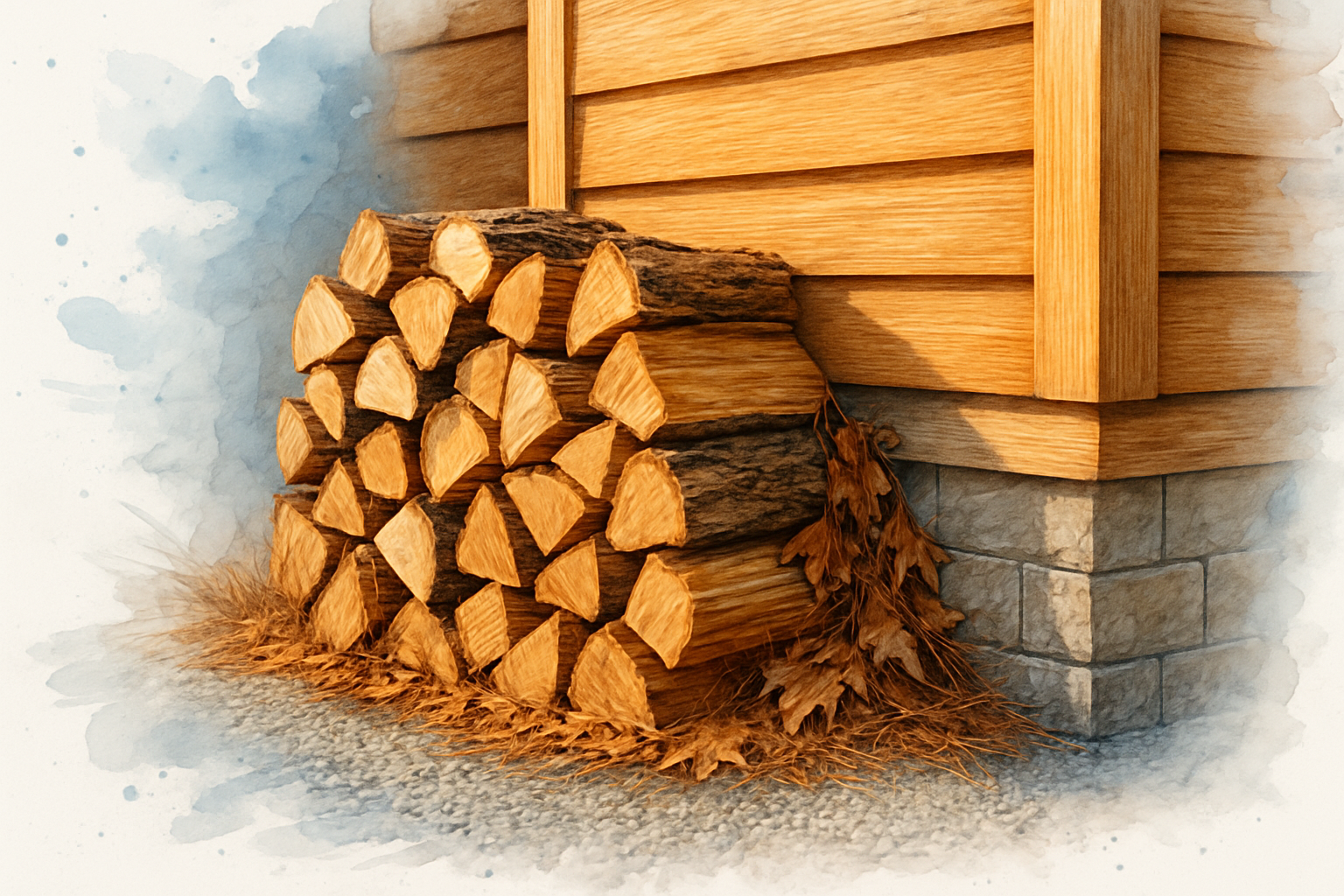
What the California Zone 0 rules say about the 5 feet around your house
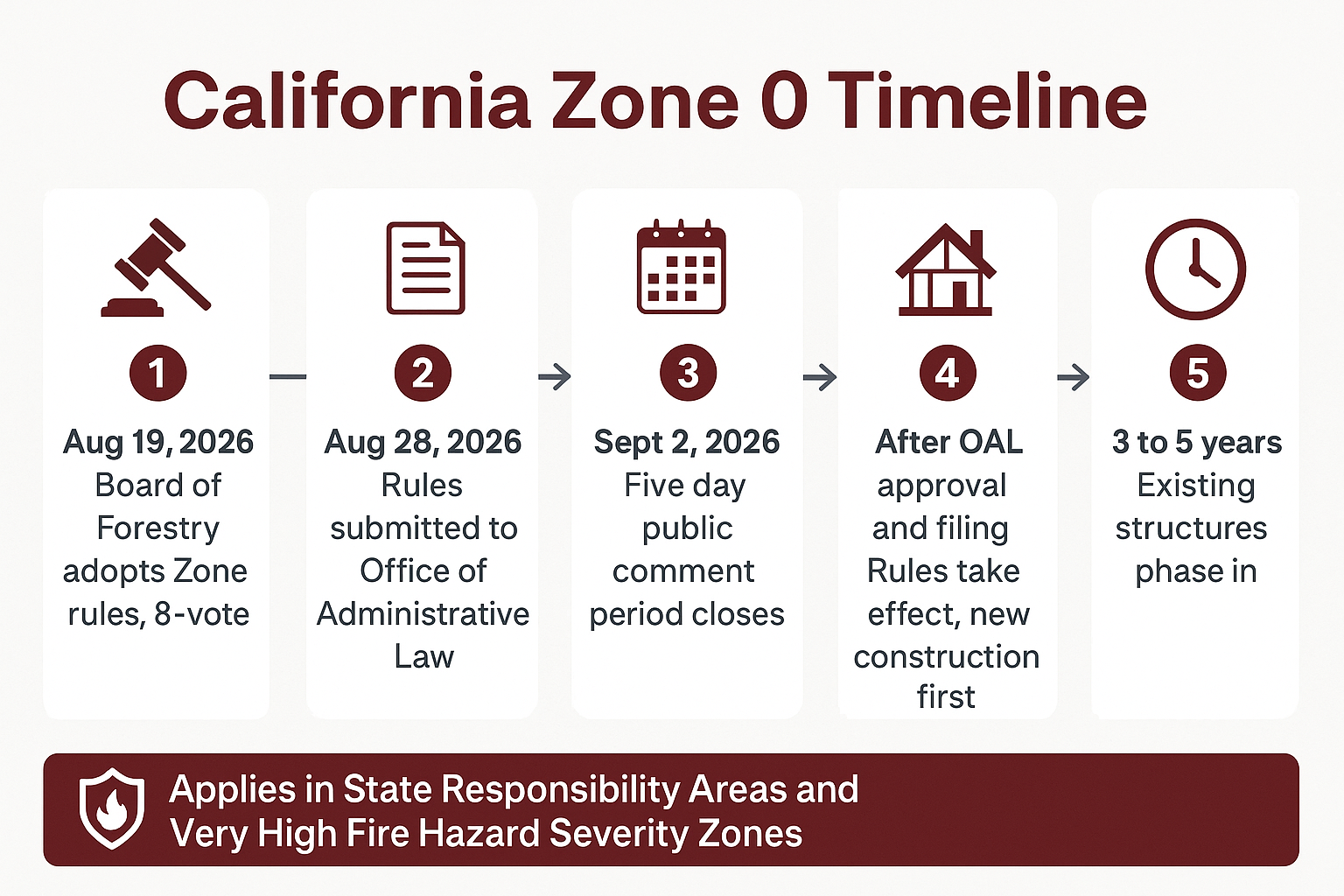
On August 19, 2026, the California State Board of Forestry and Fire Protection voted 8-0 to adopt the state’s first Zone 0 ember resistant defensible space regulations under AB 3074. The rules cover the first five feet around homes and other structures.
The timeline matters more than the headline:
- August 28, 2026: the Board submitted the regulations to the Office of Administrative Law (OAL).
- September 2, 2026: OAL’s five calendar day public comment period closed.
- OAL approval and filing are required before the regulations become effective. They are not enforceable until that happens.
- Effect is expected around September 2026 for new construction.
- Existing structures phase in over three to five years.
The rule reaches roughly two million structures statewide, according to policy coverage of the vote from California Public Policy Group and PublicCEO.
Inside that five foot band, the rules restrict combustible material: firewood, bark mulch, and dead vegetation. Reporting from the San Francisco Chronicle on the adopted rules indicates mature trees and well maintained, herbaceous plants and flowers outside the under eave zone are treated differently than that combustible material.
I would not redesign a whole yard off a summary, including mine. Read the final filed text and talk to your local fire authority. CAL FIRE keeps the state’s defensible space requirements posted as they are updated.
Who this actually applies to in Monterey County
The rules do not apply to every California property. They cover two categories.
- State responsibility areas (SRA), where CAL FIRE has primary wildfire protection responsibility.
- Very High Fire Hazard Severity Zones (VHFHSZ) as designated by the state and protected by local fire departments. For incorporated cities and towns, the rule applies in VHFHSZ within the Local Responsibility Area (LRA).
Large stretches of unincorporated Monterey County sit in State Responsibility Area. Think the Carmel Valley corridor heading inland, Cachagua, the Big Sur and Palo Colorado side of the county, and the wooded parcels that back up to open hillside.
Inside city limits it comes down to your hazard zone designation, not your address feeling rural. A home tucked in the pines can land in a different category than a neighbor two streets over.
Two minutes of homework saves a lot of speculation:
- Look up your parcel on the state’s fire hazard severity zone map.
- Call your local fire district or city fire department and ask for your designation in writing.
- If you are in a homeowners association, ask whether they have started planning for the phase in.
One more group I hear from: property managers and commercial owners. Structures are structures under this rule, so the landscaping right against a building shell deserves the same look.
What a noncombustible five foot band looks like when it is built right
Most people picture gravel, and gravel is a legitimate answer. But a five foot band is also the part of a property you walk past, drag a hose across, and see from every window, so it is worth building it like it belongs there.
The common swaps I get asked about:
- Bark mulch to gravel or decomposed granite, the cheapest move by a wide margin.
- Planting beds to a stone or paver apron that reads as a finished walkway rather than a fire break.
- A wood fence section or gate touching the house to a low block or stone garden wall, which is masonry work and stays put through ember exposure.
- A firewood rack against the wall to a masonry enclosure or storage placed well off the structure.
Here is where I see people create a new problem while solving the old one. Dumping gravel against a foundation without thinking about grade and drainage can trap water at the stem wall, bury a stucco weep screed, or push runoff toward the house instead of away from it.
Any hardscape in that band should slope away from the structure, keep the surface below the siding or weep line, and have somewhere for water to go. That is the same base prep and drainage discipline that decides whether a patio cracks in five years, which I wrote about in what separates custom stonework from off-the-shelf hardscape.
If you are already pulling out lawn for water reasons, this is one project, not two. The turf to hardscape conversion rules on the Peninsula and the Zone 0 band tend to point in the same direction.
Surface options for the first five feet
A quick comparison of what people actually use in that band, and what to watch for with each. Costs vary a lot by access, perimeter length, and demolition, so treat these as general market context rather than quotes.
| Option | Why it works in the band | What to watch for |
|---|---|---|
| Crushed gravel or decomposed granite | Noncombustible, drains fast, easy to refresh | Needs edging or it migrates; keep it below the siding line |
| Pavers or cut stone apron | Walkable, finished look, sheds water away from the wall | Base prep and slope decide longevity; not a weekend job |
| Poured or decorative concrete | Durable, low upkeep, works on tight access lots | Control joints and slope matter; hard to change later |
| Low block or stone garden wall | Replaces combustible fencing near the structure | Needs proper footing depth and drainage behind it |
| Bare soil or mineral soil | Lowest cost compliance path | Erodes, tracks mud indoors, looks unfinished |
The Zone 0 timeline at a glance
The dates below are the ones that decide whether this is a this-year project or a next-few-years project for you.
Why doing this on your schedule costs less
Existing structures phase in over three to five years, which sounds like permission to wait. In my experience it is permission to plan.
When a deadline lands or an insurance carrier sends a letter, three things happen at once. Everyone calls the same trades in the same month, material and access get priced accordingly, and homeowners end up choosing the fastest option instead of the one they wanted.
The version I would rather build looks like this:
- Confirm your hazard zone designation now, before you spend a dollar.
- Walk the full perimeter and note every combustible item within five feet, including gates, trellises, and wood steps.
- Decide which stretches only need gravel and which ones deserve stone, since not all five feet are equally visible.
- Fold it into work you were already planning, like a patio, walkway, or a wall.
That last one is where the savings live. Base prep, machine access, and haul off are a big share of any hardscape budget, and paying for them once beats paying for them twice.
Fire features are part of this conversation too. Placement, setbacks, and what surrounds a fire pit or an outdoor fireplace all get a harder look in a high hazard zone, and that is on top of local air and permit considerations covered in what Monterey County’s air rules mean for your fireplace build.
One more thing worth saying plainly. Spreading gravel is a reasonable homeowner project. Structural walls, footings, and anything touching the building envelope are not, and in a county with the seismic profile ours has, that is not a small distinction.
Frequently Asked Questions About California Zone 0 Rules
Are the Zone 0 rules in force right now?
Not yet automatically. The Board adopted them on August 19, 2026 and submitted them to the Office of Administrative Law on August 28, 2026, and OAL approval and filing are required before the regulations become effective. Effect is expected around September 2026 for new construction, with existing structures phasing in over three to five years.
Does this apply to my house in Monterey or Pacific Grove?
It depends on your designation, not your city. The rules cover homes in state responsibility areas where CAL FIRE has primary wildfire protection responsibility, plus homes in Very High Fire Hazard Severity Zones designated by the state and protected by local fire departments. For incorporated cities and towns, it applies in VHFHSZ within the Local Responsibility Area, so check your parcel and ask your local fire department.
What does it cost to swap mulch for gravel or stone in that band?
It varies more than most people expect. A short gravel band on an accessible side yard is a modest job, while a full perimeter apron in cut stone with drainage work and demolition sits in a different bracket entirely. The drivers are perimeter length, equipment access, how much existing bed and irrigation has to come out, and material choice. Get a site visit and a written quote rather than a phone estimate.
Do I need a permit to put hardscape in the first five feet?
Requirements vary by jurisdiction and project type. Loose gravel usually is not the issue; retaining or structural walls, grading, and drainage changes often are. Ask your city or county planning department about your specific scope before work starts.
Can I keep my plants near the house?
Some greenery is treated differently than mulch and firewood. Reporting on the adopted rules points to mature trees and well maintained, herbaceous plants and flowers outside the under eave zone being handled separately from the combustible material the rules restrict. Read the final filed text for the specifics before you pull anything out.
Planning your first five feet in Monterey County
If you are mapping out a gravel band, a stone apron, or a low garden wall to replace combustible material near the house, it helps to look at grade, drainage, and access before you pick a material. Stonecap Masonry works on these projects across Salinas, Carmel, Carmel Valley, Pebble Beach, and Pacific Grove, and site visits are available for homeowners and property managers sorting out scope. The number is 831-262-0442, or the details are at stonecapmasonry.com.
