Walk into a newly built home, and you might see a sleek gas insert or a prefabricated fireplace. This leads many homeowners to ask: is a masonry fireplace outdated in newer homes?
The quick answer is no. Its role has simply evolved from a primary heat source to a permanent architectural investment that adds lasting value and character.
Why a Masonry Fireplace Still Belongs in a Modern Home
Homeowners often ask this because prefab fireplaces and gas inserts are heavily marketed as cheaper and faster. This marketing makes people wonder if a full masonry fireplace is overkill—or even obsolete.
The real conversation isn't about "old vs. new." It's about long-term value versus short-term convenience and understanding the significant differences in performance and lifespan.
What’s the Real Difference Between Masonry and Prefab?
Many assume all fireplaces deliver the same experience and lifespan. In reality, prefabricated units are factory-made metal boxes with shorter lifespans and limited customization compared to true masonry construction.
A masonry fireplace is built on-site from durable materials like stone, brick, and mortar. This approach offers major advantages:
- Unmatched Longevity: A well-built masonry fireplace is part of your home's structure and can last for over a century.
- Structural Integrity: It becomes a permanent, valuable feature of the home, not a replaceable add-on appliance.
- Complete Design Flexibility: A skilled mason can build a fireplace to match any style, from rustic Carmel Valley estates to modern Pacific Grove homes.
- Superior Ambiance: The deep, radiant heat from real stone and brick creates a cozy atmosphere that thin metal boxes cannot replicate.
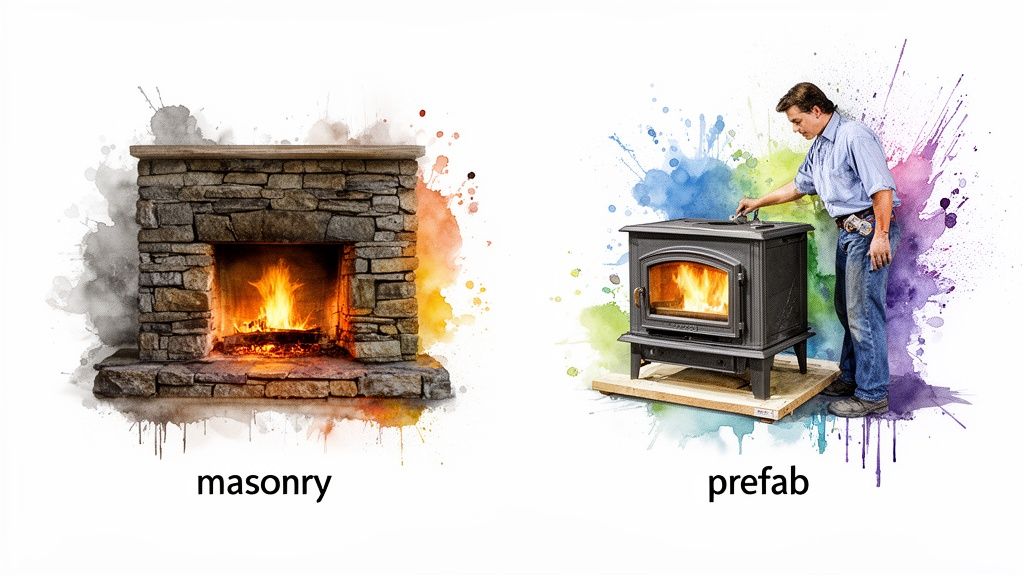
This diagram breaks down the fundamental differences between these two common fireplace types.
A masonry fireplace is an architectural feature, while a prefab unit is an appliance. This distinction is critical for homeowners in Monterey Bay, where durability against coastal weather is a must.
Masonry Fireplace vs. Prefab Unit: A Quick Comparison
| Feature | Traditional Masonry Fireplace | Prefabricated (Zero-Clearance) Unit |
|---|---|---|
| Lifespan | 100+ years; a permanent part of the home's structure. | 15-25 years; an appliance with a limited service life. |
| Material | Built on-site with stone, brick, and mortar for lasting durability. | Factory-made from sheet metal and other lightweight materials. |
| Cost | Higher initial investment due to materials and skilled labor. | Lower upfront cost for the unit and a faster installation. |
| Customization | Nearly limitless design freedom to match any architectural style. | Limited to manufacturer designs, sizes, and finishes. |
The choice depends on your goals. If you need a short-term or budget-only option, a prefab unit may work. For a long-term architectural feature that adds lasting value, masonry is the clear winner.
And fireplaces are not a fading trend. The demand for high-quality fire features is growing, with more than 50% of new single-family homes including at least one (NAHB). You can dig into the latest fireplace and stove market trends with this detailed research.
How Modern Design Embraces Masonry Fireplaces
One of the biggest myths is that masonry fireplaces are old-fashioned. In truth, today’s design trends are moving back toward the authentic texture and permanence that only true masonry offers.
A well-built fireplace acts as a powerful architectural anchor. It gives a room a sense of stability and real craftsmanship that feels both enduring and perfectly current.
From Minimalist to Rustic Modern
Modern design uses texture with intention. Masonry gives designers and homeowners a rich palette to create a stunning focal point that complements any style.
Popular modern approaches include:
- Minimalist Designs: A clean, sculptural look with a smooth, hand-troweled plaster or concrete finish over the masonry structure makes a subtle but impactful statement.
- Natural Stone Centerpieces: A floor-to-ceiling fireplace built from locally sourced stone connects the inside space with the natural beauty of the Monterey Bay landscape.
- Modern Farmhouse: Painted or slurried brick offers a fresh twist on a classic material, creating a cozy feel that bridges traditional and contemporary styles.
This flexibility is why a masonry fireplace never goes out of style. It provides a grounded, authentic aesthetic that fits perfectly with modern, even minimalist, interiors.
Craftsmanship That Defines the Space
The real difference comes down to the human touch. A professional mason doesn't just assemble parts; they build a unique structure designed for your home.
A custom masonry fireplace is more than a heat source; it is a permanent piece of functional art. Its design, texture, and sheer presence can define the character of an entire room, becoming the natural gathering spot for family and friends.
This is why masonry remains the top choice for high-end new builds and renovations. Homeowners recognize that true craftsmanship adds lasting value that a factory-made unit can't replicate. You can learn more about how Stonecap Masonry combines timeless techniques with modern aesthetics in our guide to fireplace trends making Central Coast homes safer and cozier.
Understanding the Structural Difference and Longevity
To understand why a masonry fireplace is a solid long-term investment, you must look deeper than the surface. A prefab unit is an appliance slid into a framed hole, while a true masonry fireplace is built into your home's structure, starting with its own foundation.
This fundamental difference is why hiring a licensed, bonded, and insured contractor is so critical. An expert ensures the immense weight is properly supported, meeting California's strict seismic codes.
The Power of Thermal Mass
A key advantage of stone or brick is its thermal mass. The dense material absorbs heat from the fire and continues to radiate it slowly and gently into the room long after the flames are out.
This radiant heat creates a cozy, consistent comfort that thin metal boxes simply cannot match. It’s what a real masonry hearth is all about.
A Stark Contrast in Lifespan
When debating if a masonry fireplace is outdated, longevity is a huge factor. A well-built masonry structure can last for over 100 years with basic upkeep.
Prefabricated units are appliances with an expiration date, typically needing replacement within 15 to 25 years. That makes masonry a smarter financial move over the long haul, especially here in the Monterey Bay area where structures must withstand coastal air and shifting soils.
A masonry fireplace is not just built in a house; it is built with it. Its foundation, firebox, and chimney become part of the home's essential structure, engineered for safety, stability, and enduring performance.
For a project of this scale, hiring a licensed contractor is non-negotiable. An experienced mason knows how to build the firebox for optimal heat draw and ensure the system works safely for decades. For more, learn why masonry remains the top choice for custom fireplaces.
Meeting Modern Codes for Efficiency and Wildfire Safety
If you live anywhere in California, especially around Monterey Bay, safety is a top concern. Modern masonry fireplaces are engineered to meet strict building codes for emissions and wildfire prevention.
People who think a masonry fireplace is outdated often picture an inefficient, smoky relic. Today’s construction incorporates advanced designs that make them a smart, responsible choice for newer homes.
Key Safety Features in Modern Masonry
A licensed mason ensures every component meets current California codes. This focus on safety transforms a classic fireplace into a modern, reliable feature.
Key safety components include:
- Proper Flue Liners: Clay tile or stainless steel liners are essential for safely venting gases and protecting the masonry from heat and corrosion, preventing fire hazards.
- Spark Arrestors: In wildfire-prone areas like Carmel Valley, a spark arrestor is a critical chimney cap that stops hot embers from escaping and igniting your roof or nearby landscape.
- Correct Clearances: A skilled fireplace builder maintains precise clearances between the fireplace and combustible materials, which is crucial for preventing house fires.
Evolving for Better Efficiency and Less Smoke
The technology behind masonry has made huge leaps. A perfect example is the Rumford fireplace, which uses a tall, shallow firebox with angled sides to reflect more heat into the room and improve the draft, pulling smoke up the chimney more effectively.
This smart design delivers cozy radiant heat with far less smoke, meeting today's standards for air quality. A well-built stone hearth becomes an asset in a fire-resilient home, not a liability. Of course, a great fireplace is just one piece of the puzzle when building an energy-efficient smart home.
The Non-Negotiable Role of a Licensed Contractor
In California, you cannot cut corners on building codes. An unlicensed contractor might create hidden dangers that put your family and property at risk.
Hiring a licensed, bonded, and insured professional like Stonecap Masonry guarantees your fireplace is beautiful, structurally sound, and compliant with all local Monterey County safety regulations.
Why Masonry Is Dominating Outdoor Living Spaces
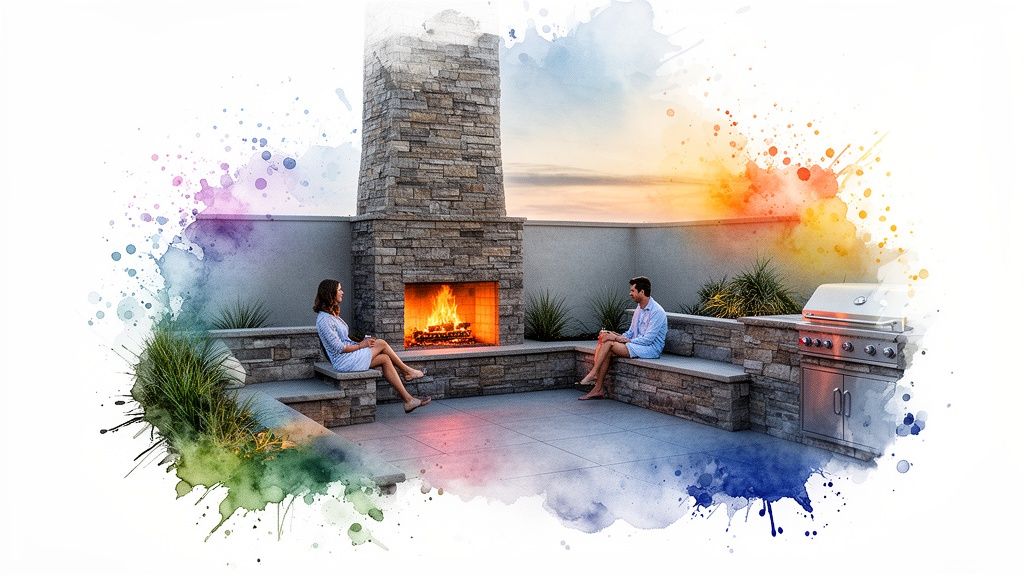
The question of whether a masonry fireplace is outdated completely changes when you step outside. In Salinas and across the Monterey Bay Area, outdoor fireplaces are increasingly popular parts of patios and living spaces.
The boom in outdoor living has given traditional masonry a powerful new stage. Custom-built fireplaces and fire pits have become stunning centerpieces, proving masonry is more in-demand than ever.
Built to Withstand the Coastal Climate
One of masonry's biggest advantages outdoors is its durability. Prefabricated metal fire pits can rust and fall apart in just a few years due to the salty, moist air around Monterey Bay.
A properly built stone or brick fireplace, however, is made to last for decades. It's an investment that stands up to the elements without losing its structural integrity.
The Centerpiece of Modern Outdoor Design
A masonry fire feature is more than a heat source; it's the anchor for your entire outdoor living area. It creates a magnetic spot that draws people together and sets the mood for the space.
An outdoor masonry fireplace isn't just an accessory; it's a permanent architectural feature that defines how you use and feel about your backyard. It turns a simple patio into a true outdoor room, which adds a ton of value to your home and your lifestyle.
This trend is about creating the seamless indoor-outdoor flow that defines the California lifestyle. If you're planning a fire feature, understanding the difference between prefab and masonry helps you invest wisely from the start. For inspiration, check out some well-curated outdoor living space ideas.
Because these are serious structures, working with a licensed mason is essential to ensure a proper foundation and compliance with local fire codes. You can see examples of expertly crafted outdoor living spaces built for our Central Coast climate.
Comparing the Cost as a Long-Term Investment
There’s no getting around it—a custom masonry fireplace is a bigger upfront investment. But it’s crucial to understand you're not just buying a box; you're commissioning a permanent, handcrafted architectural feature.
The cost covers high-grade materials, significant site prep like a dedicated foundation, and the skill of a true artisan. Seeing it as just an "expense" misses the point entirely.
Reframing the Cost as a Return on Investment
A prefab fireplace is an appliance that depreciates over time. A masonry fireplace is a permanent asset that can appreciate with your home, boosting its resale value.
In high-end markets like Carmel and Pebble Beach, a well-built stone fireplace signals quality and permanence that buyers actively seek. The durability also means you avoid the cost of tearing out and replacing a rusted metal box in a couple of decades.
Avoiding Vague Quotes and Hidden Costs
One of the biggest red flags homeowners face is the vague or surprisingly low quote. A rock-bottom price often means a contractor is cutting corners on critical safety components you can't see, like the foundation or flue liner.
A transparent quote is the hallmark of a trustworthy contractor. It should break down the scope of work, material costs, labor, and a realistic timeline so you know exactly what you’re paying for.
This level of detail is your best protection against hidden costs and shoddy work. To better understand professional quotes, read the truth about fireplace quotes and the costs most people don’t see.
Frequently Asked Questions About Masonry Fireplaces
1. Is a masonry fireplace outdated in new home construction?
Not at all. While prefab units are common for budget builds, custom masonry fireplaces remain the standard for high-end homes seeking durability, unique design, and long-term value. They are especially popular in outdoor living spaces.
2. Can I convert an old wood-burning masonry fireplace to gas?
Yes, this is a very common and popular upgrade. A licensed professional can safely install a modern gas insert, giving you the convenience of gas while preserving the beautiful masonry structure.
3. How much maintenance does a masonry fireplace require?
A masonry fireplace requires an annual inspection and cleaning by a certified chimney sweep to remove flammable creosote. The structure itself—the stone or brick—is incredibly durable and requires minimal upkeep.
4. Are modern masonry fireplaces more energy-efficient?
Yes, modern designs are far more efficient than older open hearths. Features like a Rumford firebox or high-quality glass doors significantly increase heat output and reduce smoke, while the thermal mass of the masonry radiates heat for hours.
5. Why does a masonry fireplace cost more than a prefab unit?
A masonry fireplace is a permanent architectural feature built on-site, requiring a dedicated foundation, skilled labor, and high-quality materials. A prefab unit is a factory-made appliance with a limited lifespan, resulting in a lower upfront cost but less long-term value.
Ultimately, deciding whether a masonry fireplace is right for your home depends on your priorities. If you value longevity, custom craftsmanship, and a timeless architectural feature, then a masonry fireplace is not outdated—it's an investment that will serve your home for generations.
Before starting any project, consult with a licensed and insured masonry professional. They can provide guidance tailored to your property, especially considering local factors like Monterey County's coastal climate and building codes.
