You have a few quotes from hardscape contractors, and they’re all over the place. One bid is shockingly low, another seems sky-high, and a third is so vague it barely fills a page. This is a common frustration for homeowners trying to understand how to compare hardscape contractor estimates.
You’re not imagining it. The huge demand for outdoor living spaces has stretched skilled labor thin, leading some contractors to rush quotes. They often leave out the critical details you need to make an informed decision.
Why Vague Hardscape Estimates Are a Red Flag
A low price can be tempting, but it often hides compromises that lead to failure down the road. A vague estimate is a breeding ground for future problems like sinking patios, drainage issues, and cracked retaining walls. The most common misstep is choosing the cheapest quote without understanding the hidden risks.
Common Gaps in Vague Quotes
It’s easy to get lured in by the lowest number, but that's a classic trap. Vague bids get their low price by cutting corners on things that aren't immediately obvious but are vital for durability.
Here’s what they often leave out:
- Inadequate Base Preparation: The estimate might not specify the depth of the compacted base. This is the single most important factor in preventing a sinking patio, especially in the mixed clay and sandy soils of Monterey County.
- Missing Drainage Plans: Proper drainage is non-negotiable in our coastal climate. If a quote doesn’t spell out a clear strategy for handling winter rains, that’s a massive red flag signaling future water damage.
- Undefined Material Quality: You might see a line item for just "pavers" or "flagstone." Without the brand, thickness, or grade specified, a contractor can easily substitute cheaper materials to increase their profit.
A clear, itemized estimate isn't just a piece of paper—it's the first sign you're dealing with a professional, transparent, and trustworthy contractor.
Understanding what goes into a bid is your first step toward making a smart investment. For a professional's perspective on this, see how to estimate construction costs. You can also learn more about the factors influencing professional pricing in our detailed guide: The Truth Behind Hardscape Pricing Homeowners Often Misunderstand.
How to Compare Hardscape Contractor Estimates: The Key Details
Focusing only on the total price at the bottom of an estimate is a mistake. The real story—and the key to a successful project—is in the details. A professional bid breaks down the project into clear components so you know exactly what you're paying for.
A vague quote is a gamble, leaving you exposed to cut corners and surprise costs. To properly compare bids, you must analyze the what are line items and ensure you’re comparing the same scope of work from each contractor.
Site Preparation and Excavation
This is the first place I look to see if a contractor understands our local Monterey Bay soils. The ground can be anything from sandy loam in Pacific Grove to heavy, stubborn clay in Salinas, and a professional's estimate will reflect this.
An expert bid will specify the exact depth of excavation required for a stable foundation on your specific property. It should also outline the plan for demolition, debris hauling, and grading to ensure water slopes away from your home.
The infographic below shows the difference between a confusing, vague quote and a professional, detailed estimate.
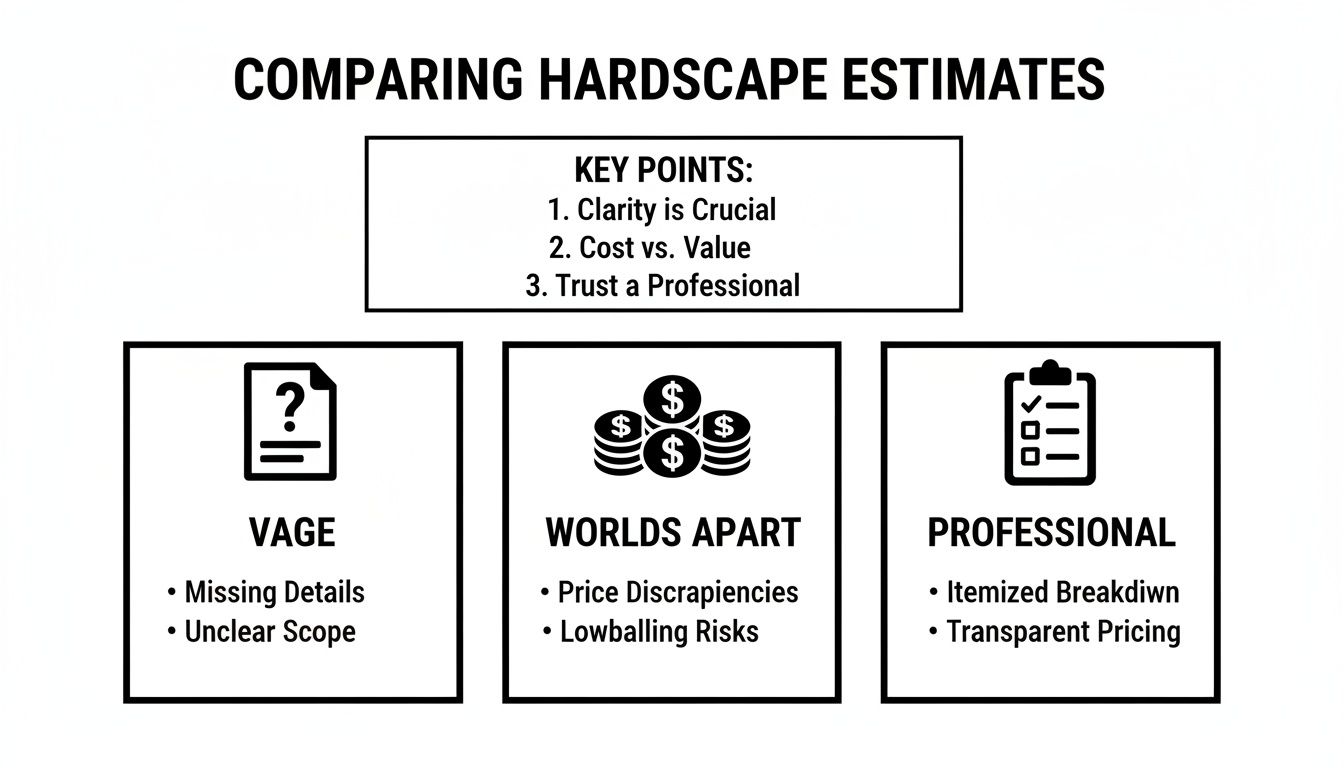
As you can see, a professional estimate serves as a clear project roadmap, while a vague one leads to uncertainty and financial risk.
Base Material and Compaction Depth
This hidden work is where lowball bids often cut corners. The integrity of your patio or walkway depends entirely on the unseen foundation beneath it. A solid, professional estimate will always specify two critical things:
- The Type of Base Material: It shouldn’t just say "gravel." It should name the specific aggregate, like Class II permeable base rock, which is ideal for the drainage needs of our local soils.
- The Compacted Depth: For a paver patio to last in this region, you need a minimum of 6 to 8 inches of compacted base. An estimate that only calls for 4 inches is setting you up for sinking and failure.
A detailed base preparation plan is the single best indicator of a contractor's commitment to building a hardscape that lasts. It’s the difference between a five-year problem and a fifty-year investment.
Material Specifications and Unit Pricing
Finally, a quality estimate will never use vague terms for your materials. Instead of "flagstone," it should specify the type, source, and grade, like "Arizona Buff Flagstone." For pavers, it should list the manufacturer, style, and color.
This level of detail is non-negotiable. It allows you to directly compare material quality and prevents a contractor from swapping in cheaper products to pad their profit margin. The same principles of detailed quoting apply to larger jobs, which you can read about here: why commercial masonry quotes vary so much between contractors.
Unpacking Labor Costs: Skill, Safety, and Stability
When you compare hardscape bids, the labor line item is often the largest and most confusing number. It's tempting to choose the lowest figure, but you’re not just buying hours. You're investing in the skill, safety, and efficiency that will determine your project's longevity.
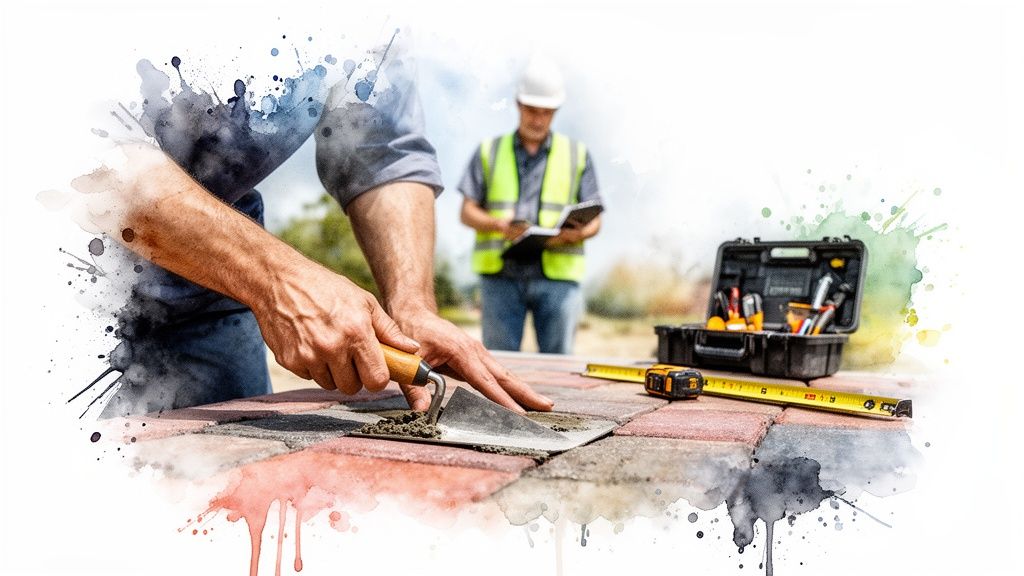
A surprisingly low labor rate is an immediate red flag. It often points to an inexperienced crew, a lack of proper insurance, or a plan to cut corners on critical steps like base compaction. A master craftsman’s expertise commands a higher rate because their work prevents expensive future failures.
The Real Value of Skilled Craftsmanship
Properly setting stone or pavers is a craft honed over thousands of hours. It demands a deep understanding of materials, local soil conditions, and the structural principles that prevent shifting and cracking.
So, what does that higher labor cost actually get you?
- A Project That Lasts: An experienced crew knows how to build a foundation that won’t sink after a few wet California winters.
- Attention to Detail: Professional masons deliver tight joints, perfectly level surfaces, and clean lines that elevate your property.
- Safety and Code Compliance: A licensed and insured team operates safely, protecting your family while adhering to local building codes.
The 2025 Hardscape Industry Report found that skilled labor is a dominant and rising cost for contractors (Stoneworld, 2024). This pressure can lead some firms to underbid jobs, but they often can't retain the talent needed to do the work right. You can read the full research about industry benchmarks and challenges to see just how competitive it is.
A low labor cost often signals a high risk of future repairs. Investing in a skilled, insured, and licensed crew is the best way to protect your long-term investment.
Key Questions to Ask About the Crew
When a contractor presents their estimate, ask who will be on your property. A reputable hardscape contractor will have no problem giving you straight answers.
Here are a few essential questions:
- Who is the on-site project manager?
- What is the average experience level of the crew?
- Are the workers employees or subcontractors?
- Can you confirm all workers are covered by your liability insurance and workers' compensation?
A professional team with deep local experience is your best guarantee that the job will be done right the first time.
Looking Beyond Price: How to Compare Contractor Professionalism
When staring at different hardscape bids, the bottom-line number can be distracting. However, the best value is rarely the lowest price. The real win is finding a professional, reliable partner who will build something beautiful that lasts.
Comparing estimates is less about the final number and more about vetting the company itself. This is the most important step to protect your investment. A bid that seems too good to be true usually means a contractor is cutting corners, putting all the risk on you.
License, Bonding, and Insurance: The Non-Negotiables
A detailed proposal is worthless if the company isn't properly credentialed. For any contractor working on your property in California, these three things are absolutely non-negotiable.
First, you must verify they hold a valid C-29 Masonry license from the California Contractors State License Board (CSLB). This proves they meet the state’s standards for experience and knowledge. Working with an unlicensed contractor is illegal and leaves you with no recourse if the project goes wrong.
Next, confirm they are bonded and carry both general liability and workers' compensation insurance.
- A Contractor's Bond: This protects your money if the contractor fails to finish the job or pay suppliers.
- General Liability Insurance: This covers accidental damage to your property.
- Workers' Compensation: This protects you from being sued if one of their employees gets injured on your property.
A true professional will provide a certificate of insurance upon request. It shows they are serious about protecting their clients.
A contractor who is properly licensed, bonded, and insured isn't an added cost—it’s the fundamental requirement for a safe and legally protected project.
Evaluating Timelines, Warranties, and Payment Terms
Beyond legal paperwork, a professional estimate lays out a realistic project timeline, a clear warranty, and a fair payment schedule. The warranty must be in writing, stating what is covered (materials, labor, or both) and for how long.
Pay close attention to the payment schedule. Be wary of contractors demanding a huge upfront deposit. In California, a licensed contractor cannot legally ask for more than 10% of the total cost or $1,000, whichever is less.
For more tips on finding a quality partner, check out our advanced guide to hardscaping that most homeowners miss.
Why Monterey Bay’s Coastal Conditions Matter
An estimate that could be for a backyard anywhere is a red flag. Here in Monterey County, our unique coastal environment requires specialized solutions. A contractor's plan for handling our local soil and weather separates the true local experts from the rest.
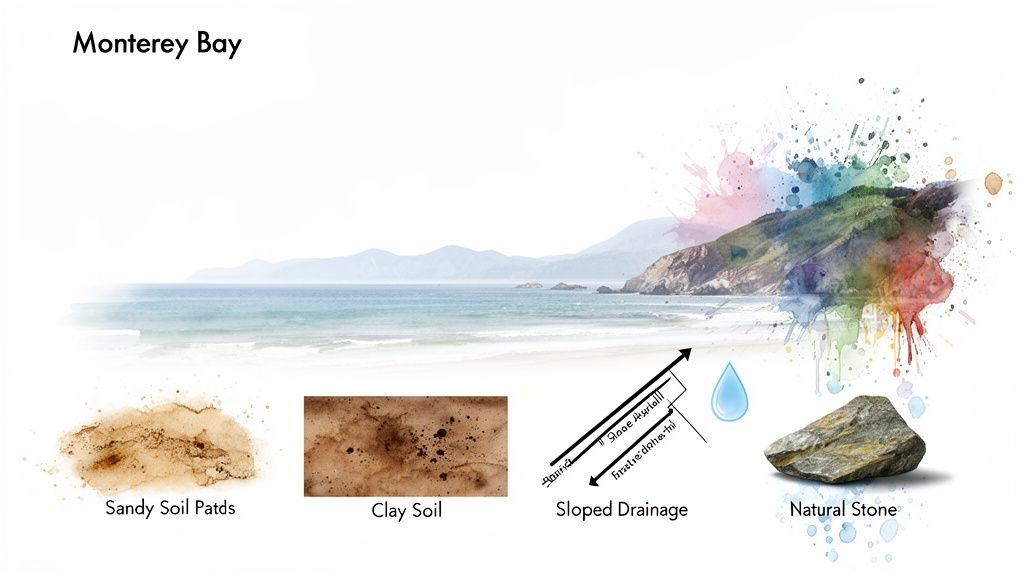
Our ground changes dramatically from the sandy soils of Pacific Grove to the heavy clay around Salinas. A professional bid will show a clear strategy for building a stable base on your specific property. If a contractor glosses over this, they are not building a project designed to last.
Tackling Local Challenges: Drainage and Fire Safety
In our region, proper drainage is an absolute must. Winter storms can demolish a poorly planned patio, causing erosion and foundation issues, especially on sloped lots in Carmel and Carmel Valley.
An experienced contractor will detail their drainage plan in the estimate. Look for specifics like:
- Permeable Base Materials: Details on the type of rock used to let water filter through naturally.
- Expert Grading: A clear plan to slope every surface to direct water safely away from your home.
- Integrated Drains: The strategic placement of French drains or channel drains to handle heavy runoff.
When an estimate details solutions for Monterey Bay’s specific soil, drainage, and wildfire risks, you know you're talking to a true local expert.
With fire safety on everyone's mind, a forward-thinking contractor will also recommend non-combustible materials like natural stone or concrete pavers to create defensible space. You can read more about how fire zones are changing stone patio design to understand its importance. An estimate that addresses these local issues proves you're dealing with someone who builds for our unique environment.
Frequently Asked Questions About Comparing Hardscape Estimates
1. Is the lowest bid for a paver patio always a bad choice?
Not automatically, but a price that’s dramatically lower is often a warning sign. It could mean they’re using second-rate materials, skimping on the base foundation, or are not properly insured. Compare the low bid line-by-line with others to see what’s missing before making a decision.
2. How much should I pay as a deposit for my hardscape project?
In California, a licensed contractor cannot legally ask for a deposit that is more than 10% of the total project cost or $1,000, whichever is less. Any request for a larger down payment is a major red flag and is against the law.
3. Why does one estimate for natural stone cost so much more?
The price of natural stone varies widely based on its type, origin, thickness, and grade. A professional’s estimate will specify the exact stone, like “Arizona Buff” or “Connecticut Bluestone,” so you can compare materials accurately and ensure you are paying for a durable, high-quality product.
4. Do I really need a permit for a new patio in Monterey County?
It depends on the scope of your project and your specific location. Retaining walls over a certain height almost always require permits and engineering, and projects in coastal zones or on hillsides may have additional requirements. A knowledgeable local contractor will clarify permit needs in their estimate.
5. What is the most common mistake when comparing hardscape quotes?
The biggest mistake is fixating on the final price while ignoring the details. A cheap estimate that cuts corners on the foundation, drainage, or materials will end up costing a fortune in repairs. Real value is in the expert prep work and quality components you can't always see.
A clear, detailed estimate from a knowledgeable, licensed contractor is your best defense against a bad outcome. Taking the time to compare the details ensures your investment is built to last in our Monterey County climate. For a professional consultation, it's always best to contact a licensed masonry specialist.
