That iconic fog rolling in over Carmel and the Monterey Peninsula does more than just paint a beautiful coastal scene—it actively wages war on outdoor fireplaces. If you're wondering how Carmel’s fog impacts outdoor fireplace design and materials, the answer is it forces a completely different approach. We must use dense, moisture-resistant stone and specialized construction techniques.
Without them, the persistent dampness and salty air lead to rapid decay, poor performance, and even become a safety issue.
Why Carmel Fog Changes Everything for Outdoor Fireplaces
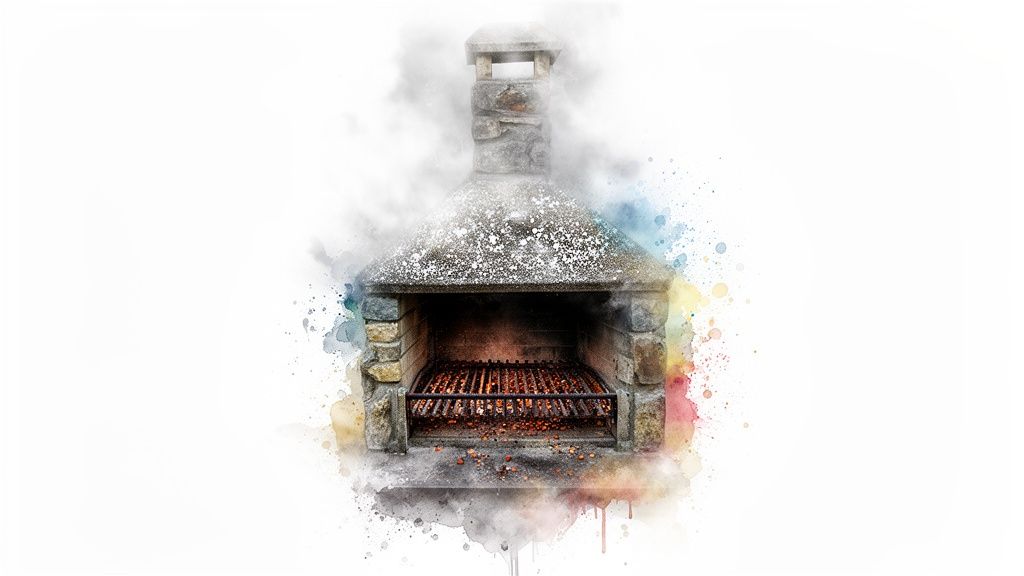
Residents of Monterey Bay know that cool evenings and frequent fog shape how outdoor spaces are used. This makes a crackling fire inviting, and it's no surprise that outdoor fire features have surged 50% in demand since 2020. But the very coastal air that makes you want a warm fire is also incredibly destructive to masonry.
Most fireplace guides are written for dry, inland climates. In areas like Carmel and Pacific Grove, moisture and salt air accelerate wear on metal components and porous stone. That generic advice isn't just unhelpful; it's dangerously misleading for a coastal homeowner.
The Hidden Risk in Our Coastal Air
A fireplace built without accounting for these hyper-local conditions is on a fast track to failure. The persistent dampness from our marine layer can cause poor draft performance, water intrusion, soot buildup, or cracking in fireplaces built with the wrong materials. These issues often catch homeowners by surprise.
A fireplace that would stand for decades in Salinas or Carmel Valley can show serious signs of failure within just a few years on the coast. These are crucial things to think about when planning your custom outdoor living spaces.
The table below breaks down exactly how our coastal fog affects key fireplace components compared to a typical inland build.
How Coastal Fog Affects Your Outdoor Fireplace
| Fireplace Component | Typical Inland Material | Impact of Carmel Fog | Recommended Coastal Material |
|---|---|---|---|
| Stone Veneer | Porous limestone, sandstone | Absorbs moisture, leading to spalling and crumbling. | Dense granite, quartzite, basalt |
| Mortar | Standard Type N or S mortar | Becomes saturated, weakens, and allows salt intrusion. | Polymer-modified or epoxy mortar |
| Firebox | Standard firebrick | Collects soot, poor heat reflection in damp conditions. | High-density firebrick, refractory panels |
| Metal Components | Carbon steel | Rusts and seizes quickly due to salt and humidity. | Stainless steel (304 or 316 grade) |
| Chimney Cap | Galvanized steel | Corrodes within years, leading to leaks. | Stainless steel, copper, or stone |
As you can see, what works just a few miles inland is often the worst possible choice for a home near the ocean.
Why Standard Designs Fail Here
The root of the problem is moisture penetration. Porous stones and standard mortar act like sponges, soaking up damp, salty air. This kicks off a chain reaction of problems that are both ugly and structurally dangerous.
- Crumbling Stone: When trapped moisture freezes and expands or causes minerals to leach out, the stone starts to flake and fall apart—a process called spalling.
- Rusted Components: Metal parts you rely on, like dampers and grates, will rust and seize up years before they should.
- Smoke and Draft Issues: The heavy, moist air can weigh down smoke, pushing it back down the chimney and into your seating area.
A fireplace needing constant repairs is a waste of a good investment. The rest of this guide shows you how to build an outdoor fireplace that thrives in our beautiful coastal climate.
How Constant Moisture Destroys the Wrong Materials
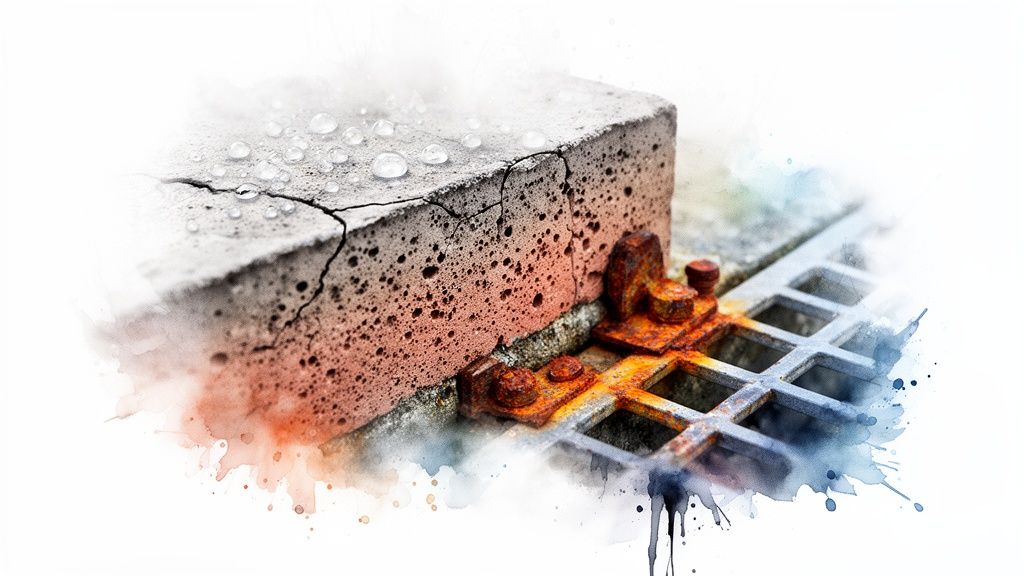
Picture a standard brick or a piece of porous natural stone as a very dense sponge. In a dry climate like Salinas, that quality rarely matters. But here on the coast, that "sponge" constantly soaks up the damp, salty air from the marine layer, starting a slow, destructive process from the inside out.
This constant saturation is why it's so critical for local homeowners to understand how Carmel’s fog impacts outdoor fireplace design and materials. The moisture that works its way deep into the masonry is the root cause of almost every failure we see in coastal fireplaces.
The Science of Spalling and Efflorescence
When water seeps into porous stone and mortar, it brings dissolved salts along for the ride. As the surface warms, this trapped moisture evaporates but leaves salt crystals behind. This leads to two major headaches for your outdoor fireplace.
- Efflorescence: This is the most obvious sign of a moisture problem. It shows up as ugly, chalky white stains across the stone and mortar joints.
- Spalling: This is far more damaging. As salt crystals build up inside the stone's pores, they expand and exert incredible pressure, forcing the face of the stone to flake, chip, and crumble away.
This internal damage is irreversible. Once spalling starts, the masonry's structural integrity is compromised, leading to expensive repairs or a complete rebuild.
Aggressive Corrosion of Metal Components
The damage doesn't stop with the stonework. The salt-packed air along the Monterey Peninsula is brutally corrosive to metal. We see this constantly in areas like Carmel and Pacific Grove, where persistent moisture accelerates wear and tear on crucial fireplace parts—a trend that also affects larger commercial masonry projects.
Metal components that might last a decade in a kinder environment can fail in just a few years here. It's a problem homeowners often discover only after it's too late.
Here are the key metal parts at risk:
- Dampers: A rusted-out damper can seize up, making it impossible to control airflow and rendering the fireplace unsafe.
- Grates: The grate holding the firewood can become brittle from corrosion and eventually collapse.
- Lintels: This hidden steel beam supports the masonry above the firebox opening. If it corrodes, the entire structure is weakened from the inside.
- Chimney Caps: When a chimney cap rusts through, it allows rain and fog to pour directly down the flue, saturating the firebox.
Getting a handle on how this coastal moisture attacks both stone and steel is the first step toward building an outdoor fireplace designed to last on our unique coastline.
Choosing Stone and Mortar That Resists Coastal Wear
Now that we’ve seen how moisture and salt air can dismantle masonry, the solution becomes clear. Building an outdoor fireplace in Carmel or Pebble Beach isn’t about picking the prettiest stone; it’s about choosing materials for their ability to shrug off water and salt. This is the core of understanding how Carmel’s fog impacts outdoor fireplace design and materials—it shifts the conversation from generic style to smart, durable construction.
Your first line of defense is picking the right kind of stone. A good mason will steer you toward dense, non-porous stones with a very low water absorption rate.
Selecting Dense, Moisture-Resistant Stone
These stones have a natural raincoat. Their mineral structures are so tightly packed that there’s almost no room for water to sneak in. This stops the destructive cycle of water absorption and spalling.
For the Monterey Peninsula, a few options stand out:
- Granite: It’s incredibly hard and dense, making it a top-tier choice for coastal builds that laughs at moisture and salt.
- Basalt: This dark volcanic rock is as tough as it looks, making it a fantastic and visually striking choice for a modern coastal fireplace.
- High-Grade Slate: High-quality slate offers a sleek, layered look with excellent water resistance that works perfectly for contemporary designs.
Choosing one of these isn't just a design decision; it's a long-term investment in a structure that will actually last. For a broader look at materials that stand up to our unique climate, check out our guide on hardscape choices for fire season.
Why the Right Mortar Is Non-Negotiable
A fireplace is only as strong as the glue holding it together. Using a standard, off-the-shelf mortar mix on the coast is like building a waterproof boat with leaky seams. Moisture will find those weak points and rot the structure from the inside out.
For any project near the ocean, specialized Type S mortar is the professional standard. It has a much higher compressive strength and a superior bond, creating a real barrier against water. For some jobs, we even use polymer-modified mortars for an extra layer of moisture resistance.
Advanced options like charred Accoya cladding are also making waves for their incredible resistance to moisture and decay. This careful material selection is what separates a fireplace that thrives on the coast from one that crumbles. At Stonecap Masonry, we select dense, moisture-resistant stone and firebrick that withstand fog and salt exposure, ensuring your fireplace becomes a beautiful centerpiece, not a maintenance nightmare.
Smart Fireplace Engineering For Foggy Nights
Have you ever noticed how smoke seems to hang heavy in the air on a foggy Carmel night? That’s not your imagination. The dense, moist marine layer literally pushes down on the smoke, acting like a lid and preventing it from drafting properly.
This is exactly where understanding how Carmel’s fog impacts outdoor fireplace design and materials becomes critical. A generic fireplace design will choke in these conditions, billowing smoke back into your seating area. The solution is to engineer a fireplace that actively fights back against that heavy air.
Designing For A Better Draft
To overcome the weight of the marine layer, you need a solid grasp of airflow physics. An experienced local mason applies this knowledge through specific design choices that are non-negotiable for a fireplace on the coast.
- Calculated Chimney Height: The chimney must be tall enough to punch through the densest part of the fog layer, creating the natural pull—or "draft"—it needs.
- Proper Flue Sizing: A wider flue can help improve the upward flow of smoke, giving it more volume to push against the heavy, damp air.
- Protective Hoods and Caps: A well-designed stone hood or a proper stainless steel chimney cap shields the firebox opening from mist and drizzle, keeping the fire burning hotter and cleaner.
This concept map shows how the right materials and smart engineering choices come together to create a fireplace that actually performs on the coast.
The takeaway here is simple: you can't separate materials from engineering. For a successful coastal build, they must be considered together from the very beginning.
This table highlights the key differences between a standard fireplace and one truly built for the challenges of our foggy coastline.
Coastal Fireplace Design vs Standard Design
| Design Feature | Standard Inland Approach | Smart Coastal Approach | Why It Matters on the Coast |
|---|---|---|---|
| Chimney Height | Standard height, often based on aesthetics alone. | Calculated height to penetrate the marine fog layer. | Prevents smoke from being pushed back down by heavy, moist air, ensuring a proper draft. |
| Flue Sizing | Generic size based on firebox opening. | Oversized and precisely calculated ratio for better airflow. | Provides more volume and upward force for smoke to escape the heavy coastal air. |
| Material Porosity | May use more porous stones like sandstone. | Prefers dense, low-porosity stones like granite or quartzite. | Resists moisture absorption, preventing spalling, cracking, and premature deterioration from salt. |
| Mortar Type | Standard Type N or O mortar is common. | High-strength Type S mortar is the standard. | Offers superior bond strength and water resistance to fight constant humidity and salt. |
| Firebox Protection | Often left open or with a minimal cap. | Includes a deep stone hood or a rust-proof cap. | Shields the fire from mist and drizzle, keeping it burning hot and preventing smoke issues. |
Ultimately, these coastal-specific adjustments are what separate a fireplace that you love to use from one that constantly frustrates you.
The Value Of Local Expertise
These engineering details are precisely where local, hands-on experience becomes essential. A craftsman who has spent years building in Pacific Grove, Monterey, and Carmel knows instinctively how to balance these elements for optimal performance. This is a blend of science and hard-won skill that protects your investment.
At Stonecap Masonry, we engineer proper chimney height and airflow to maintain clean burns even in heavy marine air. This proactive approach prevents the frustrating smoke issues that plague poorly designed coastal fireplaces. You can learn more about how custom touches are becoming standard in our area by reading about the latest fireplace trends making central coast homes safer.
Taking Care of Your Coastal Fireplace
A well-built fireplace is tough, but not set-it-and-forget-it, especially here in Carmel. Even with the best materials, proactive care is the secret to making it last. A few simple routines ensure your fireplace stays safe, beautiful, and ready for those classic foggy evenings for decades.
The logic here applies to almost any outdoor structure. Just think about how climate and maintenance shape lifespan for things like gutters or decks; it’s the same principle. A little attention now prevents big headaches later.
Annual Check-Ups and Cleaning
Once a year, give your fireplace a good once-over, preferably after the rainy season ends. Look closely for any small cracks in the mortar or any flaking on the stone itself. Catching these tiny issues early stops moisture from working its way deep into the structure where it can cause real damage.
You’ll also notice that our damp coastal air leads to a heavier, stickier soot buildup. This isn't just an eyesore; it's a potential fire hazard. A good stiff-bristled brush is all you need to scrub it away for a cleaner burn and a better draft.
Local homeowners in Carmel, Marina, and Monterey often research outdoor heating in late summer and early fall when fog peaks. Keeping your fireplace in top shape means it's always ready to go when that chill hits the air.
Sealing Stone and Protecting the Chimney
To keep moisture and salt at bay, reapply a high-quality, breathable stone sealant every few years. This is incredibly important. It creates an invisible shield that stops water from soaking into the stone and mortar, preventing the slow decay that plagues so many unprotected coastal structures.
Finally, check your chimney cap. Is it secure and free of rust? That simple cap is your fireplace’s first and most important line of defense against the elements. A rust-proof, well-fitted cap is absolutely non-negotiable around here.
Why Local Expertise Is Non-Negotiable on the Coast
Building an outdoor fireplace in Carmel isn't your average construction job. It's a battle against a demanding coastal climate. This is why bringing in a contractor who doesn't have deep roots on the Monterey Peninsula is such a gamble.
The knowledge of how Carmel’s fog impacts outdoor fireplace design and materials isn't learned from a textbook. It’s earned through years of hands-on work in this unique environment, seeing what works and what fails. A true local expert sees problems before they start, knowing which materials won’t crumble from the salt air blowing in off Pacific Grove.
The Value of a Licensed Local Mason
When you partner with a licensed, bonded, and insured C-29 masonry professional, you're buying competence. A local craftsman gets the nuances here. They know how to engineer a chimney that will draw properly in our heavy marine layer and how to navigate building codes in Monterey County.
Choosing an experienced local mason is the single best way to avoid common homeowner frustrations like poor workmanship or projects that fail prematurely. It is an investment in structural integrity and long-term performance. An experienced pro can walk you through the whole process, which you can explore by learning more about working with a professional fireplace builder.
Frequently Asked Questions
What is the best stone for an outdoor fireplace in Carmel?
Dense, non-porous stones like granite, basalt, or high-grade slate are your best choices. These materials resist moisture absorption from fog and salt air. This prevents the cracking and crumbling, known as spalling, that damages less suitable stone.
Why does my fireplace smoke so much on foggy nights?
This is a common coastal problem caused by heavy, damp marine air pushing smoke down. A proper coastal design overcomes this with a taller chimney and a correctly sized flue. These features are engineered to create a strong draft even in foggy conditions.
Can I just use a metal fire pit in Pacific Grove?
You can, but standard steel will rust almost immediately in our salt air. You must choose a marine-grade material like 316L stainless steel or Corten steel. These are engineered to withstand a corrosive coastal environment.
How often should I seal my stone fireplace on the coast?
You should inspect the sealant annually and plan to reapply a quality, breathable sealant every 3-5 years. This is essential maintenance in Pebble Beach and Carmel. It creates a protective barrier against relentless moisture and salt.
Do I need a permit for an outdoor fireplace in Monterey County?
Yes, a permanent outdoor fireplace is considered a structure and requires a building permit. This process ensures your fireplace is built to code, located safely, and won't pose a fire risk. A licensed, bonded, and insured mason will handle all permitting for you.
Building an outdoor fireplace on the Monterey Peninsula requires a deep understanding of our local climate. For homeowners across Salinas, Pacific Grove, Pebble Beach, Monterey, and Carmel, consulting a licensed masonry professional ensures your investment is not only beautiful but also built to stand up to our fog for decades. Local expertise matters more here than almost anywhere else in California.
Explore our custom masonry services or contact Stonecap Masonry Inc. to discuss your project.
