Standing water in your yard isn't just an inconvenience; it's a direct threat to your home's foundation, your expensive hardscapes, and your peace of mind. Here in the Monterey Bay area, our unique combination of clay-rich soils and intense seasonal downpours makes effective water management a necessity. For homeowners in communities from Salinas to Carmel, finding the right backyard drainage ideas is the first step toward protecting your investment.
Poor drainage can lead to soil erosion, compromise the structural integrity of retaining walls, and create unsafe, slippery patios. These issues are particularly acute for properties in fire-prone zones where managing water runoff is key to maintaining defensible space. These challenges often lead to homeowners feeling frustrated by poor workmanship from unlicensed contractors, a common pain point in the industry (Stonecap Masonry, Strategic Report).
This guide moves beyond the basics to explore nine proven solutions tailored to our local conditions. We detail how each one works, its suitability for Monterey Bay properties, and why proper installation by a licensed professional is critical for long-term success.
1. French Drain Systems
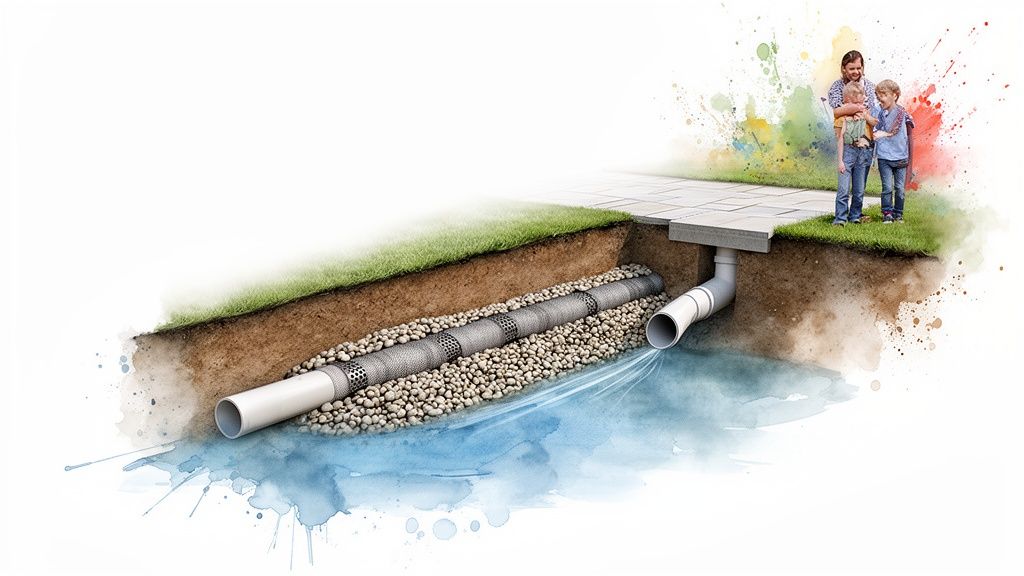
A French drain is one of the most effective and widely used backyard drainage ideas for managing excess subsurface water. It consists of a perforated pipe encased in gravel and wrapped in landscape fabric, all situated in a sloped trench. This system intercepts and redirects groundwater away from your home’s foundation, retaining walls, and low-lying landscape areas.
Water seeps into the gravel-filled trench, enters the perforated pipe, and gravity carries it to a safe discharge point. This method is particularly effective in Monterey Bay, where clay-rich soils in areas like Salinas often prevent proper water absorption during heavy winter rains.
Best Applications for a French Drain
This solution is ideal for preventing water from pooling against foundations, a common issue in hillside communities like Carmel Valley. It's also essential for protecting the structural integrity of retaining walls and preventing soggy lawns in coastal areas like Pebble Beach. For fire-prone regions, a French drain ensures that the defensible space around your home remains dry and stable.
Installation and Maintenance Tips
Proper installation is critical for a French drain’s long-term success. The trench must have a consistent slope, typically a minimum of 1% (a one-foot drop per 100 feet), to ensure adequate flow.
- Protect the Pipe: Wrap the gravel and perforated pipe in a high-quality, non-woven geotextile fabric to prevent silt from clogging the system.
- Use Clean Gravel: Surround the pipe with 4-6 inches of clean, washed gravel for optimal water filtration and flow.
- Hire a Professional: A licensed, bonded, and insured contractor familiar with Monterey Bay’s geology can determine the correct depth, slope, and materials for a lasting, code-compliant solution.
2. Rain Gardens & Bioswales
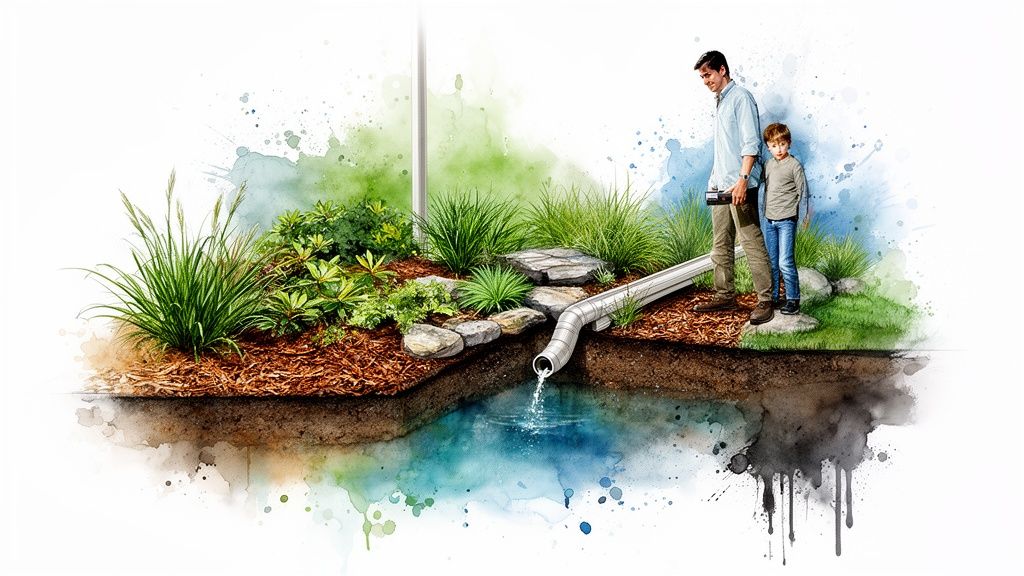
Rain gardens and bioswales are beautiful, eco-friendly backyard drainage ideas that manage stormwater runoff by mimicking natural processes. A rain garden is a shallow, planted depression designed to capture and filter rainwater. Bioswales are similar but function as gently sloped, vegetated channels that slow and cleanse water.
These sustainable systems are excellent for Monterey Bay, turning potential drainage problems into functional, habitat-friendly landscape features. This approach is increasingly encouraged by California water boards and aligns with building resilient landscapes in fire-prone areas like Carmel Valley.
Best Applications for a Rain Garden or Bioswale
This solution is perfect for coastal properties in Carmel or Pacific Grove looking to capture roof runoff and mitigate drought impacts. Bioswales are highly effective along patio edges or driveways, where they can intercept and filter runoff from hard surfaces. They are also a key component of creating defensible space, integrating both water management and fire-resilient landscaping.
Installation and Maintenance Tips
Proper design is essential for ensuring a rain garden or bioswale functions correctly. The size and location must be planned carefully to handle the expected volume of runoff.
- Strategic Location: Place the feature at least 10 feet away from masonry foundations to prevent water intrusion.
- Use Native Plants: Select California native plants like coyote brush or California buckwheat, which are adapted to our wet winters and dry summers.
- Hire a Professional: Designing and installing a functional bioswale that integrates with your hardscaping requires expertise. A licensed contractor can ensure it enhances your outdoor living spaces while providing effective, code-compliant drainage.
3. Permeable Paving & Hardscapes
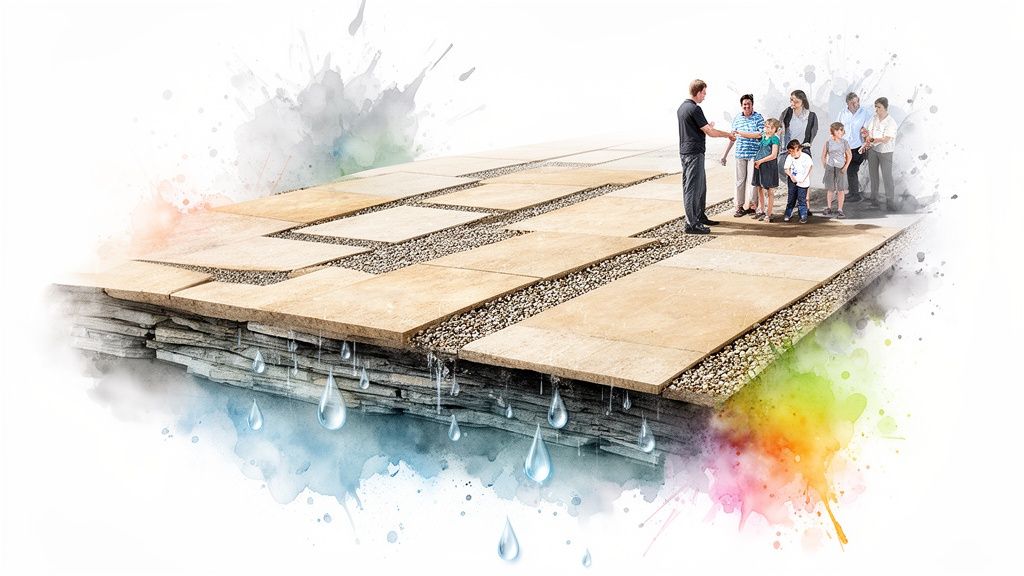
Permeable paving is an innovative backyard drainage idea that replaces traditional surfaces like concrete with materials that allow stormwater to pass through. This system includes permeable pavers, porous concrete, or gravel-filled grids placed over a specialized base of clean aggregate. The water drains through the surface and slowly percolates into the subsoil.
This approach effectively manages runoff at the source, reducing strain on storm drains and preventing erosion. It is an excellent choice for Monterey Bay homeowners, aligning with California's increasingly strict stormwater regulations.
Best Applications for Permeable Paving
This solution is perfect for creating functional yet eco-friendly outdoor living spaces, such as patios in Pebble Beach or driveways in Pacific Grove. For fire-conscious residents in Carmel Valley, using permeable pavers helps establish defensible space. This approach reduces flammable vegetation while still handling rainwater effectively.
Installation and Maintenance Tips
The success of a permeable hardscape depends entirely on proper installation, from the base preparation to the surface material. A well-designed system can last for decades with minimal upkeep.
- Hire a Masonry Expert: Work with a licensed masonry contractor who understands permeable base design and local soil conditions. To learn more, check out our advanced guide to hardscaping.
- Ensure Proper Grading: These systems perform best on gentle slopes between 2% and 10% to facilitate drainage without causing erosion.
- Prevent Clogging: Use a high-quality, non-woven geotextile fabric between the subsoil and the aggregate base to prevent sediment from clogging the system.
4. Catch Basins and Proper Surface Grading
Catch basins and drainage inlets are essential backyard drainage ideas for capturing and managing surface water runoff. These collection points are strategically placed in hardscapes like patios and driveways to intercept water. When combined with proper surface grading, this system effectively channels water into a controlled drainage network.
This integrated approach is a cornerstone of professional hardscape design, protecting masonry from hydrostatic pressure and water damage. Inlets collect water, which then flows through a solid pipe to a safe discharge point. This method is vital in coastal areas like Pacific Grove, where managing heavy winter runoff is critical.
Best Applications for Catch Basins
This solution is ideal for any property with significant hardscape surfaces. It is essential for preventing water from accumulating at the base of retaining walls, which can compromise their structural integrity. For homes in Salinas with large patios, installing catch basins ensures that stormwater is managed efficiently.
Installation and Maintenance Tips
Proper planning and installation are key to creating an effective surface drainage system. Integrating drainage during the initial design phase is a critical step that affects long-term performance.
- Establish the Right Slope: All hardscapes should be sloped at a minimum 1-2% grade away from any structure. This translates to roughly a one-inch drop for every four to six feet.
- Strategic Placement: Locate catch basins at natural low points where water is most likely to collect.
- Regular Cleaning: Clean out leaves, sediment, and debris from the basin at least annually to ensure unobstructed water flow.
- Hire a Professional: A licensed masonry contractor understands how to integrate proper grading and drainage into a hardscape project from the start, ensuring compliance with local Monterey County building codes.
5. Retaining Wall Drainage
A retaining wall must do more than hold back soil; it must also manage the immense hydrostatic pressure that builds up behind it. Proper retaining wall drainage is a critical backyard drainage idea that prevents structural failure. This system uses permeable backfill, weep holes, and an underdrain pipe to safely channel water away.
When water accumulates behind a wall, it exerts tremendous force that can cause bowing, cracking, or complete collapse. This is especially important for hillside properties in communities like Carmel Valley, where seasonal groundwater can saturate clay-rich soil.
Best Applications for Retaining Wall Drainage
This drainage method is essential for any retaining wall, but particularly for those on sloped properties. It is a non-negotiable component for tall stone walls on coastal properties in Pebble Beach that manage significant runoff. For homeowners creating defensible space, well-drained retaining walls prevent erosion that could compromise fire-safe zones.
Installation and Maintenance Tips
Correct installation is the key to a long-lasting, safe retaining wall. The system must be planned from the very beginning of the construction process. You can explore more about the professional construction of retaining and garden walls to understand the complexities involved.
- Use Permeable Backfill: Never backfill a retaining wall with native clay or fine soil. Always use clean, permeable gravel to create a zone where water can drain freely.
- Install Weep Holes: Place weep holes—small openings at the base of the wall—no more than six feet apart to allow trapped water to exit.
- Consult a Professional: Building a structurally sound retaining wall with integrated drainage is a complex job. A licensed and insured masonry contractor can ensure the design is safe, code-compliant, and built to withstand the unique soil and water conditions of Monterey County.
6. Swales & Vegetated Channels
A swale is a shallow, vegetated channel engineered to slow and direct stormwater runoff while allowing for gradual infiltration. Unlike a hard-piped storm drain, a swale uses plants and soil to filter pollutants and reduce water velocity. This nature-based solution is an excellent way to manage water from roofs, driveways, and patios.
This approach is one of the most eco-friendly backyard drainage ideas, turning a potential water problem into a landscape asset. For fire-prone regions like Carmel Valley, vegetated swales built with fire-wise native plants can manage drainage while contributing to defensible space.
Best Applications for Swales
Swales are ideal for gently sloped properties in Salinas and Pebble Beach where runoff needs to be managed without extensive excavation. They effectively capture and treat runoff from hardscapes like patios and walkways, preventing erosion. In fire-resilient landscapes, a swale planted with native grasses creates a functional and beautiful feature.
Installation and Maintenance Tips
Proper grading and plant selection are the keys to a successful swale. The design must balance water conveyance with infiltration to prevent erosion or stagnation.
- Mind the Slope: Design the swale with a gentle grade between 2% and 6%. A steeper slope can cause erosion, while a flatter one may lead to standing water.
- Choose Native Plants: Use California native grasses, sedges, and shrubs that are adapted to both wet and dry conditions.
- Hire a Professional: A licensed contractor can design a low-maintenance swale tailored to your property’s specific drainage needs and soil type.
7. Dry Wells & Underground Cisterns
A dry well is an underground chamber that collects and slowly disperses excess runoff, making it a discrete but powerful backyard drainage idea. Similarly, a cistern captures and stores rainwater for later use. Both solutions work by intercepting water before it can pool on the surface.
Dry wells are effective in constrained spaces, such as beneath patios in Pebble Beach, while cisterns support California’s water conservation goals. Coastal Carmel homes often use cisterns to capture winter rainfall for summer irrigation.
Best Applications for Dry Wells & Cisterns
This dual solution is perfect for homeowners looking to resolve drainage issues while conserving water. A dry well is ideal for collecting runoff from downspouts or hardscapes, preventing erosion. Cisterns are invaluable in water-restricted communities, aligning with Monterey Bay's conservation ethos.
Installation and Maintenance Tips
Proper sizing and placement are essential for both dry wells and cisterns to function correctly. An undersized system can be quickly overwhelmed during a significant Monterey County storm.
- Size it Right: A dry well’s capacity should be calculated based on the drainage area, local rainfall intensity, and soil percolation rate.
- Prevent Clogging: Wrap the dry well chamber in filter fabric and surround it with clean gravel to prevent silt from compromising its capability.
- Hire a Professional: Installing these systems requires excavation and knowledge of soil types. A licensed contractor can ensure your dry well or cistern is properly sized, located, and installed to comply with local codes.
8. Terracing & Stepped Hardscape Design
Terracing is a classic and highly effective backyard drainage idea for managing sloped terrain. This method involves creating a series of level platforms or steps, each engineered to slow down water runoff and prevent soil erosion. This transforms a difficult hillside into a functional and beautiful outdoor space.
This approach breaks a long, steep slope into shorter, more manageable sections. As water flows downhill, each terrace intercepts it, reducing its velocity and giving it time to soak into the soil. This is particularly vital on hillside properties in areas like Carmel and Pebble Beach.
Best Applications for Terracing
Terracing is the premier solution for properties with significant elevation changes, such as those found throughout Carmel Valley. It not only solves complex drainage challenges but also creates usable areas for patios, gardens, and seating. In high-risk fire zones, stepped hardscapes can establish critical defensible space on slopes.
Installation and Maintenance Tips
Designing and building terraces is a complex task that requires expertise in structural engineering and masonry to ensure long-term stability.
- Professional Design: Always work with a landscape architect or an experienced, licensed masonry contractor. They can assess the slope, soil stability, and water flow to design a safe system.
- Integrate Drainage: Each terrace level must have its own drainage management, such as a French drain at the base of each retaining wall.
- Use Vegetation: Planting native, deep-rooted plants on terrace faces helps stabilize the soil and further slows water runoff.
- Structural Reinforcement: For steeper slopes or less stable soils, retaining walls may require geogrid reinforcement to prevent failure. Learn more about how these hardscape choices are vital for fire season safety and slope management.
9. Sump Pumps & Mechanical Dewatering Systems
A sump pump is an active, mechanical drainage solution used when passive, gravity-fed systems are insufficient. These electric pumps are installed in a basin located at the lowest point of a backyard. When water fills the basin, a float switch activates the pump, which expels the water through a discharge pipe.
This system is a powerful tool for managing high water tables or intense rainfall where the landscape cannot be graded for natural drainage. For instance, properties in low-lying parts of Salinas often require a mechanical system to prevent structural water damage.
Best Applications for a Sump Pump
This is one of the most critical backyard drainage ideas for below-grade areas, such as sunken patios or landscape features built into a hillside. It is the definitive solution for any situation where water collects in a low spot with no possibility of a gravity-powered outlet. It serves as an indispensable backup during the Monterey Bay region's most severe winter storms.
Installation and Maintenance Tips
A sump pump is only as reliable as its installation and power source. Proper setup and regular maintenance are non-negotiable to prevent system failure.
- Install a Check Valve: A check valve on the discharge line is mandatory to prevent water from flowing back into the sump pit after the pump turns off.
- Plan for Power Outages: Storms that cause flooding often cause power outages. Install a battery-powered backup pump or have a generator ready.
- Test and Clean Regularly: Test the pump monthly by pouring a bucket of water into the pit to confirm the float switch activates correctly. A licensed contractor can perform a pre-season inspection to ensure everything is ready for winter rains.
Choosing the Right Backyard Drainage Ideas
Effective water management is rarely about a single solution. It’s about creating an integrated system tailored to your specific landscape, soil type, and climate challenges here in Monterey County. A comprehensive strategy often involves layering these ideas to work in harmony.
Why Professional Expertise is Non-Negotiable
While some smaller elements might seem like DIY projects, the physics of water flow and soil mechanics are incredibly complex. A poorly installed French drain can clog, and an improperly graded yard can direct water toward your home's foundation. This is particularly true in areas with challenging soils, like the heavy clay common around Salinas or the sandy soils along the coast in Carmel.
Hiring a professional is an investment in certainty. It ensures your project adheres to California building codes, is built to withstand local environmental pressures, and ultimately saves you from costly repairs that often follow amateur installation attempts. A licensed and insured masonry contractor can see how a retaining wall's drainage will impact a downslope patio, creating a cohesive and effective plan.
Frequently Asked Questions (FAQs)
1. What is the most common drainage problem in Monterey County?
The most common issue is poor surface drainage due to our heavy clay soils, which don't absorb water quickly. This often leads to standing water against foundations and on patios, especially during heavy winter rains.
2. Can I install a French drain myself?
While technically possible, it's not recommended. Proper installation requires precise grading, knowledge of local soil types, and heavy equipment. An incorrect installation can fail quickly or even worsen your drainage problem.
3. Are permeable pavers more expensive than regular pavers?
The upfront material cost for permeable pavers can be higher, and the specialized base preparation adds to the installation expense. However, they can reduce the need for other drainage systems, potentially saving money in the long run.
4. How do I know if my retaining wall needs better drainage?
Signs of poor drainage include water weeping through the wall's face, visible cracks, or the wall beginning to lean or bow. If you see any of these indicators, consult a licensed masonry professional immediately.
5. What is the first step to solving my backyard drainage issues?
The first step is a professional site assessment. A licensed contractor can analyze your property's slope, soil type, and runoff patterns to recommend the most effective and durable combination of solutions.
Mastering your property's water management is one of the most critical steps you can take to protect your home's value and structural health. By choosing the right combination of these backyard drainage ideas and entrusting their implementation to a skilled professional, you create a safe, dry, and beautiful landscape that will serve you well for decades. For projects in Monterey County, from Salinas to Pebble Beach, always consult a licensed masonry professional.
Ready to solve your property’s drainage challenges with a professionally designed and built solution? The team at Stonecap Masonry Inc. specializes in creating integrated hardscape and drainage systems tailored to the unique conditions of the Monterey Bay area. Contact Stonecap Masonry Inc. to ensure your project is built with expert craftsmanship and lasting integrity.
