
It’s tempting to think a handyman can handle a small masonry repair. A loose brick on the steps or a cracked paver on the patio feels minor, so why bring in a licensed professional?
The answer is simple: California law requires a licensed contractor for any construction project where the total cost of labor and materials is $500 or more. That low threshold is surprisingly easy to cross, and hiring an unlicensed worker for a job over that limit puts all the legal and financial risk on you, the homeowner.
The Real Risks of Hiring Unlicensed Help
Homeowners often feel trapped between high quotes from licensed contractors and the temptation to hire a cheaper handyman. But this choice isn't about saving a few dollars; it's about understanding the serious risks of bypassing laws designed to protect your home and finances.
Hiring an unlicensed person for that "small job" opens the door to hidden dangers that can spiral into a costly nightmare. The risks fall into three main categories.
Legal Fines and Penalties
The Contractors State License Board (CSLB) actively enforces the $500 rule. In recent stings, the state took legal action against over 100 individuals for unlicensed contracting, showing just how serious they are about compliance.
If you knowingly hire an unlicensed contractor for a job over the limit, you could face fines and find yourself in a legal mess if anything goes wrong.
Financial Liability for Accidents
This is the biggest risk. A licensed contractor must carry general liability insurance and workers' compensation.
If an unlicensed worker damages your property or gets injured, you are personally on the hook. That "cheap" repair can suddenly become a massive liability claim against your homeowner's insurance or even your personal assets.
Safety and Structural Integrity
Masonry is structural. Many homeowners assume "small" means "safe," but an improperly repaired retaining wall can fail, and a poorly set stone step is a serious tripping hazard.
Licensed masons understand how to properly prep a base, mix mortar for our coastal climate, and ensure the work isn't just visually appealing but safe and built to code.
Here's a quick look at how the two options stack up.
Licensed Contractor vs. Unlicensed Handyman at a Glance
This table breaks down the crucial differences you need to consider before making a hiring decision for your next small masonry project.
| Factor | Licensed C-29 Masonry Contractor | Unlicensed Handyman or Individual |
|---|---|---|
| Legal Status | Legally authorized to perform jobs over $500. | Legally restricted to jobs under $500 (total). |
| Insurance | Carries General Liability & Workers' Comp. | No insurance. You are liable for all accidents. |
| Bonding | Has a $25,000 license bond for consumer protection. | No bond, offering zero financial recourse for you. |
| Permits | Can pull necessary city or county permits. | Cannot legally pull permits. |
| Expertise | Verified experience, passed trade & law exams. | Skill level is unverified and often unknown. |
| Recourse | CSLB offers dispute resolution assistance. | You have very limited legal options if issues arise. |
The takeaway is clear: the protections you get with a licensed professional far outweigh the perceived savings of hiring an unlicensed worker.
Especially in areas like Monterey Bay, our unique coastal weather and soil conditions demand real expertise. Taking a moment to understand what a masonry license truly tells you about a contractor's background is the best way to protect your home and your wallet.
Understanding California’s $500 Contractor Law
The biggest tripwire for California homeowners is the state's contractor law. It’s easy to assume a "small job" doesn't need a licensed pro, but the state has a very clear rule that is often misunderstood.
At its core is the $500 threshold. If the total cost of a project—including both labor and all materials—is $500 or more, the work must be done by a state-licensed contractor. Homeowners often forget to add the cost of stone, mortar, sand, and other supplies to the labor estimate.
The True Cost of a Small Project
Let's imagine a classic scenario in Monterey or Salinas: you have a few crumbling brick steps on your front porch that need repair. The labor might only take a few hours, but the total bill can quickly exceed the legal limit.
Think about what really goes into it:
- Skilled Labor: Several hours of a craftsman's time.
- Matching Materials: Sourcing the right brick or stone to match your existing masonry isn't always cheap.
- Supplies: Mortar mix, concrete for the footing, and other necessary materials.
Add it all up, and a repair that seemed minor suddenly tops the $500 mark. That’s the point where the law requires a professional with a C-29 masonry contractor license to protect you and ensure the work is done right.
More Than Just a Number
Think of this law less as a frustrating rule and more as a built-in safety net. That $500 figure is the trigger that requires you to bring in a professional who has proven their skills and is legally accountable.
A C-29 masonry license is verifiable proof that the contractor has a minimum of four years of hands-on, journeyman-level experience. They've also passed two rigorous state exams covering masonry techniques and California business law. For a deeper look, our guide on what the $500 rule truly covers breaks it down further.
This simple flowchart can help guide your decision.
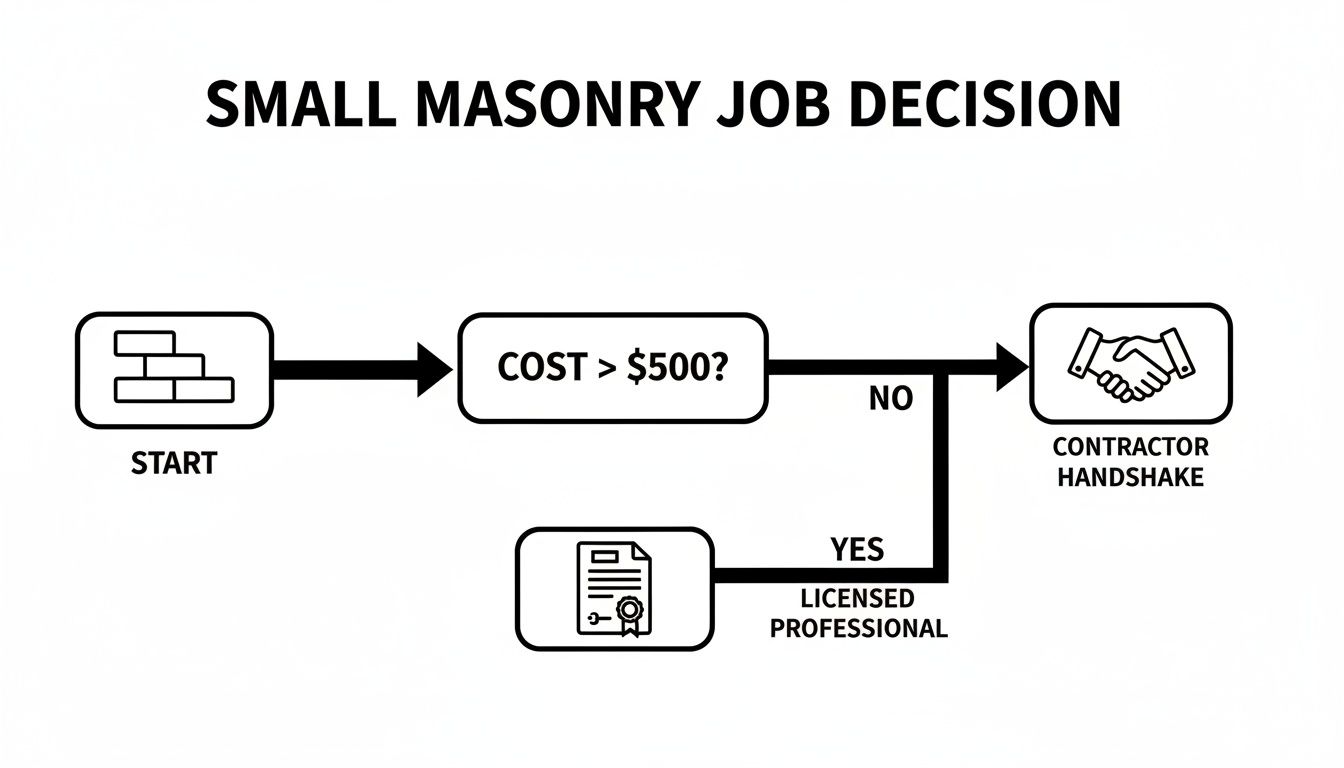
It boils down to one critical question: will the total cost of labor and materials be more than $500? If the answer is yes, the only safe—and legal—path forward is to hire a licensed contractor.
The Insurance and Bonding Safety Net You Can’t Ignore
Imagine an unlicensed worker is fixing a small retaining wall on your property. He trips, falls, and breaks his wrist. Who pays for that?
When you hire someone without the proper credentials, the answer is almost always: you do. This is where a licensed masonry contractor provides a critical safety net that protects you from these exact situations.
The Three Layers of Financial Protection
When you hire a licensed pro, you're not just hiring their skills; you're also benefiting from a system designed to shield you from financial liability. This is a core reason why you need a licensed masonry contractor for a small job in California.
- General Liability Insurance: This covers accidental property damage. If a worker cracks a buried pipe in your Carmel garden or shatters a window, their insurance pays for the repairs, not you.
- Workers' Compensation Insurance: This is crucial. If a mason gets hurt on your property, this policy covers their medical bills and lost wages. Without it, your personal assets could be on the line in a lawsuit.
- Contractor's License Bond: Every licensed contractor in California is required to carry a $25,000 bond. This bond protects you from financial loss if the contractor abandons the job or performs faulty work.
Without this trifecta of protection, you assume all the risk. A simple weekend project can quickly spiral into a legal and financial mess that lasts for years.
The peace of mind from knowing you’re fully covered is priceless. It's also worth noting that Central Coast licensing rules are tightening, making it more important than ever to work with fully insured professionals.
When a Small Repair Becomes a Big Structural Failure
Masonry isn't just about stacking bricks and stones—it's a structural science. It’s easy to underestimate the technical knowledge required for even a "small" job, but a licensed mason’s expertise directly impacts the safety and durability of the work.
Think about a simple garden wall. An unlicensed worker might build one that looks fine for a few months. But if they didn't prepare the base correctly or account for drainage, water pressure will build, the ground will shift, and the wall will eventually fail.
Suddenly, what started as a quick, cheap project has turned into a major headache involving property damage and a much bigger repair bill.

Why Local Expertise Matters for Monterey Bay Masonry
Here on the Central Coast, our unique environment presents specific challenges. A licensed local professional understands the environmental factors that an unlicensed handyman might completely miss.
These are non-negotiable forces of nature that impact masonry integrity.
- Expansive Clay Soils: In areas like Salinas or Carmel Valley, expansive clay soil swells when wet and shrinks when dry, putting incredible stress on foundations. A licensed mason knows how to engineer a reinforced base to handle that movement.
- Coastal Moisture: For homes in Pacific Grove or Carmel, salty fog can corrode the wrong kind of mortar and decay certain materials. A professional selects materials and sealing techniques that stand up to our damp, salty air.
- Seismic Considerations: This is California. Licensed contractors are trained on the latest reinforcement techniques that help masonry flex with the ground during an earthquake instead of collapsing.
A true mason isn't just laying bricks; they're calculating load-bearing capacity and designing proper water drainage. This is the difference between work that lasts for decades and a patch job that fails in a year.
Hiring a licensed professional is an investment in preventing these future failures. For a deeper dive into building to code, our article on commercial masonry requirements in California has insights relevant to residential projects as well.
Navigating Permits and Local Building Codes
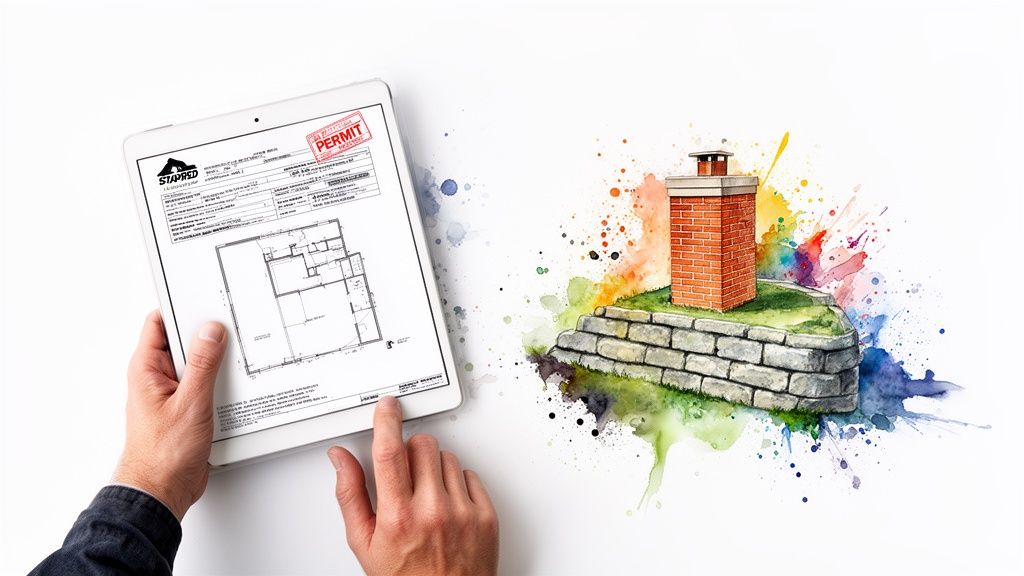
One of the most costly mistakes a homeowner can make is assuming a "small" project doesn't need a permit. The reality is, many masonry jobs in California legally require official inspections to prove they’re safe.
A simple retaining wall, for instance, often needs a permit if it's over three or four feet high. The same goes for chimney repairs or outdoor fireplaces, as these projects are tied directly to fire safety and structural codes.
The Role of a Licensed Contractor in Permitting
A licensed mason does more than just lay bricks; they manage the entire regulatory side of the project. They know when a permit is required and how to submit plans that the city or county will approve.
This is a huge advantage, especially in communities with strict building departments like those in Pebble Beach or Carmel. Understanding local and State Building Codes is non-negotiable, and a true professional handles all of it for you.
The Headaches of Unpermitted Work
The consequences of skipping the permit process can be a nightmare. If the city discovers unpermitted work, you could face steep fines and stop-work orders.
In a worst-case scenario, you might be forced to tear the whole thing down at your own expense. Unpermitted work is also a massive red flag for potential buyers and can kill a real estate deal.
Hiring a licensed contractor is your best insurance against these problems. They ensure every detail is built to code, so your project passes inspection and adds legitimate value to your home.
How to Vet and Hire a Licensed Masonry Contractor
Making a confident hiring decision comes down to knowing what to look for. Running through a quick checklist can save you from shoddy work and legal trouble.
Taking these simple steps is the smart way to ensure you're hiring the right person for the job, no matter how small it seems.
Your Vetting Checklist
Use these steps to verify any contractor you're considering.
Verify Their License Number
Always ask for their C-29 masonry license number. Then, enter it into the CSLB website to instantly check if their license is active and in good standing. The site also shows their current bonding and workers' compensation insurance status.Ask for a Certificate of Insurance
A legitimate contractor will gladly provide proof of their general liability and workers' compensation insurance. Don't just take their word for it; ask to see the certificate to ensure you're protected from accidents.Insist on a Detailed Written Contract
A professional puts everything in writing. A clear contract should detail the full scope of work, materials, payment schedule, and timeline. This document prevents misunderstandings and "ghosting" that are common with unlicensed handymen.
The temptation to go with a cheap, cash-only fix is understandable, but the long-term risks just aren't worth it. For Salinas and Monterey Bay homeowners, working with a licensed local mason avoids fines, failed inspections, and costly rework.
By hiring a qualified hardscape contractor, you're investing in work that’s built with integrity and designed to last.
Frequently Asked Questions
1. Does the $500 rule apply if I buy the materials myself?
Yes, it does. California's $500 threshold includes the total project value, which is both labor and materials. It doesn't matter who buys the supplies; if the combined cost hits that mark, a licensed contractor is legally required.
2. What if a handyman offers to do the job for cash to stay under the limit?
This is a major red flag. Intentionally breaking up a project or using cash to skirt the law is a risky game. You lose all legal protection and could be held liable if someone is injured on your property.
3. Can I bundle several small repairs into one project?
Absolutely, and it's a smart, cost-effective strategy. Combining small repairs—like a cracked paver, a wobbly wall, and some loose mortar—into a single project for a licensed mason ensures everything is done correctly and under one clear contract.
4. How can I check if a masonry contractor's license is real?
The Contractors State License Board (CSLB) has a free online tool for instant verification. Just enter the contractor's name or license number to see if their license is active, bonded, and in good standing.
5. Why do quotes from licensed masons seem higher?
A licensed contractor’s quote reflects the true cost of doing business legally and safely. It includes essential protections like general liability insurance, workers' compensation, and a license bond, which shield you from financial risk.
Choosing the right professional for your masonry project is a critical decision. For homeowners in Monterey County, hiring a licensed expert who understands our coastal climate and soil is the only way to guarantee a result that’s safe, beautiful, and built to last.
Ready to discuss your project with a fully licensed, bonded, and insured masonry professional? Contact Stonecap Masonry Inc. for a no-obligation consultation.
