A professional hardscape quote is more than a number—it’s the complete blueprint for your project. It must clearly define the scope of work, break down materials and labor, show proof of licensing and insurance, and include a solid warranty. Without these details, you’re comparing apples to oranges.
Homeowners in Salinas and Carmel ask what should a real hardscape contractor quote include because they see wildly different prices for patios and retaining walls. This guide breaks down what to look for, ensuring you can compare bids accurately and protect your investment from the start.
Why Hardscape Quotes Vary So Drastically
If you’ve gathered bids for a hardscape project, you know the feeling. One contractor quotes $10,000, another comes in at $70,000, and a third is somewhere in between. You're left wondering how they could possibly be for the same project.
The problem starts when we compare bids by looking at the final price first. A professional proposal is a detailed plan, not just a price tag. Knowing what should be in that plan is your best defense against shoddy work and surprise costs.
Vague Quotes Are a Massive Red Flag
Too many contractors hand over a simple, one-page estimate with a single price. These quotes are intentionally vague, leaving out critical details about the foundation, drainage systems, and materials.
This lack of detail is the biggest warning sign. It gives a less-reputable contractor room to cut corners where it counts most—on the parts you can’t see, like the compacted base under your pavers. A low bid based on a vague quote often leads to costly change orders or a structure that fails.
Shifting Your Focus From Price to Value
Instead of focusing on the final number, compare what's actually included in each proposal. A trustworthy contractor—one who is licensed and insured to work in places like Salinas and Carmel—will give you a quote that transparently outlines every phase of the project.
This detailed approach allows for a true apples-to-apples comparison. It also signals the contractor's professionalism. For homeowners in the Monterey Bay area, finding a contractor who understands our local soil and coastal weather is crucial for a project that is built to endure.
1. What a Hardscape Contractor Quote Must Include: The Scope of Work
The Scope of Work (SOW) is the heart of a hardscape quote. It's your best defense against fuzzy promises, unexpected costs, and poor workmanship. A quote without a clear SOW is like building a house from a napkin sketch.
A well-written SOW is the architectural blueprint. It lays out exactly what will be done, how it will be done, and what materials will be used, leaving zero room for interpretation.
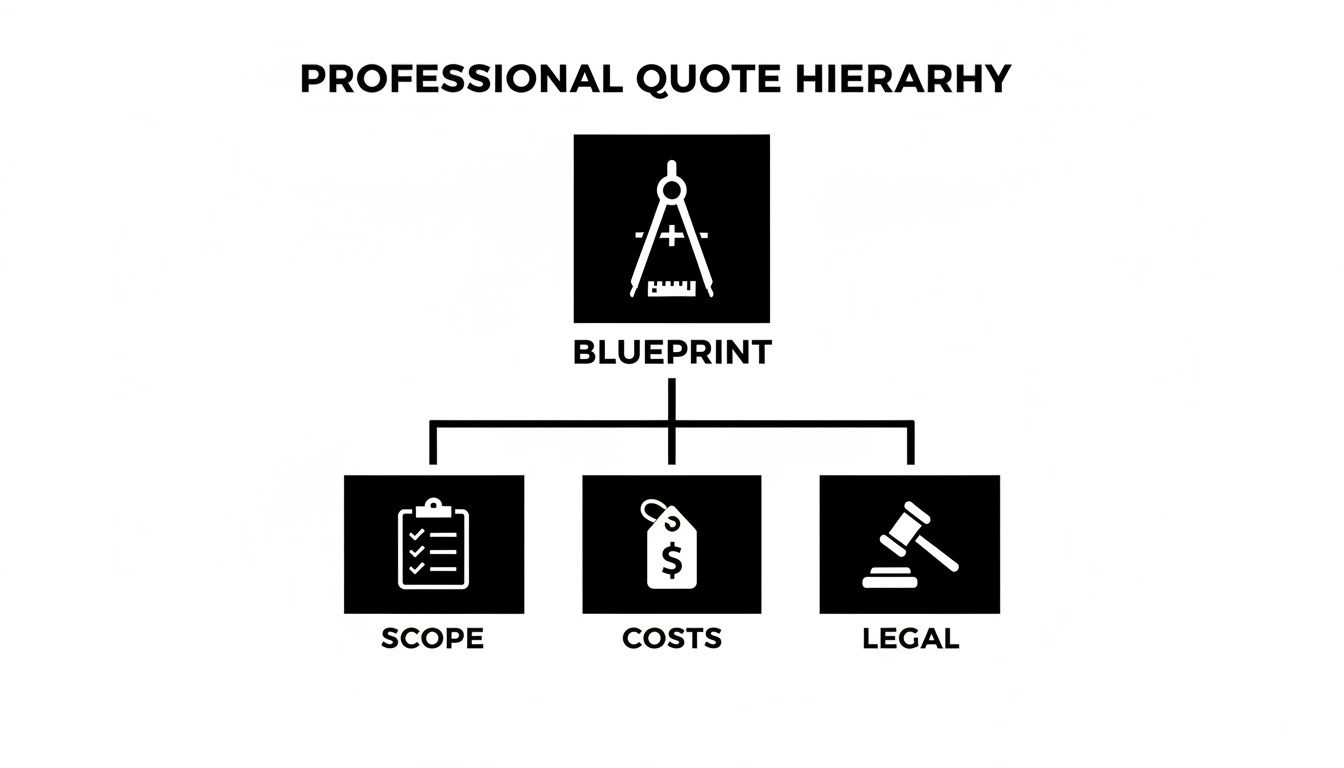
As you can see, a clear scope is the structural core that holds the entire project proposal together. This ensures accurate pricing and real accountability.
What a Detailed SOW Looks Like
A real SOW goes far beyond "Install new paver patio." It walks you through the entire construction process from start to finish. This is how you prevent a contractor from cutting corners on the "invisible" work that guarantees your patio will last, especially with the tricky soils around Salinas.
Here are the non-negotiable items you should see spelled out:
- Demolition and Site Clearing: What's being removed? The SOW should specify what goes and how it will be hauled away.
- Excavation Details: The quote must state the exact depth of the dig. A shallow excavation is the #1 shortcut bad contractors take, and it leads to a failing patio.
- Base Preparation: Look for specifics like, "6 inches of compacted Class II aggregate base rock," not just "add base rock." The type and depth prevent sinking and shifting.
- Drainage Solutions: A pro will detail how they'll manage water, whether by grading the patio with a specific slope, installing drains, or using permeable materials.
- Material Installation: The SOW should describe installation methods, bedding sand depth, laying pattern, and edge restraints.
- Soil and Debris Management: The plan should clarify if excavated dirt is being hauled off-site or left behind.
- Final Cleanup: It should state that the contractor will leave the job site clean, tidy, and ready for you to enjoy.
The Power is in the Details
Vague language is a homeowner's worst enemy. If details aren't in writing, it gives contractors an open door to use cheaper materials or skip steps. A good quote is essentially a business proposal for your project, and understanding its structure is empowering.
For anyone in the Monterey Bay area, a detailed SOW is non-negotiable. A contractor must show they know how to handle our unique local challenges, from expansive clay soils in Carmel Valley to the need for robust drainage in Pacific Grove. When you demand this level of detail, you can finally compare apples to apples.
2. Understanding Your Material and Labor Line Items
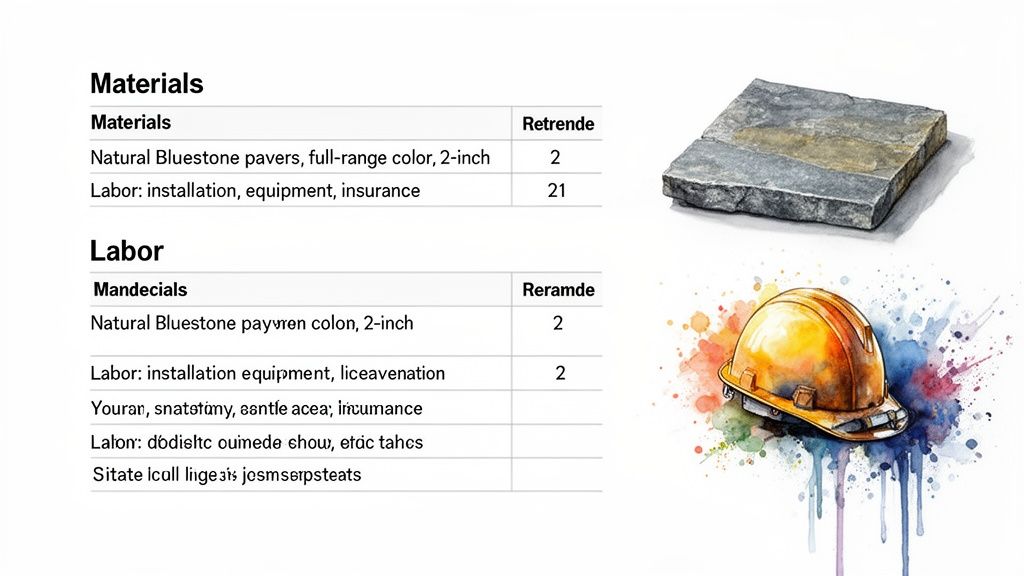
After the scope of work, the next part of a real hardscape quote is the cost breakdown. A transparent quote will always have separate, clear line items for materials and labor. If you just see a single, bundled price, that’s a major red flag.
This separation lets you see exactly what you’re paying for. It heads off any surprise material substitutions or sneaky labor charges down the road.
Why Specific Material Listings Matter
A quote that just says "stone patio" is useless. What kind of stone? How thick is it? These details make a huge difference in cost and durability.
A true professional will get specific. You should see details like:
- Product Name and Manufacturer: Something like "Belgard Catalina Grana pavers."
- Material Type and Color: For instance, "Natural Bluestone, full-range color."
- Dimensions and Thickness: A critical detail like "2-inch nominal thickness" tells you the paver is sturdy enough.
- Associated Materials: This should also list the base rock, bedding sand, joint sand, and edge restraints.
When these details are in writing, it locks the contractor into using the quality materials you agreed on. It prevents them from swapping in a cheaper, less durable product to pad their profit margin.
Decoding the True Cost of Labor
Many homeowners think the labor line item is just the crew’s hourly pay. A legitimate contractor’s labor rate includes labor burden—the essential overhead of running a legal, insured, and professional business. Understanding this helps explain why quotes vary so much between contractors.
This "burden" is what protects you. It covers critical expenses like:
- Workers' Compensation Insurance: Protects you from liability if a worker gets hurt on your property.
- General Liability Insurance: Covers accidental damage to your house or property.
- Payroll Taxes and Benefits: The legal costs of employing a skilled, professional crew.
- Company Overhead: Includes everything from trucks and tools to safety gear and administration.
An uninsured operator can always quote a lower labor rate because they’re skipping these critical costs. In doing so, they’re pushing all financial and legal risk onto you. A professional’s price reflects the real cost of doing business correctly and safely.
3. Why Production Rates Beat Square Foot Pricing
When collecting quotes, you'll inevitably hear a "price per square foot." It sounds simple, but this number is almost always a red flag. Any seasoned pro will tell you that square-foot pricing is an outdated way to quote a custom project.
The best in the business use a method called production-rate estimating. This is a far more honest and accurate way to plan for the realities of your specific job site.
The Problem with Price Per Square Foot
Relying on a flat square-foot price ignores the unique conditions that affect a project's budget and timeline. Not all square footage is created equal, especially here on the Monterey Peninsula.
Think about these common variables:
- Difficult Site Access: Getting equipment into a tight, sloped backyard in Pebble Beach is a world away from an open lot in Salinas. One requires hours of manual labor, while the other is quick.
- Challenging Soil Conditions: Digging 100 square feet of sandy loam is fast. Hitting the dense, rocky clay found in local hills could take a full day.
- Complex Designs: A simple, rectangular patio is straightforward. One with intricate curves, multiple levels, and detailed inlays requires far more time and precision.
A contractor who gives you a price per square foot over the phone isn't estimating—they're guessing. That guesswork leads to surprise change orders or cut corners.
How Production-Rate Estimating Protects You
When a quote is based on production rates, the contractor has thought through every step. They have walked your property, considered the challenges, and calculated the real-world time, labor, and equipment needed for each phase.
This modern approach is a sign of a contractor's expertise and transparency. It minimizes surprises, prevents budget overruns, and ensures you're paying for a meticulously planned project. Industry guides on how to achieve more accurate project bids highlight this evolution toward greater precision.
4. What Should a Real Hardscape Contractor Quote Include Legally?
Now for the part of the quote that isn't about stone and mortar but is just as critical: the legal framework. This is where a contractor proves they are a legitimate, accountable business. The legal details are your project's airbags and seatbelts—you shouldn't proceed without them.
These items address the biggest homeowner fears, from a contractor vanishing with your deposit to a project failing months after completion.
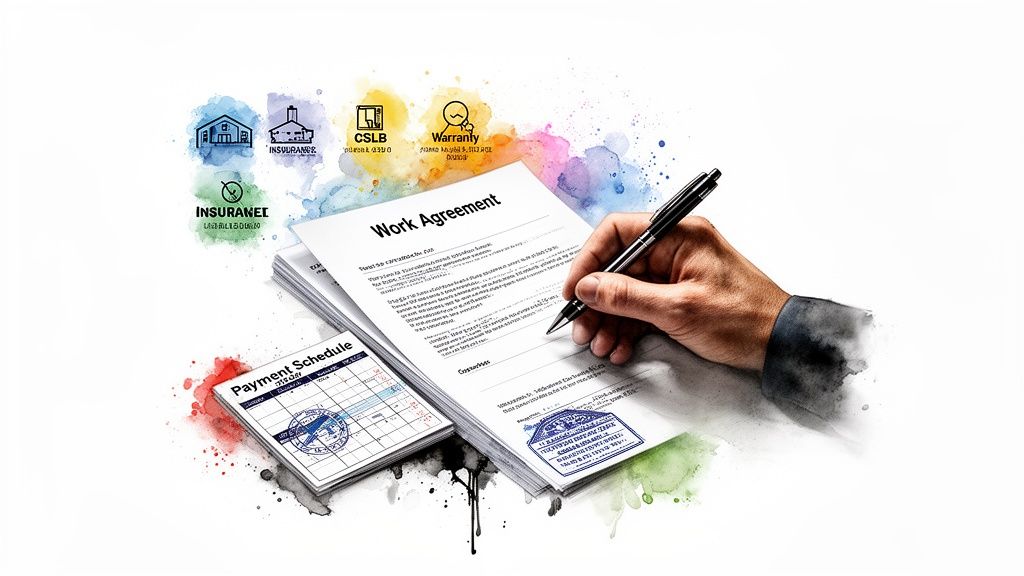
Here is a quick checklist of the non-negotiable legal items you should find in any professional proposal.
| Your Legal and Logistical Quote Checklist | ||
|---|---|---|
| Checklist Item | What It Is | Why It Matters to You |
| Licensing | The contractor's official state license number. For masonry, it’s a C-29 license in California. | This proves they meet state standards for skill and business practices. It’s your first defense against unqualified operators. |
| General Liability Insurance | Proof of insurance that covers damage to your property during the project. | If a piece of equipment accidentally hits your house or breaks a window, this insurance pays for it—not you. |
| Workers' Comp Insurance | Insurance that covers the contractor's employees if they get hurt on your job site. | This is a big one. Without it, you could be held liable for a worker's medical bills if they're injured on your property. |
| Project Timeline | A clear schedule with a projected start date and an estimated completion date. | It shows the contractor has a real plan and respects your time. It holds them accountable for progress. |
| Payment Schedule | A breakdown of payments tied to specific, completed milestones in the project. | This protects your money. You only pay for work that's been done, preventing you from overpaying a contractor who might not finish the job. |
| Workmanship Warranty | A written guarantee from the contractor that covers defects in their installation for a set period. | This is their promise to stand behind their work. If pavers sink or a wall fails due to poor installation, they will come back and fix it. |
| Change Order Process | A formal, written procedure for handling any changes to the original plan. | It prevents "surprise" charges. Any adjustments to scope or cost must be documented and approved by you in writing before work proceeds. |
Finding these details in a quote is a huge green flag. It tells you you're dealing with a professional who is committed to protecting their business and their clients.
A Closer Look at Licensing and Insurance
In California, any home improvement project costing $500 or more legally requires a licensed contractor. A professional quote will proudly display their license number, typically a C-29 (Masonry) license. It must also provide proof of General Liability and Workers’ Compensation insurance.
We see unlicensed operators all the time, and the risks they pose to homeowners are enormous. You can learn more in our guide on what hardscape contractors can and can't do. A true pro plays by the rules.
Getting Timelines and Payments Right
A vague "we'll start sometime in the spring" doesn't cut it. A serious quote will give you a projected timeline with a specific start date and an estimated completion date. A formal timeline shows they've thought through the project's logistics.
Just as important is the payment schedule. In California, a legally compliant schedule involves a down payment of no more than 10% of the contract price or $1,000, whichever is less. After that, you make progress payments as major phases are completed.
Warranties and Handling Unexpected Changes
What happens if your new patio starts to sink a year from now? This is where a written warranty comes in. A contractor who believes in the quality of their work will always stand behind it with a warranty covering their workmanship.
Lastly, a professional quote must define a clear change order process. This is a formal procedure outlining how any adjustments will be documented, priced, and approved in writing by you before extra work begins.
Choosing the Right Contractor for Your Project
The big takeaway is simple: a detailed, transparent quote is your best sign of a professional, trustworthy contractor. The smartest way to invest in a long-lasting hardscape is to compare line-item details, scope of work, and legal protections—not just the final number.
This isn't about being nit-picky; it's about minimizing risk and ensuring you get what you pay for. It flips the script from finding the cheapest price to finding the best value. A well-structured quote is a sign of a contractor's commitment to quality from day one.
Making a Confident Decision
For homeowners in the Monterey Bay area, picking a licensed masonry pro is even more important. You need someone who understands our unique soil conditions, coastal weather, and local fire safety codes. A true local expert’s proposal will reflect this specialized knowledge.
A professional's quote is a window into how they run their entire business. This knowledge gives you the power to ask the right questions and feel confident you’ve chosen a real pro. To learn more, check out our guide on selecting a local hardscape contractor.
FAQs: What a Real Hardscape Contractor Quote Should Include
1. Why do hardscape quotes vary so much in price?
Quotes vary because they often include different scopes of work. A low bid may skip crucial steps like proper base preparation, drainage, or permits, while a higher, detailed bid accounts for the work required for a durable, long-lasting project.
2. What is the single biggest red flag in a hardscape quote?
The biggest red flag is a lack of detail. A single-page quote with just a total price and a vague description like "install patio" leaves room for cut corners, cheap materials, and unexpected costs down the road.
3. Is a lower price per square foot always a better deal?
No, a low square-foot price is often misleading. It rarely accounts for site-specific challenges like poor access, difficult soil conditions in places like Carmel Valley, or complex designs, which can lead to surprise charges later.
4. What insurance information must a contractor provide?
A contractor must provide proof of two key policies: General Liability insurance, which covers damage to your property, and Workers' Compensation insurance, which protects you from liability if a worker is injured on your site.
5. How much of a deposit is legal for a contractor to ask for in California?
In California, a contractor can legally ask for a deposit of only 10% of the total contract price or $1,000, whichever is less. A request for a larger down payment, such as 50% upfront, is a major red flag.
Getting the quote right is the first and most important step toward a beautiful hardscape that actually lasts. For those of us here in Monterey County, our unique coastal climate and tricky soil conditions make expert advice absolutely essential. Stonecap Masonry focuses on transparency by providing clear scopes and realistic timelines to help you understand exactly what you’re paying for.
