Yes, a well-designed hardscape can absolutely make your home safer from wildfires. For homeowners in areas like Carmel Valley or Pebble Beach, it is one of the most effective steps you can take. While most people think about fire-resistant roofing first, the real threat often sneaks in from the ground up.
Wind-blown embers can travel for miles. When they land on flammable mulch or a wooden deck right next to your house, they have found the perfect kindling. A hardscape built from stone, concrete, or pavers creates a simple but powerful ember-proof shield where fire literally runs out of fuel.
Your Hardscape: A Critical First Line of Defense
Homeowners in California increasingly ask whether their yard design can protect their home. The answer is a resounding yes. But it requires you to look at your yard in a new way—not just as a garden, but as your most critical defensive zone.
A common misstep is focusing only on the house itself, like roofing and siding, while ignoring what’s right up against the foundation. Many leave combustible materials—mulch, wood decks, shrubs—right against the home, not realizing these act as fuel. This leaves your home's most vulnerable points wide open.
How an Ember-Proof Yard Actually Works
A fire-smart hardscape is all about starving a fire of fuel before it gets to your house. It's about making strategic swaps of flammable materials for beautiful, non-combustible ones. This is especially important in high-risk zones.
- Stone Patios Instead of Wood Decks: A stone or paver patio gives embers nowhere to go. They land, they cool off, and that’s the end of the story.
- Gravel Walkways as Firebreaks: Simple gravel or paver pathways create a clean break in the landscape. This line is surprisingly effective at stopping a low-burning ground fire.
- Masonry Walls as Ember Barriers: A thoughtfully placed masonry retaining wall can physically block embers. It keeps them from piling up against your foundation where they can smolder and ignite the structure.
This strategy is backed by fire safety experts across California. The area immediately surrounding your home is what matters most.
The first five feet around your foundation is the most critical zone. This area should be completely free of anything that can burn.
According to CAL FIRE, this immediate zone should only feature non-combustible hardscape materials like gravel, pavers, or concrete. For a deeper dive, homeowners should check the official CAL FIRE defensible space guidelines.
Comparing Landscaping Materials for Wildfire Risk
Choosing the right materials is a critical safety decision. The table below breaks down the risk levels of common landscaping materials to show why hardscaping is so essential for creating effective defensible space.
| Material | Wildfire Risk Level | Recommended Use in Defensible Space |
|---|---|---|
| Stone, Pavers, Concrete | Very Low | Ideal for the 0-5 foot "Ember-Resistant Zone" |
| Gravel, Decomposed Granite | Very Low | Excellent for paths and the 0-5 foot zone |
| Irrigated Lawn/Turf | Low (if maintained) | Acceptable in the 5-30 foot "Lean, Clean & Green Zone" |
| Fire-Resistant Plants | Low to Moderate | Best for the 5-30 foot zone, with proper spacing |
| Wood Mulch/Bark Chips | High | Not recommended within 30 feet of the home |
| Wood Decks/Fencing | High to Very High | A significant ignition risk; replace with non-combustible alternatives |
The materials you place directly against your home have a massive impact on its survivability. By consciously choosing non-combustible options for this critical area, you are actively hardening your home against ignition from embers.
A Practical Investment in Peace of Mind
A professionally designed hardscape isn't just an aesthetic upgrade. It's a real-world investment in your family's safety and your home's security. When you work with a licensed C-29 masonry contractor, homeowners in Salinas, Pebble Beach, and Pacific Grove can be confident their work meets modern fire-resilience standards.
This approach transforms your outdoor space from a potential liability into a functional and effective first line of defense. When wildfire season arrives, that peace of mind is invaluable.
How Hardscaping Creates Defensible Space
To grasp why a stone patio is such a powerful defense, you must understand defensible space. This is a proven strategy fire experts use to slow a wildfire or stop it cold. The system is built around creating specific zones on your property, and each zone has a job.
The biggest threat in most wildfires isn’t a wall of flames. It's the blizzard of wind-driven embers. These tiny, glowing bits of burning debris can fly a mile or more ahead of the fire itself and land right next to your home's foundation.
This is where hardscaping becomes your most important tool. It creates a non-combustible barrier that starves those embers of the fuel they need to cause a disaster.
Zone 0: The Immediate Ember-Resistant Zone
The most critical area for protecting your home is Zone 0, the ember-resistant zone. This is the space that extends five feet out from your foundation. California fire codes are clear: this zone must be completely free of anything that can burn.
For that, professionally installed hardscaping is non-negotiable.
- No Flammable Mulch: Forget wood chips. This area needs non-combustible materials like gravel, decomposed granite, or pavers.
- No Combustible Plants: Any shrubs, flammable grasses, or overhanging tree limbs must be removed from this zone.
- No Wooden Decks: A wooden deck attached to your house is a massive vulnerability. Swapping it for a stone or concrete patio creates a fire-proof platform.
By putting these hardscape solutions in place, you’re creating a sterile buffer. When embers land there, they just burn out on the stone or concrete.
This visual shows exactly how a hardscape barrier intercepts embers and neutralizes the threat.
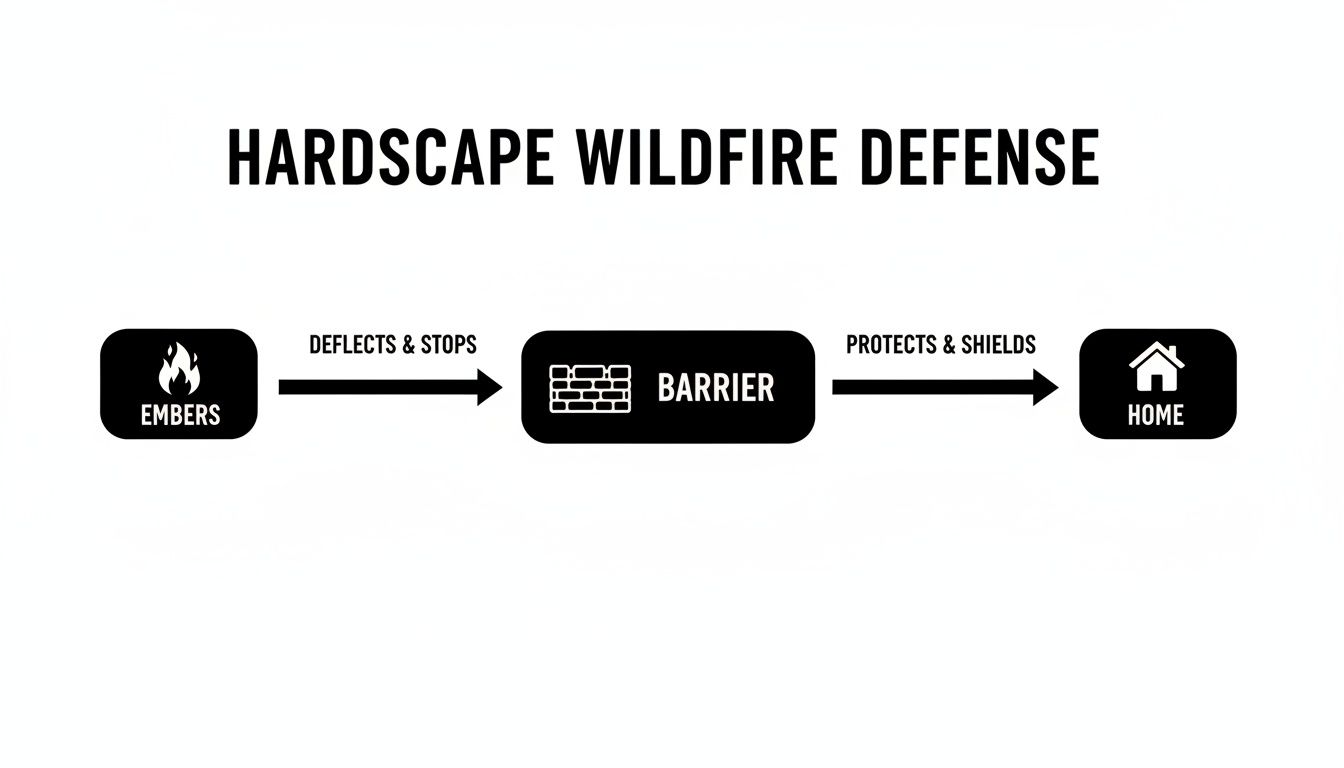
As you can see, the hardscape acts as a physical shield, breaking the chain reaction that lets embers set a home ablaze.
Zone 1: The Lean, Clean, and Green Zone
Next is Zone 1, the area from five to 30 feet away from the home. The goal here is to strategically thin out vegetation and create "fuel breaks" that rob a fire of momentum. Hardscaping is a huge part of this strategy, too.
A masonry retaining wall in this zone is more than a landscape feature; it’s a physical barrier that can trap rolling embers and halt a ground fire.
Here’s how smart hardscape design makes Zone 1 safer:
- Paver and Gravel Walkways: These create natural firebreaks that separate islands of planting, preventing fire from racing across your yard.
- Stone Retaining Walls: On sloped properties common in Carmel Valley, a well-placed retaining wall can stop embers from rolling downhill.
- Non-Combustible Borders: Using stone, brick, or concrete edging for flower beds eliminates another potential fire hazard.
By working with a licensed C-29 masonry contractor, you can turn your yard into an active part of your home’s defense system. This gives firefighters a safer space to work and improves your home’s chances of survival.
What Hardscape Features Actually Make a Difference?
Let's get practical. What specific features turn theory into a fire-resistant reality around your home? This is where we move beyond just asking can hardscaping really make my home safer from wildfires and start building a real defense.
These are beautiful, permanent additions that can boost property value. For homeowners in communities like Pebble Beach and Pacific Grove, you don’t have to sacrifice sophisticated design for security. A well-planned hardscape delivers both.
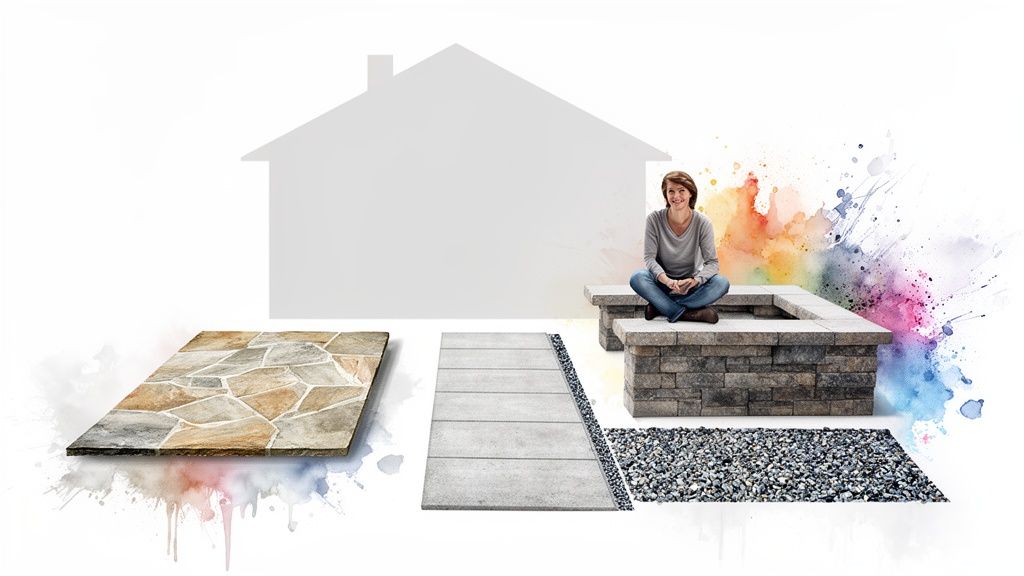
Fire-Resistant Patios Instead of Wood Decks
One of the most impactful changes is swapping a flammable wood deck for a non-combustible patio. A wood deck is a welcome mat for fire. It is a huge fuel source that gives flames a direct path to your walls.
A patio made of stone, pavers, or concrete neutralizes this threat. When embers land on a masonry surface, they simply burn out. You can explore the hardscape choices Salinas residents are making for fire season to see why these options are becoming the new normal.
Strategic Gravel and Paver Walkways
Your walkways do more than show people where to walk; they act as crucial firebreaks. A path made of gravel or pavers creates a clean, fuel-free gap in your landscape. This is an effective way to stop the spread of a ground fire.
Surrounding your home's perimeter (Zone 0) with a walkway makes it impossible for embers to ignite nearby fuel. These paths also break up large planting beds, stopping a fire from sweeping across the property.
Masonry Retaining and Seating Walls
On the sloped properties common in areas like Carmel Valley, a retaining wall built by a licensed C-29 masonry contractor is a defensive powerhouse. During a wildfire, it becomes a solid physical barrier.
A properly constructed masonry wall can literally stop rolling embers in their tracks, preventing them from piling up against your home's foundation.
This is critical on hills, where gravity gives fire an advantage. Even shorter seating walls around a patio can play a similar role by disrupting airflow and trapping embers.
Non-Combustible Landscape Borders
This might seem like a small detail, but it’s an important one. Many homeowners use wood or plastic edging, which adds another line of fuel to your landscape. Making the switch to non-combustible borders is a simple but effective move.
- Stone Borders: Natural stone or precast concrete blocks create a clean, durable, and completely fireproof edge.
- Brick Edging: Classic brick gives you a timeless look while offering fantastic fire resistance.
- Metal Edging: Steel or aluminum borders are another great non-combustible choice.
Each of these features plays a specific part in a complete fire defense plan. A professional ensures they work together to create a landscape that’s as safe as it is beautiful.
Why Materials and Professional Installation Matter
Knowing what to build is only half the battle. If you want your hardscape to truly protect your home, the conversation must shift to how it's built. The performance of your fire-resistant patio hinges on non-combustible materials and flawless, professional installation.
A homeowner might invest in beautiful stone but hire a crew that cuts corners on groundwork. The result is cracked patios and a misplaced sense of security. For a hardscape to stand up to the elements and fire, it must be built by an expert.
The Non-Negotiable Role of a Licensed Contractor
Hiring a licensed, bonded, and insured contractor is the only way to protect your investment. A C-29 masonry contractor has passed state exams and proven their expertise. They work under strict guidelines, which is exactly what you want for a safety project.
Going with an unlicensed operator is a gamble. They often use cheap materials or perform sloppy work that fails. A true professional understands our local soil conditions, from heavy clay around Salinas to the coastal ground in Pacific Grove and Pebble Beach. Proper base preparation is everything.
California’s Contractors State License Board (CSLB) actively pursues unlicensed contractors, who may face misdemeanor charges, fines, and even jail time. (CSLB)
Quality Materials and Code-Compliant Construction
The quality of the materials is just as critical as the installer's skill. A seasoned masonry professional knows where to source durable stone and pavers that can handle intense heat. They ensure every part of the project meets California's rigorous building codes.
These details make all the difference:
- Proper Mortar Mixes: Using the right mortar is essential for the strength and longevity of stone walls.
- Correct Reinforcement: Retaining walls need precisely placed steel rebar to hold back soil pressure.
- Secure Fastening: Knowing how to use fasteners like wedge anchors in concrete is key for securely attaching elements to a solid masonry base.
Working with an experienced hardscape contractor takes the guesswork out of the equation. It means your new patio or retaining wall will function as a permanent, durable, and protective part of your home's defense system.
Integrating Hardscaping With Total Home Hardening
To really understand how hardscaping makes your home safer from wildfires, you have to see it as a crucial piece of a complete strategy known as home hardening. This approach treats your entire property—from the roof to the lot edge—as a single, integrated system of defense.
A fire-resistant yard gives your home’s structural upgrades a massive boost. When you swap flammable mulch for non-combustible stone patios and gravel paths, you starve a fire of its most convenient fuel. An ember that lands on stone simply dies out.
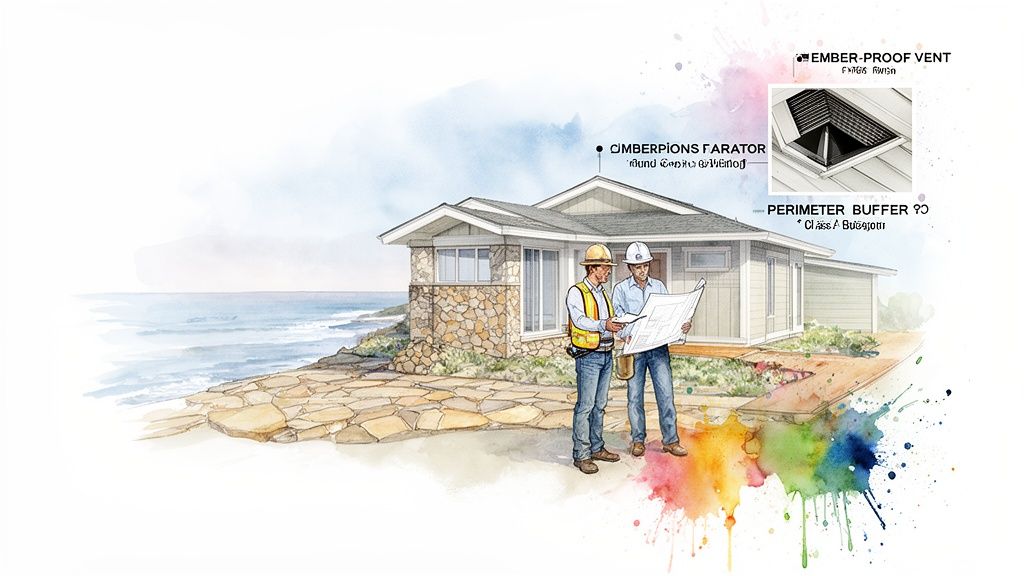
How Hardscaping Amplifies Other Defenses
Home hardening involves swapping out vulnerable parts of your house for ignition-resistant materials. A smart hardscape design acts as your first line of defense, taking pressure off those structural elements.
Here’s how they work together:
- Ember-Proof Vents: Specialized vents block embers from entering your attic. When your hardscape prevents embers from collecting against your foundation, fewer get kicked up to threaten those vents.
- Non-Combustible Siding: Materials like fiber cement or stucco are far safer than wood siding. A non-combustible patio ensures flames from a burning deck won't climb up the side of your house.
- Class A Roofing: A Class A fire-rated roof is your best defense against the rain of embers. Looking into the durable standing seam metal roof benefits shows how different materials contribute to survivability.
A Proven, Holistic Safety Plan
This combined strategy is a proven method that saves homes. By systematically reducing the fuel load on your property, you create an environment where a wildfire struggles to gain a foothold. The data backs this up.
Research shows that fire-resilient construction isn’t more expensive. In fact, code-compliant, fire-resistant materials can reduce overall build cost by 2% and lower siding costs by ~25%. (Headwaters Economics)
A hardened home within a fire-resistant landscape creates multiple layers of protection. This dramatically increases its chances of surviving a wildfire. For those of us in Monterey, Carmel Valley, and the surrounding areas, this integrated approach is the new standard.
When planned by a licensed C-29 masonry professional, your project is a core component of your defense system. You get resilient and secure outdoor living spaces that also protect your most valuable asset.
FAQs: Wildfire-Safe Hardscaping in Monterey County
Can hardscaping really make my home safer from wildfires?
Yes, absolutely. Hardscaping with non-combustible materials like stone, pavers, and concrete creates a "fuel break" around your home. This starves embers of anything to burn, effectively stopping a fire from reaching your house.
Is fire-resistant hardscaping more expensive?
While materials like stone can have a higher upfront cost than mulch, they are a long-term investment. They require less maintenance and provide critical protection, potentially saving you far more. In some cases, using fire-resistant materials can even lower overall construction costs by up to 2%. (Headwaters Economics)
What part of my yard is most important to hardscape for fire safety?
The most critical area is "Zone 0," the first five feet out from your home's foundation. This zone must be completely free of flammable materials. A gravel path or stone patio here is your single most effective defense.
Will a stone patio completely stop a wildfire?
A stone patio alone won't stop a large wildfire, but it is a powerful tool in a larger strategy. It acts as a fuel break, stopping ground fires and giving embers nowhere to ignite. It works best when combined with other home hardening measures like a Class-A roof and ember-resistant vents.
Why do I need a licensed C-29 contractor for this?
A licensed masonry contractor ensures the project is built to last and meets California's strict fire and building codes. Proper base preparation is critical for durability, especially in Monterey County's diverse soil conditions. Hiring an unlicensed contractor risks poor workmanship and structural failure.
A professionally built hardscape is a lasting investment in your home's safety, value, and beauty. For homeowners in Carmel, Salinas, and surrounding communities preparing for wildfire season, consulting a licensed masonry professional is the most reliable path forward. You can request a quote from a licensed masonry professional to get started.
