Let's be honest. Many beautiful stone patios in California start to look terrible after just a few years—cracking, sinking, and turning into an uneven mess. It rarely has anything to do with the stone itself.
The real secret to a patio that lasts a lifetime is hidden beneath the surface. It's all in the foundation, the drainage, and the kind of craftsmanship specifically designed for California’s demanding environment. This guide cuts through the fluff to explain the truth about building a stone patio that lasts in California and what most contractors won't tell you.
The Unspoken Truth: Why Most Stone Patios Fail in California
Vague advice like “pick good stones” completely misses the mark. The problem isn't the flagstone or pavers you see on top; it's the critical, unseen preparation work that was either done poorly or skipped altogether.
A patio isn't just a decorative feature. It's a complex structural system that has to fight against powerful natural forces, and it demands real expertise in local ground conditions.
Unique Challenges for Patios in Monterey Bay
Building a patio around here is about more than just making your backyard look good. We have a unique set of challenges that can destroy a poorly planned project in short order.
- Expansive Soils: Much of Monterey County, especially around Salinas, is full of clay soil. This material acts like a sponge—it swells up when it gets wet and shrinks dramatically when it dries out. That constant movement will heave, shift, and crack any patio built on a weak base.
- Seismic Activity: We live in earthquake country. Even the small, constant ground tremors common throughout the Monterey Bay area can cause a badly built patio to settle unevenly. Before you know it, you have dangerous tripping hazards.
- Coastal Moisture: The beautiful fog we get in Carmel and Pacific Grove is great for the mood, but it keeps the ground persistently damp. This constant moisture can turn a weak foundation into mush and slowly erode the base material right out from under your stones.
- Wildfire Risk: If you live in a place like Carmel Valley, your patio is a key part of your home's defensible space. You can learn more about how fire zones are changing stone patio design in our in-depth article.
A patio built without a deep respect for these local forces is basically designed to fail. A true mason doesn’t just lay stone; they engineer a complete system from the ground up to handle the specific environmental pressures of your exact location.
Your Patio’s Foundation: The One Thing You Cannot Ignore
You can have the most beautiful, expensive stone on the market, but if the foundation underneath is weak, your patio is doomed. Think of it just like the foundation of your house—if it fails, everything on top of it will crack, shift, and fall apart.
This is the single most important part of building a stone patio that lasts in California. Yet, it's precisely where corners get cut to save money upfront, leading to costly rebuilds later.
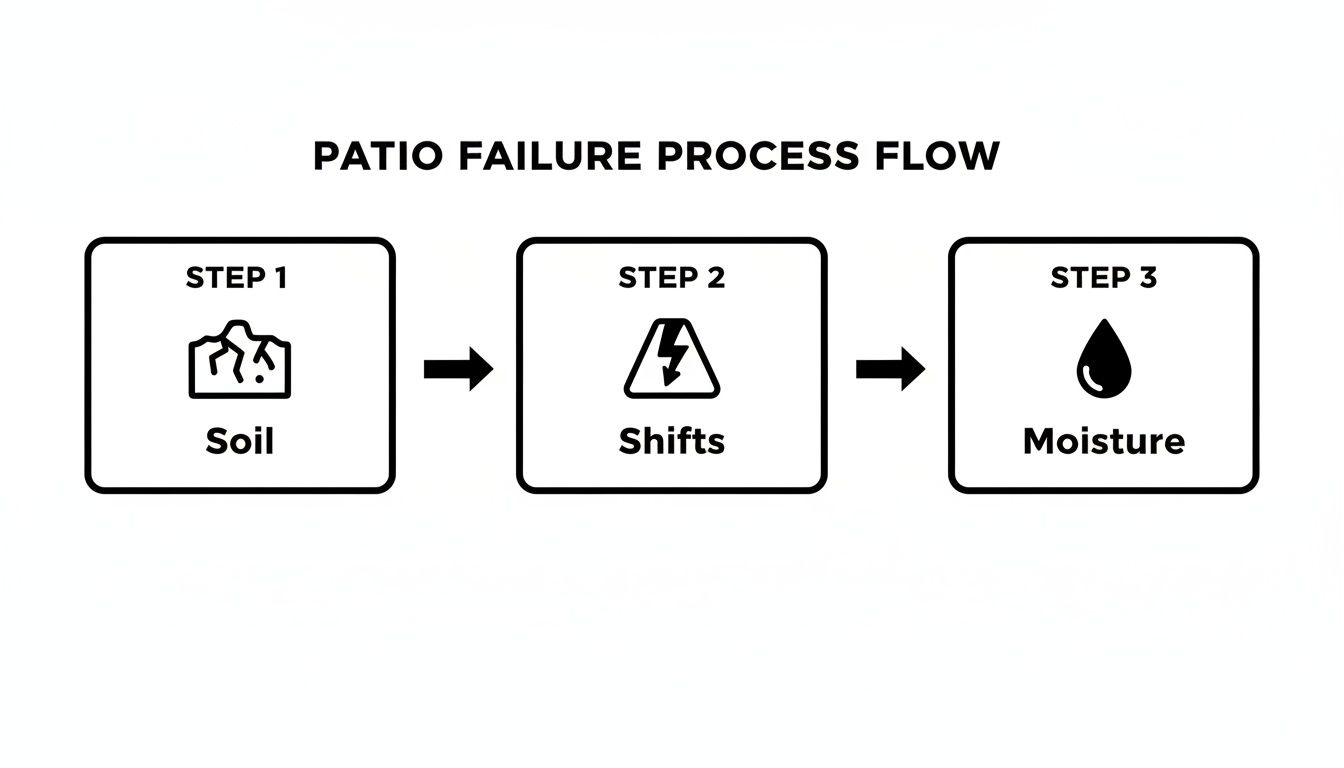
As you can see, unstable soil, ground movement, and water getting trapped create a vicious cycle. A rock-solid foundation is designed to break that cycle from the very beginning.
Building a Base That Fights Back Against Local Soils
A patio built to last starts with digging deep. A shallow base is just a guarantee of future headaches. The right way involves excavating deep enough to get past all the organic topsoil and down to the stable, undisturbed subsoil.
From there, we build it back up with specific layers of crushed stone. Each layer is methodically compacted with heavy-duty machinery to create a locked-in, stable platform that spreads weight out evenly and refuses to move.
A crucial, non-negotiable step is laying down a geotextile fabric separator between the native soil and the new gravel base. This tough fabric is the unsung hero—it stops the clay soil from mixing into the clean gravel, which would completely ruin the foundation's ability to drain and provide support.
The Science of Compaction and Reinforcement
Living in California's seismic zones means a proper base isn't just a good idea—it's essential for structural integrity. A compacted gravel base, at least 6-8 inches deep, is your first line of defense against shifting ground.
For extra insurance against movement in places like Carmel Valley or Salinas, a skilled mason might also lay down geogrid reinforcement within the base. Think of this synthetic mesh like rebar inside concrete. It literally locks the layers of aggregate together, creating one unified foundation that can handle tremors and soil swelling without breaking a sweat.
Patio Foundation Quick Comparison: Standard vs. Professional
How can you spot the difference between a job built to last and one destined to fail? It all comes down to the details in the foundation. Understanding these elements helps you recognize true craftsmanship.
This table breaks down what separates a professional, long-lasting patio foundation from a standard, shortcut-laden one.
| Foundation Element | Standard (Failure-Prone) Method | Professional (Long-Lasting) Method |
|---|---|---|
| Excavation Depth | Shallow (3-4 inches), often just scraping off the topsoil. | Deep (6-12 inches), removing all organic soil to reach stable subgrade. |
| Soil Compaction | Minimal or only hand-tamping, leaving the subgrade loose. | Mechanical compaction of the native subgrade to create a solid starting point. |
| Geotextile Fabric | Often skipped to save costs, allowing soil and base to mix. | Always used to separate soil from the aggregate, ensuring proper drainage and stability. |
| Base Material | Uses whatever fill is cheap, like sand or pea gravel, which don't lock together. | Uses multiple layers of specific crushed aggregate that interlocks when compacted. |
Focusing on these unseen details ensures your investment in a beautiful stone patio for your home in Pacific Grove or Carmel is something you'll enjoy for decades. Of course, knowing your material needs is also part of the plan; you can find tools online to help you estimate your Quikrete needs for certain parts of the job.
For more on what it takes, you can explore The Advanced Guide to Hardscaping in 2026.
Mastering Water Drainage for a Lasting Hardscape
Water is the number one enemy of a stone patio. Here in the Monterey Bay area, we get intense winter downpours followed by long, dry spells. If you don't have a solid plan to manage that water, your beautiful patio won't stand a chance.
When water has nowhere to go, it soaks into the ground beneath the stones. That soil swells, heaving the patio out of place. This relentless cycle of expansion and contraction is what leads to the ugly cracks and sunken spots that plague so many projects.
The Two Percent Slope Rule Explained
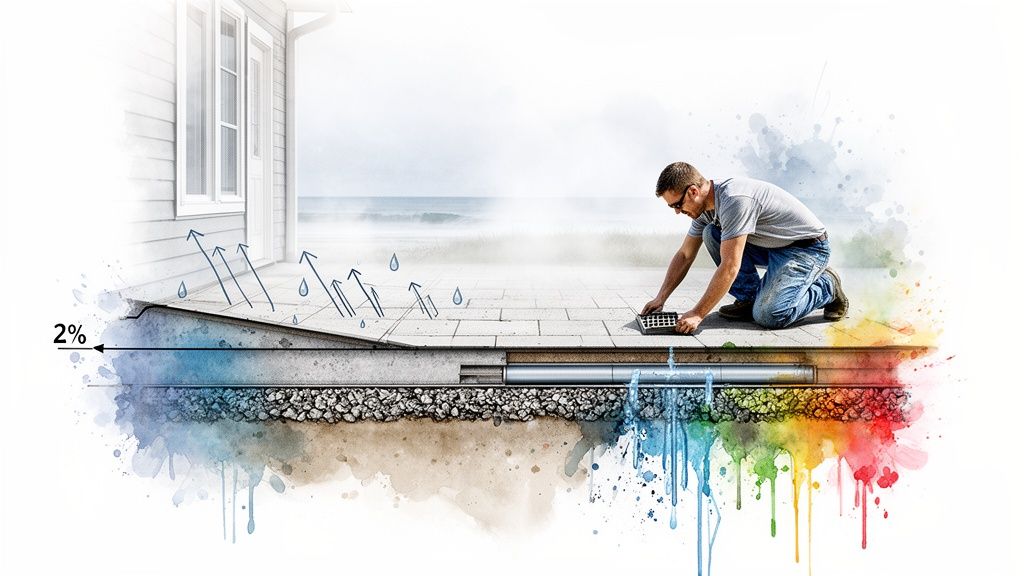
Any good mason will talk about the 2% slope, and for good reason. This gentle, almost unnoticeable grade is carefully built into the patio to guide every single drop of rain away from your home's foundation.
For every four feet of patio stretching out from your house, the surface needs to drop by about one inch. It's the perfect angle to keep water from pooling on top or—even worse—flowing back toward your foundation where it can cause thousands in damage.
A correctly sloped patio is your first and best line of defense. It ensures that surface water is managed effectively before it ever has a chance to penetrate the foundation and cause problems below.
When Subsurface Drainage Becomes Essential
Sometimes, just sloping the surface isn't enough, especially with heavy clay soil. When the ground itself doesn't drain well, you have to give the water an underground escape route. That's where subsurface drainage systems come in.
An experienced contractor will evaluate your property and soil to figure out the right approach. A couple of the most reliable options we use are:
- French Drains: We dig a trench along the edge of the patio, lay in a perforated pipe, and backfill it with gravel. This setup collects excess groundwater before it can saturate the soil under the patio and channels it safely away.
- Permeable Paver Systems: These are a fantastic, eco-friendly solution and are becoming more popular in our outdoor living spaces. Water flows right through special paver joints into a deep base of open-graded stone, which holds the water and allows it to slowly seep back into the ground.
Whether you need a simple slope or a full permeable system depends on your property’s unique challenges. From coastal Pebble Beach to inland Carmel Valley, a professional assessment is the only way to protect your investment from erosion.
Choosing Stone for Beauty, Durability, and Fire Safety
Let’s get beyond the generic advice to just "pick a durable stone." Building a stone patio that truly lasts in California demands a smarter approach. It's a careful balance between stunning looks and the harsh realities of our climate—from the intense sun to the ever-present threat of wildfire.
Your stone selection directly impacts how hot the patio gets, how slippery it might be, and how much maintenance it requires. Even more critically, for homeowners in places like Carmel Valley or Pebble Beach, your patio is a key player in your home's fire defense strategy.
Comparing Popular Stone Choices for California Living
Not all stone is created equal, especially when facing the California sun and salty coastal air. A good mason won’t just show you samples; they’ll help you weigh the practical pros and cons of each option.
Here’s a quick rundown of what we often see in the Monterey Bay area:
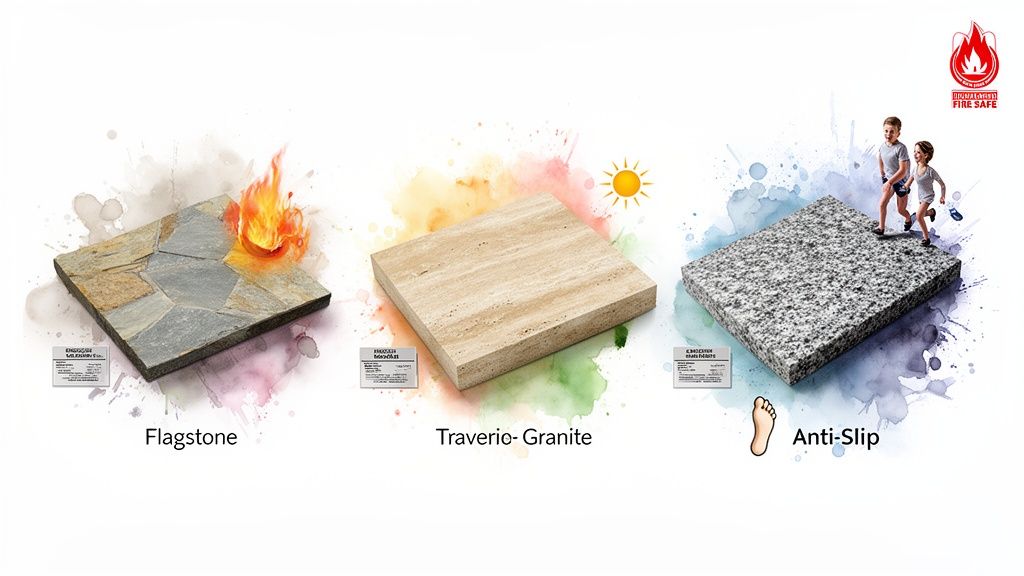
- Flagstone (Bluestone, Sandstone): People love flagstone for its natural, rustic character. Just be aware that darker varieties can soak up heat, making them scorching hot to walk on in full sun.
- Granite: As one of the toughest natural stones, granite resists scratches and stains like a champ. This makes it a fantastic choice for busy patios or outdoor kitchens, though its density can increase installation costs.
- Travertine: This is a top contender for pool decks because it stays remarkably cool to the touch. The catch is its porous nature—it absolutely must be sealed correctly to prevent stains and moisture damage.
The secret is to match the stone’s natural characteristics to your specific needs. You might prioritize slip resistance for a family pool in Pacific Grove or heat reflection for a backyard in Salinas.
The Critical Role of Stone in Wildfire Defense
Here in California, a patio isn't just a place to relax. It’s a vital part of your home’s defensible space—that essential buffer zone you create between your house and the surrounding landscape.
A non-combustible stone patio is, quite literally, a firebreak. It starves an approaching wildfire of fuel right where it matters most, creating a "safe zone" where flying embers are far less likely to ignite anything.
This isn’t a small detail; it’s a potentially life-saving feature. Swapping an old, flammable wood deck for stone hardscaping drastically boosts your home's resilience. Any stone you consider should have a Class A fire rating, which natural stone provides. We dive deeper into how Salinas residents are making smart hardscape choices for fire season in another guide.
The Finishing Details That Prevent Future Problems
After the heavy lifting is done, you get to the final touches. These are the details that separate a patio that looks good for a year from one that looks great for decades. It's the mark of real craftsmanship.
Skipping these last steps is like building a solid house but forgetting to caulk the windows. Your main lines of defense against weeds, insects, and moisture are the right joint filler and a good sealer.
Locking It All Together with the Right Joint Filler
Once the stones are set, you have to fill the gaps between them. This isn't just about aesthetics; the joint material is what locks the whole patio into a single, solid surface. You’ll typically see two choices.
- Regular Sand: This is the traditional, cheap route. Rain washes it out, wind blows it away, and ants see it as a pre-approved construction site for their new home.
- Polymeric Sand: This is what the pros use, period. It’s a fine sand blended with a polymer that activates with a light mist of water, hardening into a firm barrier that locks the stones tight.
For a stable, low-maintenance patio, using polymeric sand is non-negotiable. It forms a powerful barrier that stops erosion, keeps weeds from sprouting, and tells burrowing insects to find another place to live.
Why Sealing Your Stone Patio Is a Smart Investment
Natural stone is tough, but it’s not invincible, especially in our Monterey Bay climate. Whether it's the intense Salinas sun or the damp coastal fog in Carmel, your patio is under constant assault. Sealing it adds a crucial layer of protection.
A high-quality stone sealer soaks deep into the pores of the stone to create an invisible shield from within.
Think of sealing your patio like putting on sunscreen and a raincoat at the same time. It blocks the UV rays that fade the stone’s beautiful colors and repels the moisture that causes stains, mildew, and—especially near the coast—salt damage.
This final step is your best insurance for protecting the beauty and integrity of your investment. Spills from a summer BBQ wipe right up, and the rich colors of your stone won't look washed out after a few years.
Why a Licensed Mason Is Your Most Important Investment
Think of a stone patio as a permanent addition to your home, not just another landscaping feature. Building something meant to last for decades—and stand up to California's challenges—demands a level of skill, engineering knowledge, and code awareness that a general landscaper simply doesn't have.
This is exactly why your first and most important investment should be in a licensed, bonded, and insured C-29 masonry contractor. A license isn't just a piece of paper; it’s your primary defense against shoddy workmanship and contractors who disappear.
The Serious Risks of Unlicensed Work
In California, hiring someone without a license can end up costing you far more than you think you're saving. When you hire an unlicensed worker, you become the responsible party.
- No Insurance Protection: If someone gets hurt on your property, you could be on the hook for their medical bills and lost wages. Your homeowner's insurance might not cover it.
- No Bond to Cover Poor Work: A contractor's bond is your financial safety net if the work is terrible or they abandon the job. Unlicensed operators offer zero protection.
- Code Violations: Someone who isn't licensed probably doesn't know the specific building codes for places like Monterey or Carmel. This can lead to an unsafe patio that you might be legally forced to tear down at your own expense.
Investing in a true professional mason isn't just about getting a better-looking patio. It's about ensuring your project is safe, structurally sound, and a compliant asset to your home—not a dangerous liability.
Questions to Ask Every Potential Contractor
Before signing a contract, you need to do your homework and verify every potential contractor. A true professional will expect you to and will have all their information ready. You can learn more in our guide to hiring licensed masons.
Start with these non-negotiable questions:
- Can you provide your C-29 Masonry license number? (Always check it yourself on the CSLB website).
- Can you provide a certificate of general liability and workers' compensation insurance?
- Are you bonded, and can you provide the bond number?
- What's your specific experience building patios in Monterey County, considering our soil and coastal conditions?
Any hesitation to answer these questions is a major red flag. A professional's expertise is your best guarantee that your patio is built right from the ground up.
FAQs About Building a Stone Patio That Lasts in California
What is the most common reason stone patios fail?
The number one reason is a poor foundation. Contractors often cut corners by not excavating deep enough or failing to properly compact the base material. This leads to shifting, cracking, and sinking, especially in California's expansive clay soils.
Do I need a permit for a patio in Monterey County?
Often, yes. You will likely need a permit if the patio is attached to your home, covers a significant area, or requires major grading work. A licensed, local contractor will know the specific requirements for cities like Carmel or Salinas and handle the permitting process for you.
What is the best stone for a coastal patio?
For coastal homes in places like Pacific Grove or Pebble Beach, you need a dense, low-porosity stone like granite or certain types of slate. These materials resist salt corrosion and moisture absorption better than porous stones like travertine, ensuring they last longer in the damp, salty air.
How does a stone patio improve wildfire safety?
A stone patio creates critical "defensible space" around your home. As a non-combustible surface, it acts as a firebreak, preventing embers from igniting vegetation near your house and reducing the radiant heat that reaches your walls, which is crucial in areas like Carmel Valley.
How much slope does a patio need for proper drainage?
A patio should have a minimum slope of 2%, which means it drops one inch for every four feet of length. This gentle, often unnoticeable grade is essential for directing rainwater away from your home's foundation, preventing water damage and soil erosion underneath the patio.
A properly built patio is an investment that pays you back with decades of enjoyment. Understanding the truth about building a stone patio that lasts in California—from the critical groundwork in Salinas to fire-wise choices in Carmel—puts you in control. For a project that stands the test of time in our local climate, there's no substitute for consulting a licensed masonry professional who understands the unique challenges of building in the Monterey Bay region.
For homeowners in Salinas, Carmel, Pebble Beach, and the greater Monterey Bay area, Stonecap Masonry Inc. provides expert craftsmanship built on a foundation of trust and durability. To discuss your project, visit us at https://stonecapmasonry.com.
