It’s a familiar story across the country and especially here in Monterey Bay: homeowners are scrapping plans to move. Instead, they are investing right where they are. In 2026, we're seeing a massive shift away from house hunting and toward high-impact renovations, with stone patios leading the charge as part of the answer to why more homeowners are choosing patios over new homes in 2026.
This isn't just about aesthetics; it's a smart financial decision. It's driven by high mortgage rates and inflated home prices that make moving impractical. For many, adding a beautifully crafted stone patio is the most logical way to gain functional square footage without the burden of a massive new loan.
The Great Housing Reassessment: Patios Over New Homes
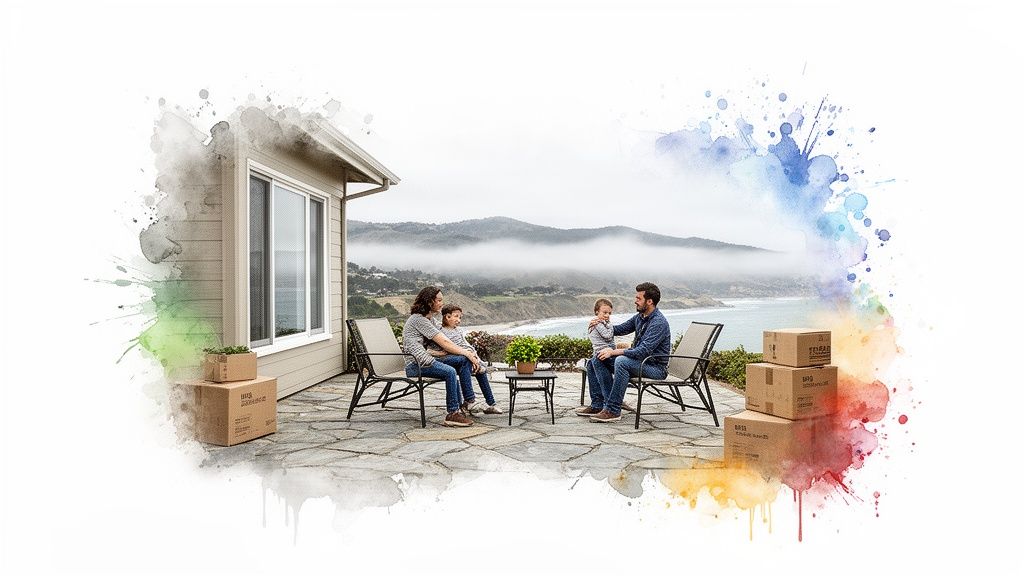
The classic American dream of upgrading to a bigger house is on pause. The current economic climate has created a "locked-in" effect, where homeowners sitting on low-interest mortgages simply can't justify moving. This has triggered a profound reassessment of what a "home" really needs to be.
Rather than taking on the stress and expense of relocating, families are getting strategic. They're investing in their current properties to make them more livable, more enjoyable, and more valuable. At the center of this movement is the custom stone patio—a project that transforms a backyard into a seamless extension of the home’s living area.
A Smart Response to High Interest Rates
The numbers paint a clear picture. Current market data shows that 55% of U.S. homeowners prefer renovating rather than moving due to high interest rates. (Stonecap Masonry Inc., Strategic Report, 2026). This means families in Salinas, Carmel, and Pebble Beach are choosing to maximize their stay-in-place investment by creating incredible outdoor spaces.
It’s no surprise, then, that patio installations are booming as homeowners who feel locked-in turn to outdoor improvements. This shift is part of the broader home renovation trends in 2026 that prioritize function and lifestyle. When weighing your options, the financial and lifestyle trade-offs become incredibly clear.
Renovate vs Relocate: A Homeowner's Financial Dilemma
| Consideration | Adding a Stone Patio | Buying a New Home |
|---|---|---|
| Upfront Cost | $10,000 – $30,000+ (project dependent) | $50,000 – $100,000+ (down payment, closing costs) |
| Financial Risk | Lower; often funded with savings or smaller loan | Higher; involves a large new mortgage at current rates |
| Return on Investment | Strong (20-30% ROI); adds immediate resale value | Varies greatly; dependent on market fluctuations |
| Lifestyle Impact | Immediate improvement to current home, less disruption | Major disruption; stress of moving and settling in |
| Timeline | 2-4 weeks from start to finish | 3-6 months for searching, financing, and closing |
Ultimately, adding a patio allows you to enhance the home you already love. You can do this without the financial shock and upheaval of moving in today's market.
Patios as Strategic Livable Square Footage
A professionally built patio is more than a slab of concrete; it’s a strategic investment. It delivers tangible value aligned with what modern homeowners need. The market is shifting toward patios as livable square footage, not just decorative features.
- Cost-Effective Expansion: It gives you that "bonus room" experience—an outdoor living room or kitchen—for a fraction of what a traditional home addition would cost.
- Enhanced Lifestyle: It creates a central hub for family dinners, entertaining friends, or quiet relaxation, directly improving your day-to-day life.
- Increased Property Value: A well-designed, beautifully constructed outdoor space is a major selling point that makes your home stand out to future buyers.
By transforming their backyards, homeowners are making a calculated choice. This is a key reason why 2026 is the turning point for outdoor living investments.
Why Patios Offer Better Value Than New Construction
When weighing whether to renovate or move, the math often boils down to a single number: the cost per square foot. More homeowners are running those numbers and coming to a surprising conclusion. This simple fact is a huge part of why more homeowners are choosing patios over new homes in 2026.
This isn't just a feeling; it's a real shift driven by the shrinking size of new homes. While new construction prices keep climbing, floor plans are getting smaller. This forces buyers into a corner where they're paying more for less, making the idea of adding outdoor space to their current home look incredibly attractive.
The Shrinking New Home Footprint
The data tells a clear story. In 2024, the average new single-family home hovered around 2,200 square feet. That’s a significant 10% drop from its peak back in 2015.
Why the change? It's a direct response to soaring material costs and the price of land in desirable areas. Builders have to pass those costs along, leaving homebuyers with a tough choice.
Meanwhile, the average new patio now adds around 320 square feet of high-quality, usable space. This creates a powerful financial argument for staying put and upgrading. You can dig deeper into this trend with the latest patio construction data from NAHB.
Comparing the Cost Per Square Foot
Let’s get practical and break down the numbers. It’s here that the advantage of adding a patio becomes impossible to ignore. Think of it as adding a "bonus room" without the expense of a traditional home addition.
- New Home Construction: In many markets, you’re looking at $200+ per square foot. That doesn't include the new mortgage, closing costs, or the hassle of moving.
- Patio Installation: A professionally installed stone patio typically lands somewhere between $50 to $150 per square foot, based on materials and design complexity.
The difference is staggering. For what you might spend on a cramped bedroom addition, you could build a sprawling, multi-functional outdoor living area. A custom stone patio isn't just a feature; it's a strategic acquisition of livable square footage.
A Durable Investment in the Monterey Bay Climate
The value calculation goes beyond the initial price tag, especially here on the coast. In communities like Carmel, Pacific Grove, and Monterey, durability isn't a luxury; it's a necessity. A properly constructed masonry patio is engineered to withstand our local environment, from salty sea air to shifting clay soils.
Expert craftsmanship and proper base preparation ensure your investment stands the test of time. A wood deck requires constant maintenance and will eventually surrender to moisture. A stone patio, however, offers decades of enjoyment with almost no upkeep, adding lasting value.
Understanding the truth behind hardscape pricing is the first step to appreciating why quality construction pays for itself.
The Real ROI: How a Patio Enhances Your Daily Life
Beyond dollars and cents, a powerful shift in how we live is fueling the patio trend. Remote work has put a new premium on our home environment. An outdoor living area has gone from a "nice-to-have" to a must-have.
A well-built stone patio isn't just for weekend barbecues anymore. It's a versatile space that genuinely improves your quality of life. The daily enjoyment you get from this space is its own return on investment.
The New Standard for Outdoor Living
Especially in high-value areas like Carmel and Pebble Beach, the bar for outdoor spaces has been reset. Features once considered luxuries, like outdoor kitchens or custom stone fire pits, are becoming expected. A home lacking a quality patio is already a step behind on the resale market.
This is where the numbers really start to make sense. Just look at the cost-per-square-foot advantage of adding a patio versus a full home addition.
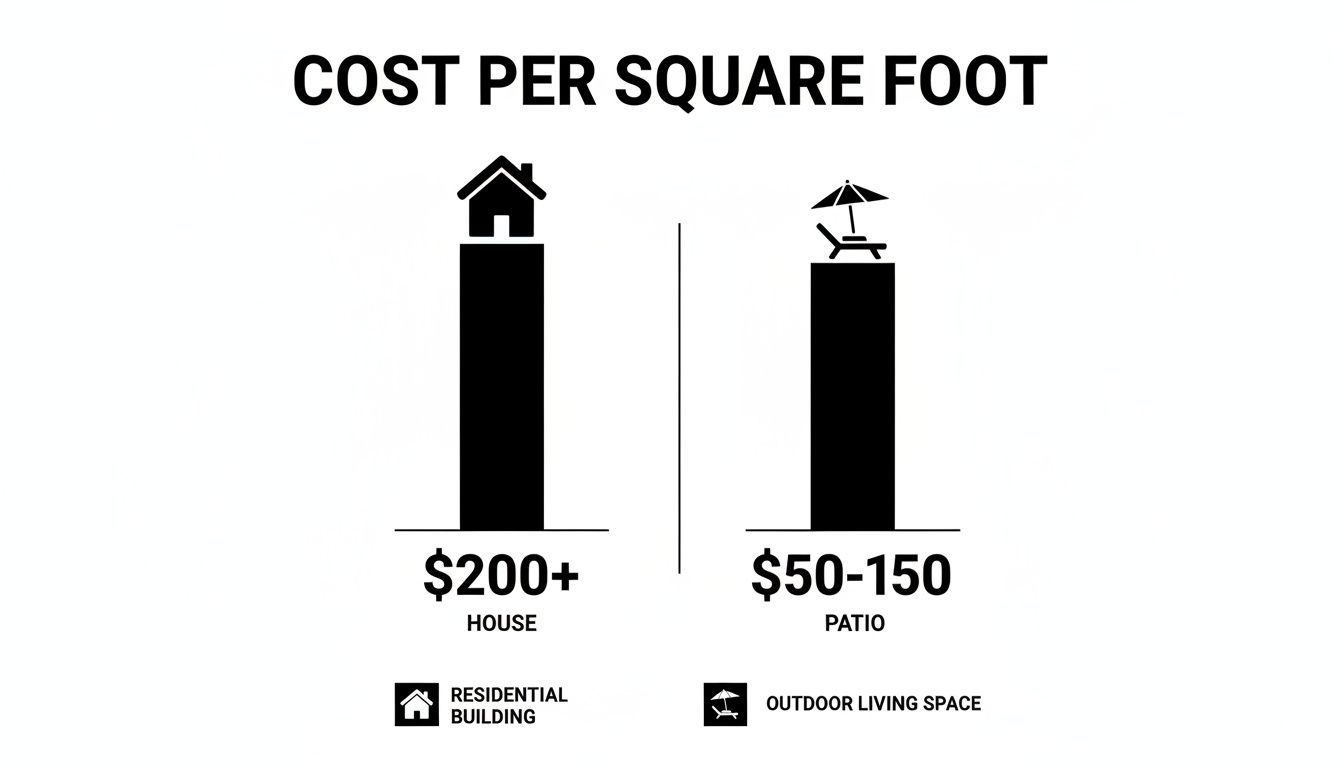
As you can see, creating usable outdoor square footage is dramatically more cost-effective.
Why Patios Have Overtaken Decks in Homebuyer Preference
Recent industry data adds another layer to why more homeowners are choosing patios over new homes in 2026. Patios have officially surpassed decks as the most in-demand outdoor feature.
A survey from the National Association of Home Builders (NAHB) found that patios were included in a whopping 63% of all new homes built in 2021. Meanwhile, decks were installed in just 17.5%, their lowest share in over 15 years. It’s a clear signal that homeowners today prefer the durability and low maintenance of stone and pavers. (NAHB, 2022).
A thoughtfully designed patio is an investment in your well-being. It creates a space to decompress and connect with family. Designing and building these custom outdoor living spaces demands a deep understanding of aesthetics and structural integrity.
Building a Patio for the Monterey Bay Climate
Putting in a new patio is a fantastic investment, but it must be built for our local conditions. Our coastal environment throws a lot at a structure, from corrosive salt air to wildfire risks. A poorly built patio just won’t stand a chance.
A resilient patio is more than pretty stone; it's a system engineered from the ground up. For anyone in Salinas, Carmel, or Pacific Grove, getting these local details right is the secret to a durable investment.
Creating Defensible Space in High-Risk Fire Zones
If you live in Carmel Valley, wildfire is a reality you can't ignore. A properly designed stone patio is one of your best tools for creating defensible space. This is a critical buffer around your home meant to slow or stop an approaching fire.
Natural stone, pavers, and concrete simply don’t burn. A wood deck, on the other hand, is fuel sitting next to your house. A stone patio creates a fire-resistant barrier, a feature essential for protecting your property. You can learn more about how Carmel Valley's fire zones are changing stone patio design in 2026 right here.
Engineering for Coastal Weather and Shifting Soils
The Monterey Bay climate is tough on building materials. The constant salty air corrodes the metal fasteners in decks and makes wood rot much faster. Stone masonry, however, is completely unfazed by this coastal environment.
It’s not just what’s in the air; it’s what’s under our feet. Much of our region has expansive clay soils that shift and swell with the seasons. An improperly built patio will quickly crack and heave, which is a major safety hazard.
A patio’s longevity is determined by what you can't see. Proper base preparation, compaction, and drainage are non-negotiable. This ensures structural integrity against our region’s unique geological and weather-related stresses.
The Importance of Structural Integrity on Varied Terrain
Many properties around Pebble Beach and the Santa Lucia hills are built on slopes. This makes structural stability the single most important part of any patio project. In almost every case, a patio on a slope will need a professionally engineered retaining wall that meets strict building codes.
These walls prevent soil erosion that could undermine your home's foundation. They also manage water runoff and ensure long-term stability. Trying to save money on structural work is a surefire way to court disaster. Hiring an insured and licensed masonry professional ensures every component is built to exceed California codes.
Your Patio Project From Vision to Reality
Taking a patio from a dream to a finished project can feel overwhelming. But if you break it down into a clear plan, it's not so daunting. It all starts with figuring out what you want and ends with finding the right pro to build it.
The very first step is to pinpoint your patio's main job. Is this a quiet spot for coffee or a hub for family barbecues? The answer will steer every other decision, from the layout to the materials.
Defining Your Patio's Purpose and Style
Before a single stone is laid, you need a clear vision. A great patio is an extension of your home that fits your lifestyle. It should match your house's architecture and handle the Monterey Bay climate.
A few key questions will point you in the right direction:
- Functionality: How will you use this space 90% of the time? Think about creating zones for grilling, dining, and lounging.
- Aesthetics: What look feels right? A clean, minimalist patio might be perfect for a modern home in Pacific Grove. A rustic, natural flagstone design could feel right at home in Carmel Valley.
- Budget: What’s a realistic number you're comfortable investing? Nailing this down early helps guide material choices and keeps the project on track.
Having answers to these questions gives you a solid foundation before you even talk to a contractor. To bring the space to life, think about finishing touches like adding greenery with outdoor planter pots.
Choosing Your Patio Material for Coastal Durability
Here on the Central Coast, our materials have to work harder. The salty air, morning fog, and intense sun mean durability is just as important as looks. Your choice of material will impact your patio's longevity, maintenance, and cost.
Let's break down some of the most common options for our unique coastal environment.
| Material | Average Cost (per sq ft) | Lifespan | Best For | Maintenance |
|---|---|---|---|---|
| Natural Stone | $25 – $50+ | 50+ years | Timeless, high-end look; unmatched durability in salty air. | Low; requires periodic sealing to prevent stains. |
| Pavers | $18 – $30 | 30-50 years | Versatility in design and color; easy to repair individual pieces. | Moderate; may need joint sand replenishment and weed control. |
| Brick | $20 – $40 | 100+ years | Classic, traditional aesthetic that complements older homes. | Low; very durable but can be susceptible to moss in shady areas. |
| Poured Concrete | $12 – $20 | 20-30 years | Budget-friendly and modern; can be stamped or colored. | Moderate; prone to cracking over time and requires regular sealing. |
Ultimately, the best material fits your budget, matches your home's style, and won't give you maintenance headaches. A skilled mason can walk you through the pros and cons of each.
Navigating the Contractor Hiring Process
Choosing the right professional is the single most important decision you'll make. The gap between a true craftsman and an unlicensed operator is massive. It affects not just how your patio looks, but its safety and how long it lasts.
Many homeowners get burned by inconsistent quotes, poor workmanship, or contractors who simply vanish. These horror stories almost always start with hiring someone who isn't properly licensed. Protecting yourself starts with doing your homework.
A licensed, bonded, and insured professional is non-negotiable. It means you’re covered if an accident happens on your property and holds the contractor accountable. To get a better handle on what to look for, check out our guide on hiring the right hardscape contractor.
A detailed quote from a reputable mason will do more than just give you a number. It will break down costs and provide a clear contract and realistic timeline. That kind of transparency is the hallmark of a real professional.
Why Quality Craftsmanship Is Your Best Investment
Making the call to invest in your current home with a new patio is a great financial decision. But the lasting value of that choice boils down to one thing: the quality of the work. It’s the driving force behind the trend of why more homeowners are choosing patios over new homes in 2026—they want an investment that will truly stand the test of time.
A patio is a permanent structural addition to your property. The difference between a passable job and genuine craftsmanship is hidden in the details. We're talking about meticulous base preparation and smart drainage solutions that ensure your patio lasts for decades.
The Foundation of a Lasting Patio
The success of your patio depends on what’s buried beneath the surface. Here in the Monterey Bay area, our shifting soils can wreck a poorly prepared base. An experienced mason knows that building on an unstable foundation is asking for trouble.
True craftsmanship means getting the fundamentals right:
- Proper Excavation: Digging down past the loose topsoil to reach solid, stable ground.
- Engineered Base Layers: Using the right kind and depth of aggregate, then compacting it to create a rock-solid foundation.
- Integrated Drainage: Designing a system that pulls water away from the patio and your home’s foundation to prevent erosion.
A patio’s beauty is temporary, but its structural integrity is permanent. Investing in professional craftsmanship means you’re paying for a solution engineered to last.
Protecting Your Investment with a Licensed Professional
Choosing a licensed, bonded, and insured masonry contractor is the most critical step you can take. A CSLB-licensed professional like Stonecap Masonry is held to strict state standards for safety, quality, and business ethics. This is your best defense against shoddy work or blown timelines.
Hiring an expert ensures your project complies with all local building codes. This is crucial for structural elements like retaining walls in the hilly terrain from Pebble Beach to Carmel Valley. This doesn't just guarantee your patio is safe; it solidifies its value when you eventually sell.
Frequently Asked Questions
1. How much value does a stone patio add in California?
A professionally installed stone patio offers a strong return on investment. In desirable areas like Carmel or Monterey, a stunning outdoor space is also a huge emotional draw for buyers, helping your home sell faster and for a higher perceived value.
2. Is a patio a smarter choice than a deck in the Monterey Bay area?
Yes, for our coastal climate, a stone or paver patio is a far better long-term choice. It stands up to damp, salty air without rotting, isn't susceptible to pests, and offers superior fire resistance, making it a more durable and safer investment.
3. How long will my yard be a construction zone?
This depends on the project's complexity. A simple paver patio on a flat surface might only take one to two weeks, while a multi-level design with a full outdoor kitchen could take several weeks. A professional contractor will provide a realistic timeline upfront.
4. Do I need a permit for a patio in Monterey County?
It depends. A simple, ground-level patio usually doesn't require one, but adding retaining walls over a certain height or utility lines for an outdoor kitchen almost always will. A licensed, local contractor will handle all necessary permits to ensure compliance.
5. Why is hiring a licensed mason so important?
Hiring a contractor with a C-29 Masonry license protects your investment. It proves they have met state requirements for skill and knowledge and carry the proper insurance to protect you from liability. This ensures your project is safe, beautiful, and built right.
Adding a beautiful patio is a savvy move that pays off in both lifestyle and property value. Given the challenges of our local environment—from the coastal fog in Pacific Grove to the fire-risk areas in Carmel Valley—working with a licensed masonry professional is the smartest first step. A qualified expert ensures your project is built with craftsmanship, durability, and local expertise.
For a patio built to last, trust a licensed professional to bring your vision to life. Learn more about our services.
