Direct Answer: A C-29 masonry contractor builds the structural island frame, footing, stone or tile finish, and surrounding hardscape. Gas lines, electrical, and plumbing require separate licensed trades.
I get variations of the same question almost every week. A homeowner wants a fire pit, a built-in grill, a paver patio, and maybe some artificial turf, all in the same project. They reach out to a masonry contractor, and then they’re surprised to learn that one contractor can’t do all of it. That confusion is completely understandable, and it’s worth clearing up before anyone breaks ground.
On the Monterey Peninsula, outdoor kitchen projects tend to involve three or four separate licensed trades, and the masonry scope is just one piece of the puzzle. Getting clear on what falls inside that scope, and what doesn’t, saves homeowners from hiring the wrong contractor first, or expecting one trade to absorb work that requires a different license entirely.
This article focuses on exactly that: what a C-29 licensed masonry contractor actually builds in an outdoor kitchen, where that scope ends, and why the sequence those trades work in matters more than most people realize before a project starts.
What the Masonry Contractor Actually Builds
The masonry scope in an outdoor kitchen is specific. It’s not vague or flexible, it’s defined by what a C-29 masonry license covers under California law.
Here’s what falls inside that scope on a typical outdoor kitchen build:
- The footing or base slab, a concrete foundation sized for the load of the island and any integrated fire feature above it
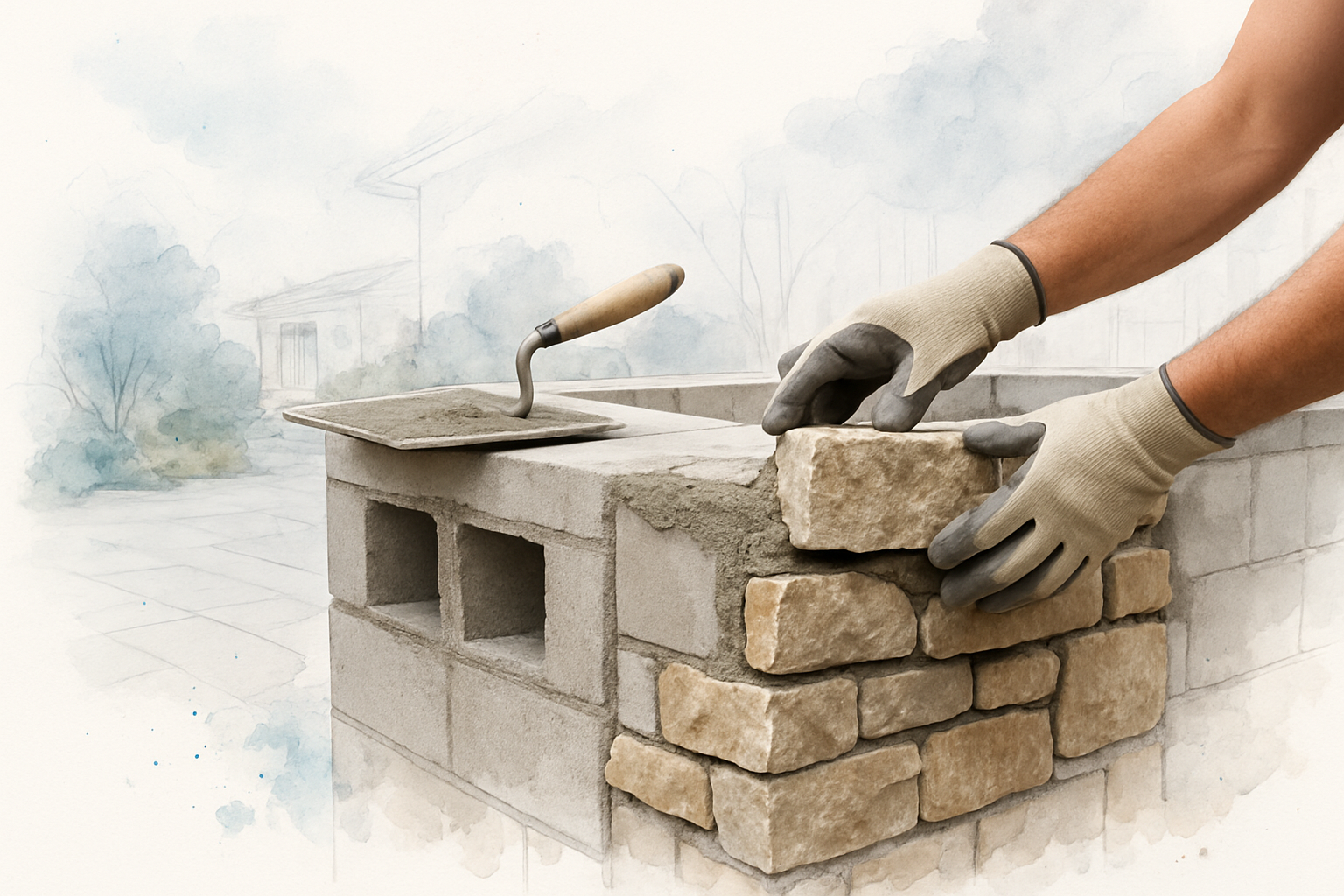
- The structural island frame, typically built from CMU block (concrete masonry units), which is the non-combustible core that houses the grill opening and any other appliance cutouts
- The exterior finish, stone veneer, tile, or stucco applied over the CMU frame once the utility rough-ins are approved
- Integrated fire features, a built-in fire pit or outdoor fireplace component, if included, is masonry work from the footing up
- The surrounding hardscape, the patio surface itself, whether natural stone, pavers, or brick, is masonry and ties directly into the island base
For a deeper look at what goes into a freestanding masonry grill or fire pit specifically, this breakdown covers the process in detail.
What masonry does not cover: the gas line connection to a built-in grill, any electrical outlets or lighting wired into the island, plumbing for a sink, or the appliance installation itself. Each of those requires its own licensed trade.
Why CMU Block Is the Right Frame for a Coastal Build
I want to spend a moment on the material choice for the island frame, because this is where I see a real split between masonry-built outdoor kitchens and the pre-fabricated or wood-framed alternatives some contractors use.
CMU block is non-combustible. That matters enormously when you’re housing a live flame or a high-BTU grill. But on the Monterey Peninsula specifically, it carries another advantage: resistance to the coastal moisture cycle.
The salt air off Monterey Bay, the marine fog that rolls through Pacific Grove and Carmel most mornings from May through August, and the temperature swings between cold nights and afternoon sun, all of that punishes building materials. Wood-framed outdoor kitchen structures can take on moisture, swell, and eventually compromise the finish materials bonded to them. CMU block doesn’t behave that way. It’s stable, dimensionally consistent, and provides a solid substrate for mortar-set stone or tile.
The stone veneer finish deserves equal attention. Porosity and mortar quality are the two factors that determine how a coastal stone finish holds up. A veneer that isn’t properly sealed or is set in an inconsistent mortar bed will show water staining and joint failure within a few seasons, especially on west-facing installations that take the direct marine exposure. The stone veneer installation process is one where cutting corners early creates visible problems later. Selecting the right stone for the exposure, and getting the mortar bed right the first time, is not optional on the Peninsula.
The Outdoor Kitchen Trade Sequence
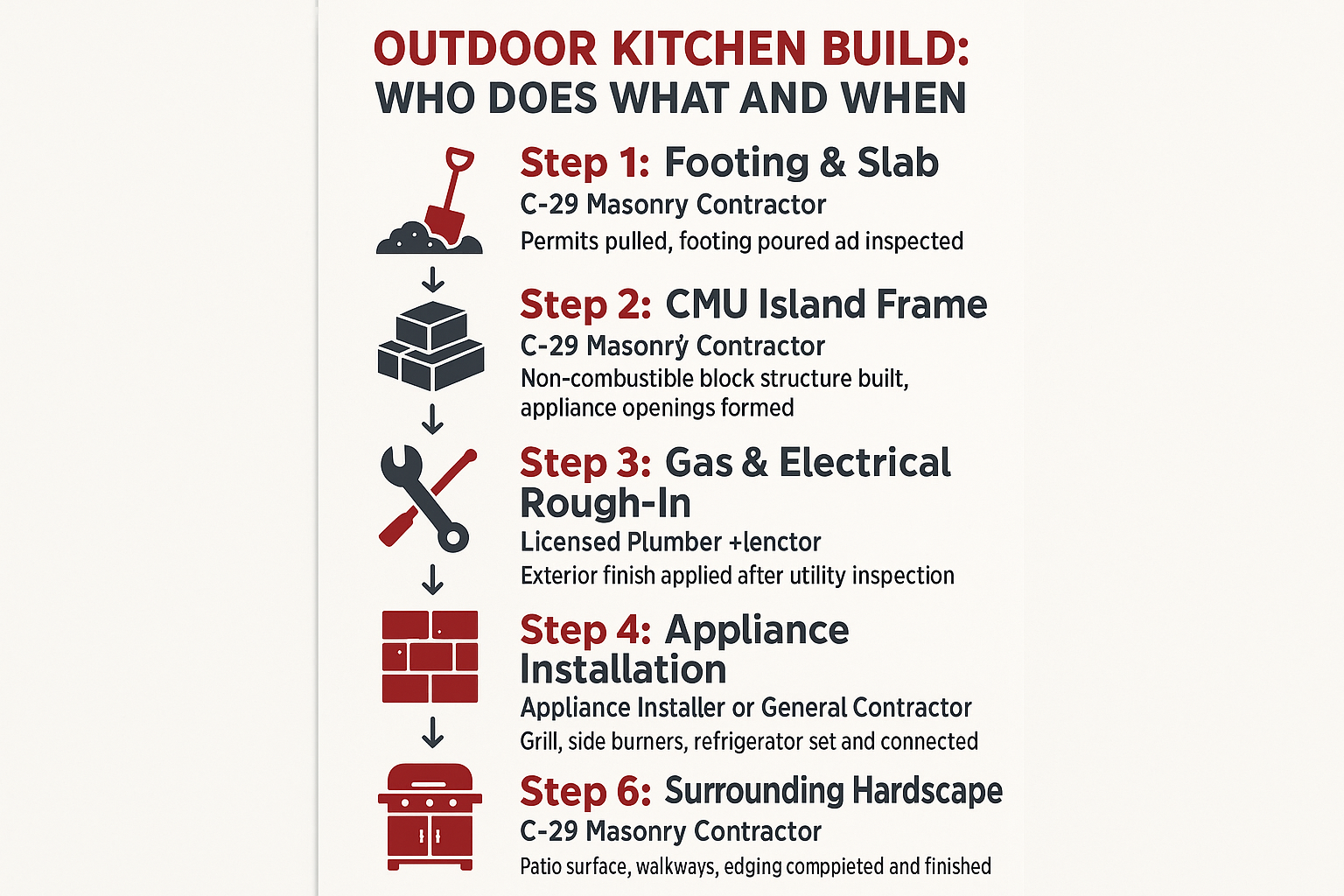
Getting the trade sequence right is what keeps a project on schedule and out of trouble with inspectors. This shows the order that work happens and which license covers each phase.
Why the Sequence Matters More Than the Price
One of the most expensive mistakes I see on outdoor kitchen projects happens when the trade sequence gets skipped or compressed to move faster.
The masonry frame has to be built and inspected before the gas and electrical rough-in can happen inside it. That’s not a preference, it’s how the inspection process works. The utility trades need access to the interior of the island before it’s enclosed. If a contractor finishes the stone veneer before the rough-in inspection is approved, the inspector requires access to what’s inside. That means demolishing finished work, completing the inspection, and re-setting the stone finish.
I’ve seen that scenario play out when a homeowner chose a contractor who gave a low bid and then tried to compress the schedule by running phases out of order. The cost of re-doing finished masonry work typically far exceeds whatever was saved on the original bid. For more on how this kind of sequencing applies specifically to fire feature construction, this guide on fireplace construction from footing to firebox walks through similar principles.
A contractor who has built outdoor kitchens before knows the sequence and coordinates with the other trades around it. That coordination isn’t overhead, it’s what keeps the project moving without expensive backtracking.
Outdoor Kitchen Scope by Trade
This table breaks down who is responsible for each element of a typical outdoor kitchen project, and which license that trade requires in California.
| Project Element | Trade Responsible | California License Required |
|---|---|---|
| Footing / base slab | Masonry contractor | C-29 Masonry |
| CMU island frame | Masonry contractor | C-29 Masonry |
| Stone veneer or tile finish | Masonry contractor | C-29 Masonry |
| Surrounding patio / hardscape | Masonry contractor | C-29 Masonry |
| Integrated fire pit or fireplace | Masonry contractor | C-29 Masonry |
| Gas line connection | Plumber | C-36 Plumbing |
| Electrical outlets / lighting | Electrician | C-10 Electrical |
| Sink plumbing | Plumber | C-36 Plumbing |
| Grill / appliance installation | Appliance installer or GC | Varies by scope |
Permits: What Triggers Them on the Peninsula
Permit requirements for outdoor kitchens in California vary by jurisdiction and by what the project actually includes. There is no universal rule, and I want to be direct about that.
A simple masonry surround for a portable or cart-style grill with no utility connections generally does not require a permit. Once you add any of the following, the project almost certainly does:
- A hardwired gas line to a built-in appliance
- Electrical outlets or wired lighting in or around the island
- Plumbing for a sink
- A roof or overhead structure above the kitchen area that exceeds local square footage thresholds
On the Monterey Peninsula, each jurisdiction, Salinas, Carmel, unincorporated Monterey County, may apply local amendments on top of the California Building Code. The California Building Standards Commission publishes the base code, but local amendments are the deciding factor for any specific address. The only correct answer is to confirm requirements with your local building department before any work begins.
For anyone considering how masonry licensing fits into this picture, reading a California contractor’s license before you hire is worth doing early, before you’ve committed to a contractor or a project scope.
Frequently Asked Questions About Outdoor Kitchen Masonry
Can a masonry contractor handle the whole outdoor kitchen project?
For the structural and hardscape elements, yes. A C-29 licensed masonry contractor can build the island frame, footing, stone finish, fire features, and surrounding patio. But the gas line, electrical work, and plumbing each require their own licensed trade. A masonry contractor who has done outdoor kitchen projects before will typically know which other trades to coordinate with, and in what order.
Does a built-in outdoor grill require a permit in Salinas or Carmel?
It depends on what ‘built-in’ means for your specific project. If the grill connects to a permanent gas line or the island includes electrical outlets, you’ll almost certainly need permits, and possibly separate permits for each trade. Confirm with the City of Salinas Building Division or the applicable Monterey County department before work starts. Requirements vary and the answer for one street may differ from the answer for a neighboring one.
Why is CMU block used instead of wood for the island frame?
CMU block is non-combustible, which matters when the island houses a live flame or a high-BTU grill. On the Monterey Peninsula, it also holds up better to the coastal moisture cycle than wood-framed alternatives. Wood can absorb the marine fog and salt air over time, which compromises the finish materials bonded to the frame. CMU block stays dimensionally stable, giving stone veneer or tile a solid, consistent surface to bond to.
What happens if a contractor applies the stone finish before the gas rough-in is inspected?
The inspector will require access to what’s inside the island. That typically means removing finished stone work, completing the inspection, and re-setting the veneer. This is one of the most avoidable and expensive mistakes on outdoor kitchen projects. The correct sequence is: frame built and inspected, utility rough-in completed and inspected, then stone finish applied.
How do I know if a masonry contractor is properly licensed for this work in California?
Every licensed contractor in California can be verified through the CSLB’s check-a-license tool at contractors.ca.gov. Look for a current, active C-29 classification, confirm the license is bonded and insured, and make sure the business name on the license matches the name on any contract you’re signing.
Have Questions About an Outdoor Kitchen Project on the Peninsula?
If you’re planning an outdoor kitchen in Salinas, Pebble Beach, Carmel, or anywhere on the Monterey Peninsula and want to understand the masonry scope before you start getting bids, Stonecap Masonry is available to talk through the details. Reach the team at 831-262-0442 or visit stonecapmasonry.com to request a quote and get a clear picture of what the masonry work on your project actually involves.
