Direct Answer: Most stone veneer failures start beneath the surface — with poor substrate preparation or inadequate anchorage, not the stone itself. Coastal moisture and seismic conditions on the Monterey Peninsula make those hidden details even more important.
Stone veneer is one of the most dramatic upgrades a homeowner can make to a wall, fireplace facing, or exterior surface. It changes the entire look and feel of a space — and when it’s done right, it holds up for decades. But I’ve seen enough veneer installations fail prematurely to know that the stone itself is almost never the problem.
The failure almost always starts underneath. The anchorage system, the substrate preparation, the mortar selection, the drainage detailing — those are the decisions that determine whether veneer on a Carmel home or a Salinas courtyard wall is still looking solid in fifteen years or separating from the wall in five.
If you’re planning a stone veneer installation on the Monterey Peninsula, this is the conversation worth having before the stone gets ordered. I’ll cover the three areas where most installations go wrong and what an honest evaluation of your wall should include before any work begins.
The Substrate Beneath the Stone Is Where Bids Actually Differ
One of the most common questions I hear from homeowners comparing veneer bids is some version of: Why is there such a price difference between these two quotes? The answer is almost always the substrate.
One contractor’s lower number typically means a direct application over whatever existing surface is there — painted concrete, old stucco, even bare CMU block. That approach looks fine on installation day. The problem is that none of those surfaces give the mortar a clean, stable mechanical bond, and the veneer system begins to underperform before the first full year of weather cycles has passed.
The correct substrate depends on three things:
- The existing wall condition — Is it structurally sound? Is there old paint, sealant, or a previous coating that needs to come off?
- The stone type being applied — Natural stone and manufactured veneer products have different weight and moisture profiles, which affects what base system is appropriate.
- The exposure environment — A wall facing Monterey Bay gets fundamentally different conditions than an interior fireplace facing in the same house.
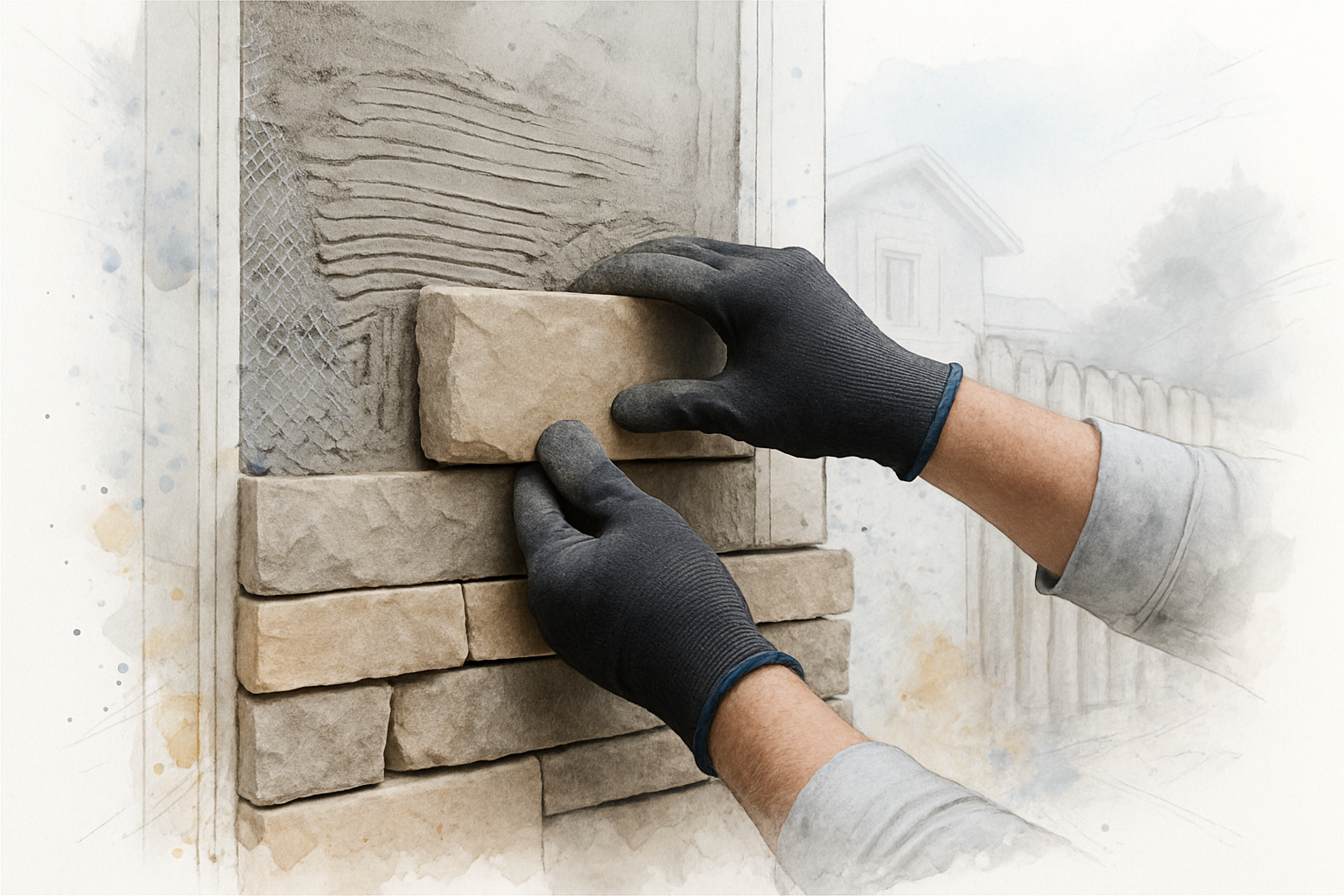
A contractor who skips a real evaluation of your existing wall before pricing is telling you something. Proper substrate prep on an exterior application typically involves metal lath mechanically fastened to the framing, a scratch coat of mortar, and adequate cure time before the stone goes on. That process adds time and cost — and it’s exactly where the price gap between responsible bids and low bids lives.
If you want to understand how foundational prep decisions affect the long-term result in masonry more broadly, what separates a solid hardscape installation from one that fails early covers similar principles in the context of outdoor paving work.
What Coastal Conditions Do to a Veneer System Over Time
This is where Monterey Peninsula installations differ from anything I’d describe in an inland market. Salt air and marine moisture cycling are hard on mortar joints — harder than most product specs are written to acknowledge. And when water gets behind a veneer face, the damage isn’t always visible right away.
What happens is this: water infiltrates through degraded mortar joints or poorly sealed termination points, gets trapped behind the veneer because there’s no drainage plane, and then expands and contracts as temperatures shift. Over enough cycles, that movement physically pushes the facing off the substrate. By the time you can see it, the failure has been building for years.
A properly detailed installation for this environment includes three things that low-bid work frequently skips:
- A drainage plane between the water-resistant barrier and the back of the veneer — this gives infiltrated moisture a path out instead of trapping it
- Mortar rated for the exposure level — standard Type S mortar performs differently in a coastal salt environment than a mortar selected specifically for that condition
- Flashing at every horizontal termination point — anywhere the veneer ends at a ledge, sill, or grade line is a water entry point if it’s not detailed correctly
Porous natural stones are especially vulnerable here. Without proper sealing, stones like certain sandstones or softer limestones absorb water and can spall or stain well before the underlying bond shows any sign of failure. The right material conversation happens before the stone is ordered — not after the first rainy season. The El Niño winter article goes into detail on how sustained moisture loading affects masonry systems across the Peninsula, and the same dynamics apply to veneer.
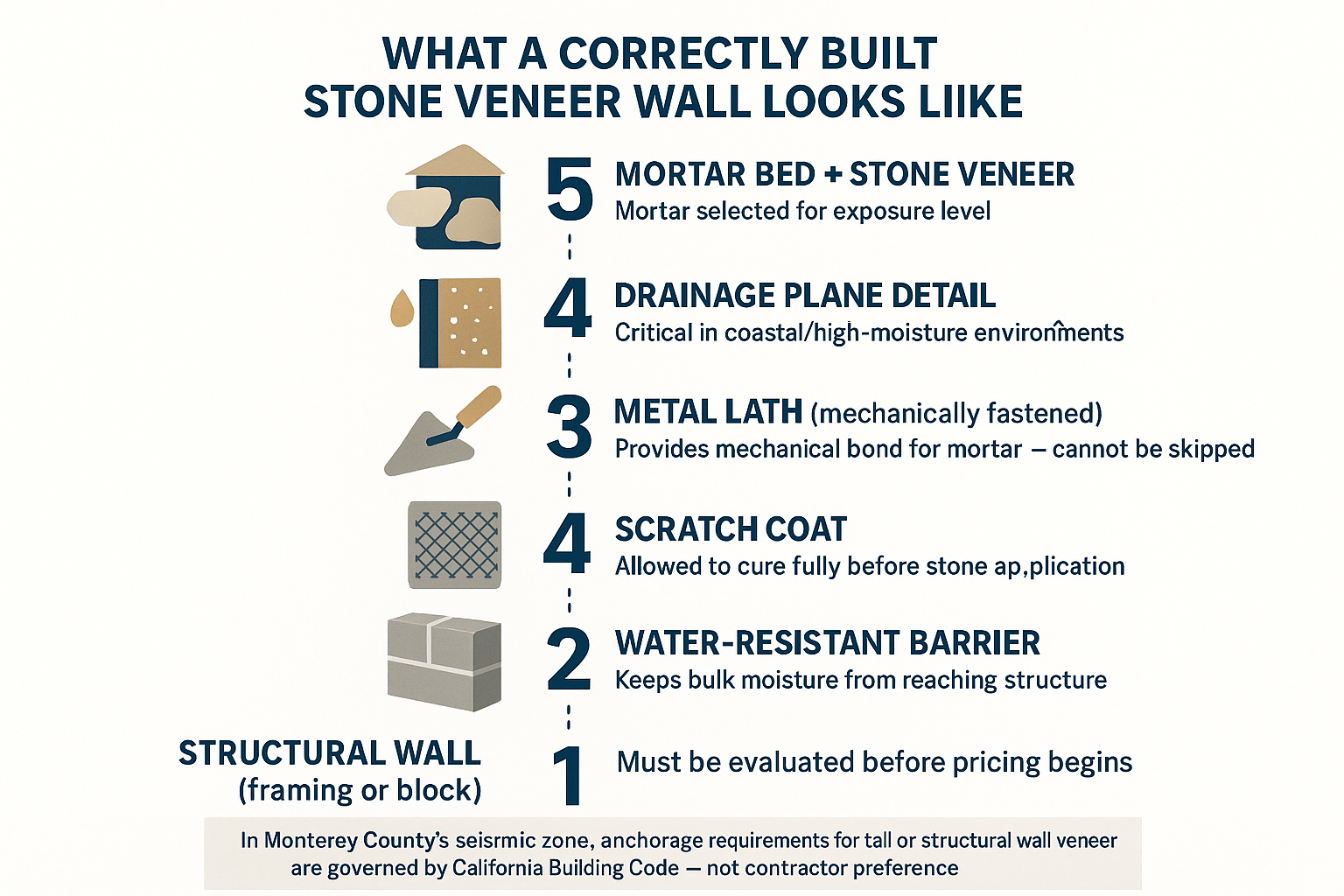
The Layers of a Correctly Built Veneer System
Understanding what a properly installed veneer wall actually looks like from the inside out helps homeowners ask better questions before work begins.
Anchorage Requirements in a Seismic Zone — This Is Not Optional
Monterey County sits in a moderate-to-high seismic hazard zone, and that has direct implications for how veneer is attached to structural walls. During lateral movement — the kind that happens in an earthquake — a veneer system that’s only held by mortar adhesion will separate from the wall. The anchorage system is what keeps the facing mechanically connected to the structure beneath it.
California’s building code establishes specific anchorage requirements based on the height of the installation and its proximity to exits or occupied areas. Those requirements aren’t flexible based on contractor preference or what’s been done locally for years. They exist because the failure mode is a heavy stone facing coming off a wall — and in a residential or commercial setting, that’s a serious safety issue.
In practice, this means:
- Veneer applied to a structural wall — especially any exterior application above the first floor — may require engineered anchorage, not just mortar contact
- Taller installations or those in high-traffic areas trigger stricter tie requirements under the California Building Code
- Any veneer work on a commercial structure, particularly one that falls under the City of Monterey’s URM (unreinforced masonry) hazard-reduction program, carries additional compliance considerations
For homeowners, the practical takeaway is this: ask your contractor directly whether the installation requires a permit. The answer depends on the jurisdiction, the extent of the work, and the wall type — and a contractor who gives you a blanket “no permit needed” without evaluating those factors is not being careful enough. Unpermitted structural veneer work creates real complications at resale, and it can require costly remediation if a future renovation touches the same wall. The local building department — whether that’s the City of Salinas, Monterey County, or the City of Carmel — is always the right first call on permit questions.
What Drives Cost Differences Between Stone Veneer Bids
Homeowners comparing bids for stone veneer installation often focus on the total number. Here’s where those numbers actually come from — and what a lower bid might be leaving out.
| Cost Factor | What It Covers | Impact if Skipped |
|---|---|---|
| Substrate evaluation | Assessing existing wall condition before pricing | Wrong prep method chosen; bond failure within a few years |
| Metal lath + scratch coat | Mechanical base system for mortar adhesion | Veneer relies on adhesion only; fails faster in moisture cycling |
| Drainage plane detailing | Moisture management behind veneer face | Water traps behind stone; freeze-thaw and salt air push facing off |
| Mortar selection | Mix appropriate for coastal or wet exposure | Standard mortar degrades faster in salt air environments |
| Flashing at terminations | Sealing horizontal ledges, sills, grade lines | Primary water entry point; leads to infiltration behind system |
| Anchorage hardware | Mechanical ties for tall or structural wall applications | Non-compliant with California seismic requirements; safety risk |
| Permit and inspection | Building department review for structural veneer | Complications at resale; potential remediation costs |
What an Honest Pre-Installation Conversation Should Include
Before any stone gets ordered or any wall gets touched, the right contractor should be asking — and answering — a short list of questions. I think of this as the pre-installation evaluation, and it’s where a lot of the real work happens.
A few things that should come up in any serious veneer consultation:
- What is the existing substrate? Not just “is it concrete” — but is there a previous coating, sealant, or condition that changes the prep approach?
- What is the exposure level of this wall? A Pebble Beach exterior facing the prevailing marine layer gets different treatment than an indoor fireplace facing in Salinas.
- What stone is being specified, and what are its moisture absorption characteristics? Manufactured stone products carry moisture resistance ratings that vary widely. Natural stone behaves differently by species.
- Does this application require a permit in this jurisdiction? The answer varies — but the question should always be asked before work begins, not after.
- What drainage and flashing details are included in the scope? If a bid doesn’t address these explicitly, they’re probably not included.
A homeowner who’s had a previous contractor experience go sideways — which describes a meaningful number of the inquiries we receive — is often right to be cautious. The questions above are reasonable ones to ask of any mason, and a contractor who takes them seriously is worth paying attention to.
For context on how similar pre-work evaluation applies to masonry repair, the difference between a cosmetic fix and a masonry repair is worth reading alongside this one.
Frequently Asked Questions About Stone Veneer Installation
Does stone veneer installation require a permit in Salinas or Monterey County?
It depends on the scope and the jurisdiction. Veneer applied to a structural wall — particularly on an exterior surface or at height — can trigger a permit requirement under California Building Code. The City of Salinas, Monterey County, and the City of Carmel each have their own building departments with slightly different thresholds. Ask your contractor before work begins, and when in doubt, contact the local building department directly. Unpermitted work on a structural wall creates problems at resale.
What’s the difference between natural stone veneer and manufactured stone veneer?
Natural stone is cut from quarried material — each piece varies in thickness, weight, and absorption characteristics. Manufactured stone veneer (sometimes called cultured stone) is a cast concrete product made to look like natural stone. Both can perform well when installed correctly, but they have different weight profiles, frost resistance ratings, and moisture absorption levels. The right choice depends on the application, the exposure environment, and the substrate. On the Monterey Peninsula’s coastal side, moisture resistance ratings matter more than most homeowners realize at the selection stage.
How much does stone veneer installation typically cost on the Monterey Peninsula?
Costs vary significantly based on the wall area, stone type, substrate condition, and the amount of prep work required. From what we see in Monterey County, material and labor costs combined can range widely — a straightforward interior fireplace facing reads very differently from a large exterior application on a Pebble Beach or Carmel Valley home that needs full substrate prep and drainage detailing. The factors listed in the cost table above are what drive the spread between bids. For a real number based on your specific wall and conditions, an on-site evaluation is the only honest answer.
Can stone veneer be applied over existing painted concrete or stucco?
Technically yes — but it’s usually the wrong call, and it’s where a lot of failures start. Paint and sealant layers create a weak bond plane between the mortar and the substrate. Over time, especially with coastal moisture cycling, the veneer separates at that layer. The correct approach is to evaluate whether the coating can be removed and what the wall condition is underneath. Skipping that step is one of the most common reasons a low-bid installation looks fine at first and fails within a few years.
How do I verify that a masonry contractor in California is properly licensed?
The California Contractors State License Board (CSLB) maintains a free public license lookup tool at www.cslb.ca.gov. You can search by contractor name or license number and see the license classification, status, bonding, and insurance information. For masonry work, look for a C-29 classification — that’s the specific designation that covers the full scope of masonry contracting in California. Never hire a masonry contractor who can’t provide a CSLB license number you can verify.
Thinking About Stone Veneer on a Monterey Peninsula Home?
Stonecap Masonry works with homeowners across Salinas, Carmel, Pebble Beach, and the broader Monterey Peninsula on stone veneer projects that start with a real evaluation of the existing wall — not just the stone selection. If you have a project in mind and want to talk through the substrate, the scope, or the permit question before you’ve committed to anything, the team at Stonecap Masonry is reachable at 831-262-0442 or through the request form at stonecapmasonry.com.
