
Let's get straight to the point: can you legally hire someone for small masonry repairs under $500 in California? The short answer is almost always no. Many homeowners are shocked to learn this.
This is a common and frustrating misconception. The state's $500 threshold applies to the total project cost—that includes both labor and materials combined. Even a seemingly minor job, like fixing a cracked step or resetting a loose brick, can easily exceed this strict legal limit.
The Reality of California's $500 Contractor Rule
Homeowners from Salinas to Carmel are often surprised by this rule. It feels like a simple handyman task, so why the red tape? The law sees it as regulated construction work, regardless of scale, to protect homeowners from the serious risks of unqualified work.
The trouble starts when a small job's true cost is calculated. You might have a few loose stones on a walkway in Pebble Beach or a hairline crack in a retaining wall in Carmel Valley. Once you add up quality mortar, matching stones, and skilled labor, you’re often past that $500 mark.
Why This Rule Catches Homeowners Off Guard
It’s understandable to feel frustrated when you just want a quick fix. But the California State License Board (CSLB) enforces this rule to prevent common problems that arise with unlicensed workers.
Hiring an unlicensed individual for a small job often leads to:
- Poor Workmanship: An unlicensed person may lack the skill for a lasting repair. That patch job could crumble in a year, forcing you to pay for the repair all over again.
- Serious Liability Risks: If an unlicensed worker gets hurt on your property, you could be liable for their medical bills. Your homeowner's insurance likely won't cover it.
- No Accountability: When the repair fails, unlicensed individuals can simply disappear. You have no contract and no license to report, leaving you with no way to recover your money.
For those of us in Monterey and Pacific Grove, these risks are significant. Our coastal weather and unique soil conditions mean even minor masonry work must be done with expert craftsmanship to last.
It's not just about the price. It's about ensuring every repair, no matter how small, adds to your home's safety and value. California's $500 rule is the state's line in the sand for consumer protection.
Understanding this rule helps you shift from seeking the cheapest fix to finding the right professional who can do the job legally, safely, and correctly.
Decoding California’s $500 Contractor Law
So, why is it so hard to hire someone for a small masonry repair under $500? The answer lies in how California law defines a "project." The law is clear: the $500 limit includes both labor and materials.
This is the critical detail that trips up many homeowners. The state looks at the full picture, from the cost of the bricks and mortar to the time and expertise needed to install them properly.
Why The Total Project Cost Is the Deciding Factor
Let's say you have loose flagstones on your patio in Carmel. The labor might seem like a couple hundred dollars. But once you factor in matching stone, polymer-modified mortar, and a professional-grade sealant, that "small job" has shot past the $500 legal threshold.
This is where some handymen suggest illegal workarounds. Be wary of tactics like:
- Splitting Invoices: Giving you multiple bills for the same job, each under $500.
- "You Buy, I Build": Asking you to buy materials so their labor-only invoice seems compliant.
The CSLB sees these as blatant attempts to break the law. You can learn more in our guide on the truth about the $500 rule.
The Law's Intent and Aggressive Enforcement
The CSLB’s purpose is to protect homeowners from shoddy work, abandoned jobs, and scams. The law ensures anyone working on your property has proven competence and can be held accountable. And enforcement has increased, especially in areas like Salinas and the Monterey Bay.
The Strategic Report highlights widespread homeowner frustration with this law but also notes aggressive CSLB enforcement against unlicensed contractors, which is why professionals won't risk taking "small" jobs casually. (Stonecap Masonry, Strategic Report).
The bottom line is this: If the combined value of labor and materials for a single project tops $500, you are legally required to hire a licensed contractor. There are no loopholes.
This flowchart breaks down the decision-making process for you.
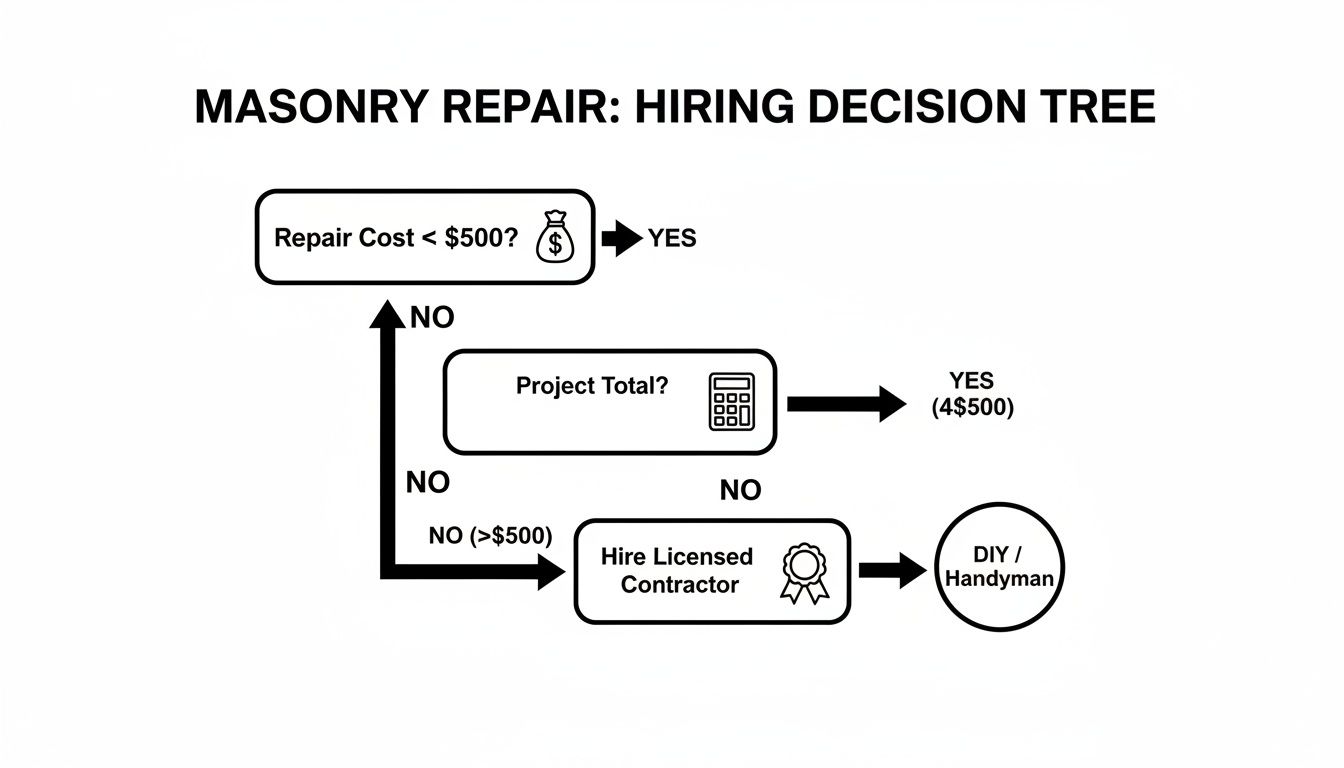 masonry repair hiring decisions based on cost and project total.” />
Following the law isn't just about avoiding fines; it's about protecting your biggest investment and ensuring work is safe, built to last, and up to code.
The Hidden Dangers of Hiring Unlicensed Workers
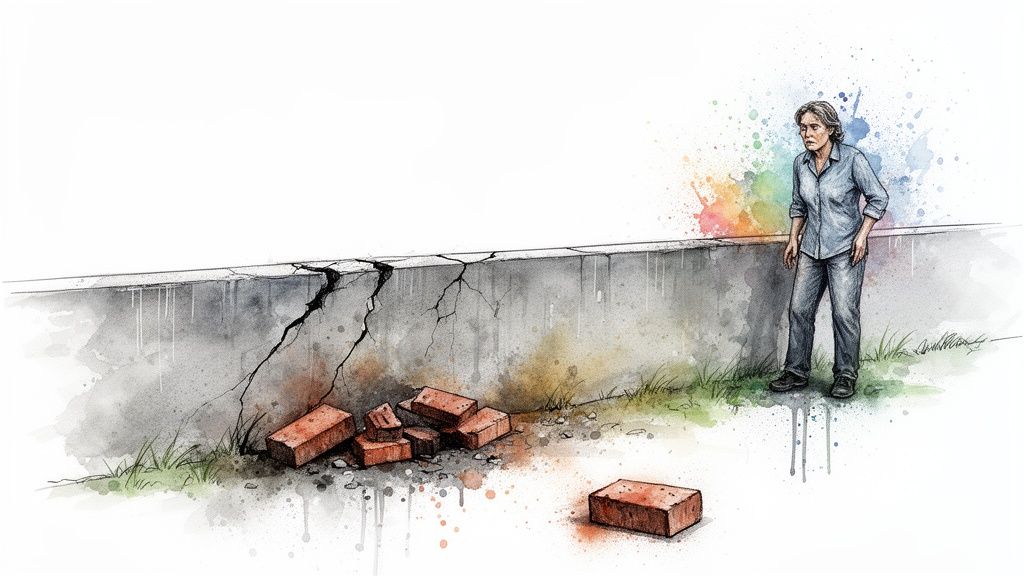
Hiring a handyman for a quick fix might seem like a bargain, but that low price often hides serious risks. A small repair job can quickly turn into a homeowner's nightmare.
The single biggest danger is your personal liability. A licensed contractor carries general liability and workers' compensation insurance. If you hire an unlicensed person and they get hurt, you could be responsible for their medical bills, a devastating financial blow.
The Frustration of Poor Workmanship
Then there's the quality of the work. We are often hired to fix a previous botched repair. Unlicensed workers may lack the specialized training for durable masonry, especially given the coastal conditions in the Monterey Bay area.
A shoddy repair always costs more in the long run. Those "savings" vanish when you have to call a professional a year later to tear out the bad work and redo it correctly.
Lack of Accountability and Code Violations
What happens if an unlicensed worker takes your deposit and disappears? Without a license to report or a proper contract, you have almost no recourse.
Worse, their work often violates local building codes. An improper fireplace repair in a high-risk area like Carmel Valley could create a fire hazard. These violations not only put your family's safety at risk but also create headaches when you try to sell your home. Learn more about what a license really tells you.
The Smarter, Safer Approach
The small upfront savings aren’t worth the long-term legal and financial fallout, as detailed in discussions about the pros and cons of hiring licensed vs. unlicensed contractors. The risks are clear:
- Personal Liability: An on-site injury could be financially devastating.
- Costly Re-Repairs: Bad work inevitably needs to be redone by a professional.
- Zero Recourse: Unlicensed workers can abandon a job with no consequences.
- Code & Safety Violations: Non-compliant work threatens your property and a future sale.
Hiring a licensed, bonded, and insured masonry professional is the only way to protect your investment, your family, and your peace of mind.
How a Licensed Masonry Contractor Handles Small Repairs
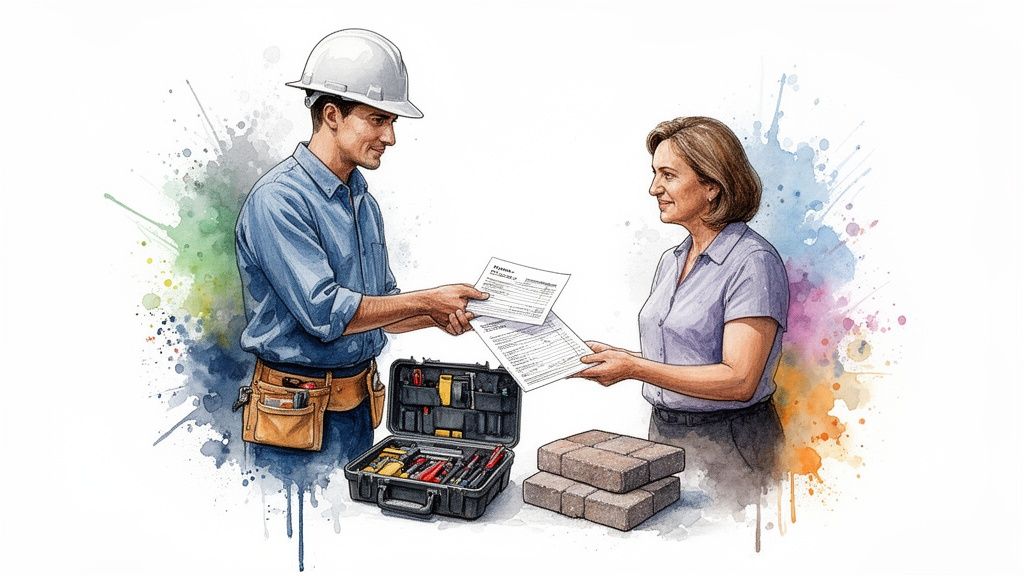
A licensed masonry contractor approaches every project—big or small—with a structured, professional process. This method is designed to protect you, guarantee quality craftsmanship, and adhere strictly to California law.
It begins with a professional consultation. A true expert will visit your property to assess the damage firsthand, whether it’s spalling brick in Pacific Grove or a cracked wall in Salinas. They have the experience to diagnose underlying structural issues a handyman would miss.
From Consultation to Compliant Action
After the assessment, you will receive a detailed, written quote. This document is your legal shield, clearly breaking down the scope of work, materials, labor costs, and final price. This transparency ensures there are no surprises.
A licensed professional will not suggest sketchy workarounds like splitting a project into multiple payments. Instead, you get a clear, comprehensive proposal that functions as a legal contract, protecting both parties.
A licensed contractor’s process is built on documentation and accountability. Their job isn't just to patch a problem; it's to provide a fix that is fully compliant, structurally sound, and gives you lasting peace of mind.
This professional approach extends to handling multiple small jobs.
The Smart Strategy: Bundling Small Repairs
A licensed contractor can legally and efficiently bundle several small repairs into a single project. Say you have a wobbly step, crumbling mortar, and a cracked paver. A professional will combine them into one project.
This approach offers significant benefits:
- Legal Compliance: It creates a single contract that removes any gray area around the $500 rule.
- Cost-Effectiveness: It is more efficient for a mason to tackle everything in one visit, saving you money.
- Comprehensive Care: It ensures all masonry issues on your property are addressed with the same high standard of craftsmanship.
Ensuring Code Compliance and Safety
A licensed mason guarantees that every repair meets local building codes. This is critical in the Monterey Bay area. For example, repairing a retaining wall in Carmel Valley requires deep knowledge of soil stability and drainage, while a fireplace builder in Pebble Beach must follow strict fire-safety codes.
A professional will show you proof of their CSLB license, general liability insurance, and workers' compensation coverage upfront. This paperwork is your guarantee that you are shielded from liability and working with a qualified, accountable expert.
What to Do Instead of Hiring an Unlicensed Handyman
Hiring a mason can feel intimidating, but a simple checklist can help you avoid common traps like shoddy workmanship or ghosting contractors. Following these steps helps you find a true professional who takes pride in their craft and protects you legally.
Step 1: Verify Their License
This is the non-negotiable first step. Ask for their contractor's license number before discussing the job.
You can check it in seconds on the CSLB website. This simple search confirms:
- If they are a legitimate, registered business.
- If their license is active and in good standing.
If someone is hesitant to provide their number, walk away. A true professional will be proud to share it.
Step 2: Confirm Insurance and Bonding
What happens if a worker damages your property or gets hurt? If your contractor isn't insured, that liability could fall on you.
Always ask for proof of:
- General Liability Insurance: This covers your property against accidental damage.
- Workers’ Compensation Insurance: This protects you from financial liability if a crew member is injured.
Bonding provides an extra layer of financial protection if the contractor fails to complete the job or pay suppliers.
Step 3: Insist on a Detailed Written Contract
A verbal agreement is not enough. A professional will always provide a written contract before work begins.
Your contract is your ultimate tool for accountability. It should detail the scope of work, materials, a payment schedule, and a projected timeline, leaving no room for surprises.
The contract must state the total cost. Be wary of anyone suggesting they break up the job to stay under the $500 limit—that’s illegal. California law also limits down payments to 10% of the total cost or $1,000, whichever is less. A large cash deposit is a major red flag.
By following these steps, you can confidently find the right hardscape contractor and ensure your project is done right.
Why a Licensed Pro Is Always the Right Call
When you see a small crack in a walkway, it’s tempting to get a handyman for a cheap patch. But in California, that simple fix can spiral into a mess of legal, financial, and safety problems.
The only way to ensure the job is done right—and legally—is to hire a licensed, bonded, and insured professional. A licensed mason won't just slap mortar on a crack; they'll diagnose the underlying cause and ensure the repair meets all local codes.
For homeowners in Monterey County, this is non-negotiable. Our coastal climate and local soil conditions are tough on masonry. An improper fix can fail quickly, leading to much larger and more expensive problems.
While hiring someone for a job under $500 is technically possible, it’s almost never the right move for masonry. Opting for a licensed expert like Stonecap Masonry means you're getting craftsmanship, durability, and the confidence that the job is done right from the start. We approach small projects with the same care and legality as larger ones, helping homeowners stay compliant while avoiding shortcuts that backfire.
Frequently Asked Questions About Small Masonry Repairs
Here are answers to common questions homeowners in the Monterey Bay area have about small masonry jobs and California's contractor laws.
Does the $500 limit only apply to labor?
No, this is a critical point. The $500 limit includes the total project cost—that means all labor, materials, and supplies combined.
What if I buy the materials myself to keep labor under $500?
This is a common misstep but still violates state law. The CSLB considers the total value of the project, so the cost of materials you purchase still counts toward the $500 threshold.
Can I split a larger job into smaller phases to stay under the limit?
No, this is illegal. Attempting to split one project into multiple sub-$500 invoices is a direct violation of California contractor law and can expose you to fines and liability.
What if my repair is a true emergency?
Even in an emergency, licensing laws apply. It’s even more critical to hire a licensed professional in a crisis to ensure the fix is safe, up to code, and won’t be denied by your homeowner's insurance.
Why is hiring a licensed contractor for a small job smarter?
A licensed contractor protects you from liability, ensures the repair is structurally sound and code-compliant, and provides a formal contract. They can also legally bundle multiple small repairs into one project, which is often more efficient and cost-effective.
For homeowners in Salinas, Carmel, and across Monterey County, understanding how the $500 rule works can save serious headaches. If you have masonry repairs you’ve been putting off, getting clear guidance from a licensed professional upfront will help you handle them the right way, protecting your home's integrity and value.
