Most hardscaping guides get stuck on the fun stuff—paver colors, patio shapes, and fire pit designs. While that's important, the real secret to a project that lasts a lifetime isn't what you see on top. It’s what lies hidden underneath.
The advanced guide to hardscaping in 2026 most homeowners never get is this: your project’s success depends almost entirely on the unseen foundation. Getting the soil, drainage, and base prep right is what protects your investment from sinking, cracking, and turning into a costly headache down the road.
Why Most Hardscaping Advice Falls Short
Typical industry advice often feels like ordering from a menu—you pick a patio, a retaining wall, or a walkway. Most providers fail to explain how these structures are built to withstand local conditions, leaving a huge trust gap.
This approach skips the most critical details like soil type and proper drainage. It leaves homeowners vulnerable to sinking pavers, leaning walls, and frustrating water problems.
The Hidden Factors That Determine Success
A beautiful hardscape is a carefully engineered system. Its ability to look good for decades is all about how well it handles invisible forces like shifting soil and immense water pressure.
The difference between a patio that fails in five years and one that lasts fifty comes down to a few key things. When you understand them, you can ask smarter questions and quickly spot a contractor who's trying to cut corners.
Here's what really matters:
- Soil Conditions: The expansive clay soils common in Salinas and Carmel Valley behave differently than the sandy soils along the coast in Pacific Grove. Every project must be engineered for the specific ground it's built on.
- Drainage and Grading: This is non-negotiable for protecting your investment. A patio that slopes even slightly toward your house is a recipe for foundation damage and water intrusion.
- Base Depth and Compaction: The thick layer of compacted gravel under your pavers is the real foundation. If it's too thin or poorly compacted, the beautiful surface on top is guaranteed to shift and sink.
These factors are especially crucial here in Monterey County. Our unique mix of coastal fog, heavy winter rains, and hilly terrain makes building a resilient hardscape a highly technical challenge.
Shifting Homeowner Priorities for 2026
The way we use our outdoor spaces has changed. Homeowners now demand fully integrated, multi-functional areas that serve as a true extension of their home.
Demand for complex outdoor living projects is up 50% since 2020, reflecting higher expectations from homeowners (Stonecap Masonry Inc. Strategic Report, 2024). This shift means homeowners prioritize durability and long-term performance more than ever.
In fact, 71% of homeowners prioritize durability and aesthetics, which puts the focus right back on expert craftsmanship and high-quality materials (Stonecap Masonry Inc. Strategic Report, 2024).
This guide meets these new expectations by digging into the forward-thinking elements that define a high-value, long-lasting outdoor space. To get a feel for how these priorities are influencing design, you can explore the top trends that make stone patios a leading home upgrade.
Building a Hardscape That Lasts Generations
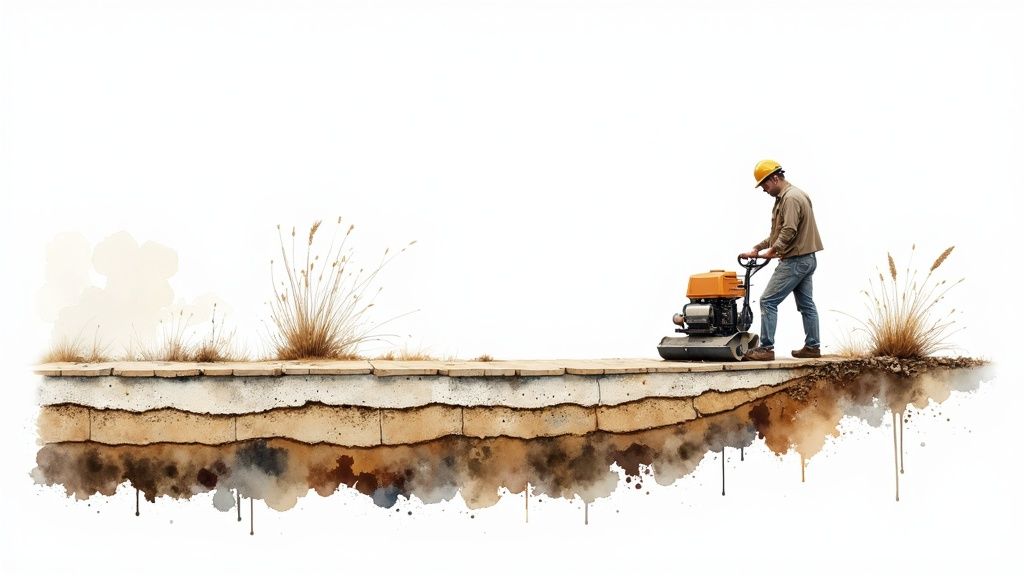
Think of your hardscape’s base as the foundation of your house. If it fails, everything built on top of it—the beautiful patio, the elegant walkway—will eventually crack, sink, and shift.
What you see on the surface is just the finishing touch. The real engineering that guarantees a project will last for decades is buried completely out of sight.
The Science of a Solid Foundation
Getting the base right isn't guesswork; it's a science. It starts with excavating the native soil to a specific depth, then building it back up with layers of compacted aggregate material.
This creates an incredibly stable, interlocking platform that distributes weight evenly and lets water drain away. The depth of that base is engineered to fight back against the unique challenges of our local soil.
In places like Salinas and Carmel Valley, we deal with expansive clay that swells when wet and shrinks when dry. A standard, off-the-shelf base will be torn apart by that movement, leading to structural failure.
A robust base is your only defense against soil movement and water damage. It is the single most critical investment you can make in the longevity of any hardscape project.
This is why an experienced, licensed contractor will always insist on a deeper, reinforced base in clay soil. Understanding this is the advanced guide to hardscaping in 2026 most homeowners never get—it's the non-negotiable step for true durability.
Common Pitfalls of Inadequate Base Prep
Shortcuts on base preparation are alarmingly common. It's an easy way for a low-ball contractor to cut costs, but the consequences appear a year or two later, long after they're gone.
These failures almost always come down to two classic mistakes:
- Inadequate Depth: Skimping on the excavation means using less base material. This saves the contractor time and money but leaves you with a weak foundation that can’t handle soil movement.
- Improper Compaction: Each layer of base material must be mechanically compacted to lock the particles together. Just dumping gravel and smoothing the top is a guaranteed recipe for settling and sinking.
Knowing this empowers you to ask a potential contractor the right questions. If they can’t clearly explain their plan for base depth and compaction specific to your soil, that’s a huge red flag.
To see how a solid foundation fits into the bigger picture, check out our guide on the top outdoor living upgrades every Monterey homeowner wants.
Comparing Standard vs. Advanced Hardscape Base Preparation
The difference between a patio that looks good for a year and one that lasts a generation comes down to what's underneath. This table breaks down the shortcuts versus the professional methods needed for our Central Coast soil.
| Component | Standard (Failure-Prone) Method | Advanced (Durable) Method |
|---|---|---|
| Excavation Depth | A scant 3-4 inches, ignoring soil type to save on labor and disposal costs. | 6-12 inches or more, customized to local soil (e.g., deeper for expansive clay in Salinas). |
| Base Material | A single layer of inconsistent material that contains fine particles that hold water. | Clean, crushed, angular gravel applied in specific layers to ensure fantastic drainage and interlocking stability. |
| Compaction | A quick once-over, leaving a loose, unstable base prone to settling. | Material is compacted in 2-3 inch "lifts" with a heavy plate compactor to achieve maximum density. |
| Geotextile Fabric | Often skipped entirely, allowing soil to mix into the base and clog drainage. | A tough separation fabric is always installed between native soil and the gravel base to prevent contamination. |
A hardscape is only as strong as the foundation it rests on. Insisting on this advanced, soil-specific approach is the absolute best way to make sure your investment provides decades of beauty, safety, and function.
Choosing Smarter Materials for Modern Designs
Once your foundation is solid, you can choose the materials for your patio, walkway, or retaining wall. Today, a smart material choice balances stunning looks, durability, and our environmental reality here on the Central Coast.
This is a huge part of the advanced guide to hardscaping in 2026 most homeowners never get. It’s about understanding that the right stone can do more than just look pretty—it can manage winter rains and help protect your home from wildfire.
Responding to Water and Fire Realities in Monterey County
For anyone in Monterey County, from Carmel Valley to Pebble Beach, the two biggest concerns are water and fire. Your hardscape materials are your first line of defense against both.
Permeable Pavers for Smarter Water Management
Traditional concrete patios cause water to sheet off into storm drains. Permeable pavers are engineered with small gaps that let rainwater pass through, absorbing naturally back into the ground. This reduces runoff and helps recharge our local groundwater.
Fire-Resistant Materials for a Defensible Space
If you live in a high-risk area, creating a "defensible space" with non-combustible materials is essential. This buffer zone around your home can slow or even stop a wildfire.
Hardscaping is the best way to build this zone. Using materials like natural stone, concrete pavers, or gravel creates a beautiful patio that doubles as a powerful firebreak. You can dive deeper into how fire zones are changing stone patio design in our detailed article.
Selecting Materials That Withstand the Coastal Climate
The Monterey Bay climate is tough on building materials. The daily cycle of salt-laced fog, intense sun, and temperature shifts will cause lesser materials to fade, crack, and fail.
- Natural Stone: Dense stones like granite and quartzite are practically bulletproof against salt and moisture, making them perfect for our coastal environment.
- High-Density Concrete Pavers: Modern manufacturing creates incredibly dense units that resist the flaking (spalling) and color fade that plagues older poured concrete.
- Porcelain Pavers: A premium choice, porcelain is so dense it's virtually non-porous. That means it’s incredibly resistant to stains, salt damage, and moisture.
Choosing a material rated for coastal or high-moisture environments is a crucial step that protects your investment from premature decay.
The Rise of Multi-Functional Hardscapes
Outdoor spaces are now extensions of our homes, designed to host dinner parties, serve as quiet reading nooks, or be the hub for a family barbecue. Your hardscape materials tie all these functions together seamlessly.
When you build integrated features from the same durable stone as your patio, you get a cohesive, high-end look. This transforms a simple backyard into a true outdoor room.
Consider incorporating these popular multi-functional elements:
- Integrated Seating Walls: Low retaining walls that double as permanent seating, defining the edge of a patio while saving space.
- Outdoor Kitchens and Bars: Built-in structures made from stone that house grills, sinks, and fridges for a complete culinary setup.
- Tiered Patios: For homes on a slope, using retaining walls to create multiple levels turns a challenging hillside into a series of usable outdoor zones.
Solving Drainage and Slope Challenges
Water is the single greatest enemy of any hardscape. Poor water management can lead to shifting, cracking, and even damage to your home’s foundation.
Professional site grading and drainage solutions aren't just a good idea—they're a non-negotiable part of any project built to last. Every hardscape surface needs a slight slope, typically a quarter-inch drop per foot, to push water away from your house.
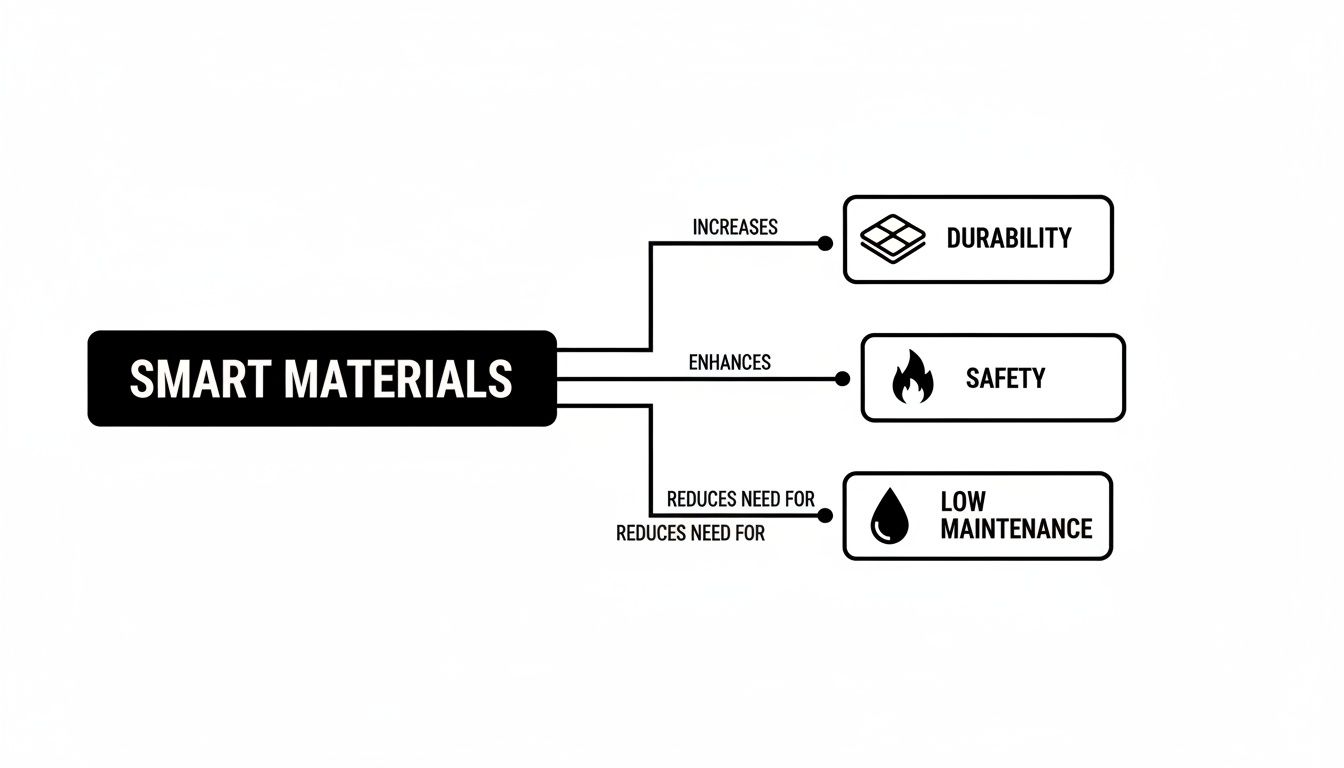
As you can see, modern materials deliver on durability, safety, and reduced maintenance. They are the backbone of a successful hardscape project for 2026 and beyond.
Advanced Water Management Techniques
For properties with complex needs, especially on the sloped terrains common in Carmel and Monterey, a simple surface grade may not be enough. Advanced solutions are often needed to protect your landscape and home.
These systems work together to capture and move water safely:
- French Drains: Hidden trenches with a perforated pipe and gravel that collect groundwater, pulling it away from patio foundations and retaining walls.
- Swales: Shallow, wide channels in your landscape that slow water down and guide it away, allowing it to soak into the ground.
- Permeable Surfaces: Permeable pavers let water drain through the surface, dramatically reducing runoff from the start.
The Hidden Danger of Hydrostatic Pressure
When building a retaining wall, managing water becomes a serious safety concern. Soil behind a wall soaks up rainwater, creating an immense sideways force called hydrostatic pressure.
This force pushes relentlessly against the wall. Without proper drainage, it can build until it literally shoves a retaining wall over.
A professionally engineered wall isn't just a recommendation; it's a structural necessity to prevent catastrophic failure, property damage, and serious injury.
This is why a licensed contractor will never build a retaining wall without robust drainage behind it. The solution involves a layer of clean gravel and a perforated drainpipe at the base to relieve the pressure and ensure the wall stands strong for decades.
Understanding the True Cost of Your Project
Getting hardscape quotes can feel like a guessing game. While it's natural to focus on the bottom line, the lowest bid is almost never the best value.
A suspiciously cheap quote is a red flag. It usually means corners are being cut where you can't see them—like shallow base preparation, subpar materials, or no drainage plan.
What Really Drives Project Costs
To truly compare bids, you must understand what you're paying for. This is a core part of the advanced guide to hardscaping in 2026 most homeowners never get—shifting your mindset from short-term price to long-term value.
Here’s a breakdown of the real cost drivers:
- Materials: Premium natural stone or high-end interlocking pavers cost more upfront but are built to withstand our coastal climate.
- Labor and Craftsmanship: A team of licensed, experienced masons commands a higher rate because their work is what makes a project last for decades.
- Site Access and Excavation: Steep slopes or difficult access adds labor hours. Proper digging and grading are the bedrock of a stable hardscape.
- Base Preparation: A deep, properly compacted aggregate base takes more material and time but is the only thing preventing your patio from sinking.
Investing in Value, Not Just Price
A well-built hardscape costs more today but saves you thousands in repairs later on. More importantly, it adds real, lasting value to your home.
Professionally designed outdoor spaces can increase a home's resale price by up to 15-20% in key markets (Precedence Research). You can read the full research about landscaping product market trends to see the numbers.
An expertly built hardscape is an asset that appreciates over time. A poorly built one is a liability from day one.
This is especially true in the competitive real estate markets of Carmel and Pebble Beach, where a stunning outdoor living area is a huge draw for buyers. For a deeper dive into spotting contractors who take shortcuts, learn more about the truth about what hardscape contractors can and can't do.
How to Choose the Right Masonry Contractor
You’ve done the research and have a solid vision—now you need the right craftsman to build it. Picking the right contractor is the most critical step in your project's success.
First, never hire anyone who isn't licensed, bonded, and insured. This is your project’s built-in safety net against shoddy work, accidents, and financial loss.
Questions That Reveal True Expertise
With the essentials confirmed, it’s time to separate the real artisans from the rest. A true professional will appreciate you asking tough, technical questions.
Try using these as a starting point during your interviews:
- Local Know-How: "I'm in Salinas where we have heavy clay soil. How would you prep the base to handle our specific soil conditions?"
- Base Preparation: "For a paver patio, what is your standard base depth, and how do you ensure proper compaction?"
- Drainage Strategy: "Walk me through exactly how you'd keep water moving away from my foundation on my sloped property."
- Project Communication: "What is your process for providing updates, and how do you handle changes during the project?"
Identifying a True Partner, Not Just a Bidder
A seasoned mason will give you straight, confident answers grounded in building science. They won't just tell you what they do; they’ll explain why it matters for the longevity and safety of your project.
Homeowner frustrations like ghosting, surprise costs, and unclear timelines often start with a contractor who lacks a professional process (Stonecap Masonry Inc. Strategic Report, 2024). A true partner communicates openly, sets clear expectations, and gets everything in writing.
Choosing a contractor based on craftsmanship and a clear process—not just the lowest price—is how you ensure a safe, resilient, and stunning outdoor space.
With regulations getting stricter, knowing how homeowners should hire contractors in 2026 is more critical than ever. Asking the right questions upfront protects your investment and ensures your hardscape is built to be enjoyed for decades.
Frequently Asked Questions
Why is the patio base so important?
The base is the hidden foundation of your entire outdoor living area. An improperly built base is the #1 reason hardscapes fail, leading to sinking pavers, cracking, and poor drainage that can damage your home's foundation.
What are the best hardscape materials for fire-prone areas like Carmel Valley?
Your safest options are non-combustible materials like natural stone, high-quality concrete pavers, and decorative gravel. These are essential for creating a "defensible space" that can halt a wildfire and protect your home.
How do I know if I need a retaining wall?
If you have a sloped yard that you want to make functional, you likely need a retaining wall. They are the best solution for preventing soil erosion and creating flat, usable areas for patios or gardens.
What does "licensed, bonded, and insured" actually mean for me?
This trio is your non-negotiable protection. A license proves competency, a bond protects your money if the contractor defaults, and insurance covers accidents or property damage during construction.
Will a quality hardscape project increase my home's value?
Absolutely. In a competitive market like Monterey County, a professionally built outdoor living space is a major selling point. It boosts curb appeal and can deliver a significant return on investment.
A stunning hardscape that stands the test of time is the result of smart planning that accounts for our region's unique challenges, from the clay soil in Salinas to the coastal air in Pacific Grove. If you want clear, area-specific guidance before starting your project, our team is here to help you plan a safe, durable, and beautiful hardscape built for the Central Coast.
To consult with a licensed masonry professional, contact us at https://stonecapmasonry.com.
