Residents of Monterey Bay know that wildfire resilience is a growing regional concern. With recent fire seasons impacting Carmel Valley, Prunedale, and South Salinas, homeowners are increasingly choosing masonry-based outdoor upgrades that can act as protective zones around their homes. What used to be a decision driven by aesthetics is now a conversation about safety, turning a decorative space into a crucial line of defense.
This guide explains how Carmel Valley’s fire zones are changing stone patio design in 2026, focusing on new material requirements, design strategies, and the importance of expert craftsmanship.
The New Rules: Patios as Defensible Space in Carmel Valley
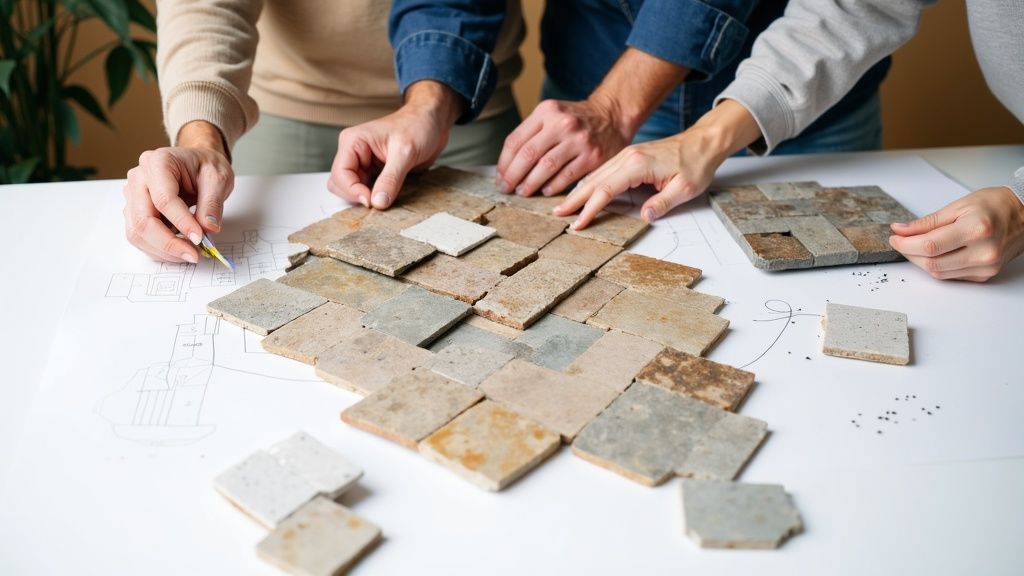
The primary force behind this change is CAL FIRE's expansion of its Fire Hazard Severity Zone (FHSZ) maps. As these maps are redrawn, many properties in areas like Carmel, Salinas, and Monterey now fall under stricter building codes. This shift directly impacts how we plan and build outdoor living spaces.
Wood decks and low-grade patio materials not only deteriorate faster in our coastal moisture but also pose a fire-spread risk in high-hazard zones. This hidden risk is why more homeowners now search for "fire-safe patio" and "non-combustible hardscape," making compliance a matter of both safety and trust.
A Focus on Non-Combustible Materials
The most significant change is the mandate for non-combustible materials in new patios and hardscapes. That classic wood deck is no longer a viable option in high-risk zones, as it can carry flames directly to your house. Instead, codes now push homeowners toward materials with a Class A fire rating.
These safer, more durable options include:
- Dense Natural Stone: Granite, basalt, and properly sealed slate offer incredible resistance to heat and embers.
- Porcelain Pavers: Engineered to be extremely dense and non-porous, these tiles give smoldering embers nowhere to lodge.
- Sealed Joints: It's not just the stones; joints must be filled with fire-resistant mortar or polymeric sand to prevent flammable debris from accumulating.
Designing Patios as a Fire-Wise Buffer
Beyond materials, the new rules redefine a patio's purpose. It's no longer just a place for a barbecue; it must now function as "defensible space." This means creating a fuel-free barrier designed to slow or stop a ground fire before it reaches your home.
This strategy is a cornerstone of the Firewise USA® program, which strongly advises creating an ember-resistant zone within the first five feet of a home's exterior walls. A professionally built stone patio is the perfect way to establish this critical safety buffer.
The following table breaks down how these changes look in practice.
Key Changes in Carmel Valley Stone Patio Design for 2026
| Design Aspect | Past Common Practice | New Mandated Approach |
|---|---|---|
| Material Choice | Wood decking, loose gravel, untreated materials | Class A rated non-combustible materials (stone, porcelain pavers) |
| Patio Perimeter | Placed right against flammable grass or mulch | Must extend at least 5 feet from the home, creating a clear zone |
| Joints & Gaps | Often left open or filled with regular sand | Sealed with fire-resistant mortar or polymeric sand to prevent debris |
| Primary Function | Solely for aesthetics and entertainment | Serves as a defensible space and part of the home's fire defense |
This means new patios must extend at least five feet from the foundation, creating a clean perimeter. By working with a licensed contractor who understands these codes, homeowners in Salinas, Monterey, and Carmel can be confident their patio is both beautiful and safe.
Why Is Your Property Suddenly in a High-Risk Fire Zone?
Many homeowners in the Monterey Bay area are asking, "When did my property become a high-risk fire zone?" The answer lies in the newly updated Fire Hazard Severity Zone (FHSZ) maps from CAL FIRE. These maps are the result of data-driven analysis of how wildfire risk is changing across California.
Anyone who remembers the 2020 Carmel Fire knows this isn't a distant problem. The new maps reflect our new reality, pulling more homes in Carmel Valley, Salinas, and surrounding communities into zones that demand higher standards of fire-safe construction.
What’s Different About the New Maps?
Older maps relied heavily on historical data, but our climate is changing faster than the historical record. Today’s fire scientists use advanced climate models that account for warmer temperatures, longer droughts, and high-wind events.
As a result, properties once considered lower risk are being re-classified. Any new construction or significant renovation—including a new stone patio—must meet a much stricter set of rules. This reclassification directly impacts how you design your outdoor living space.
How This Affects Your Patio Plans
Your property’s FHSZ designation is now the starting point for any outdoor project. It dictates material choices, layout, and even drainage. Modern wildfire science shows that the real danger is often the storm of embers preceding a fire, which causes most homes to ignite.
A professionally built, non-combustible stone patio acts as a powerful "ember-resistant zone." It creates a hardscape buffer that stops windblown embers from landing on flammable materials next to your house.
These regulations aren't meant to make life harder; they're a proactive way to protect our homes and communities. You can see the changes for yourself by exploring the updated Monterey County LRA maps. A compliant, professionally designed stone patio is an essential investment in your home's safety.
Choosing Smart, Non-Combustible Materials for Your Patio
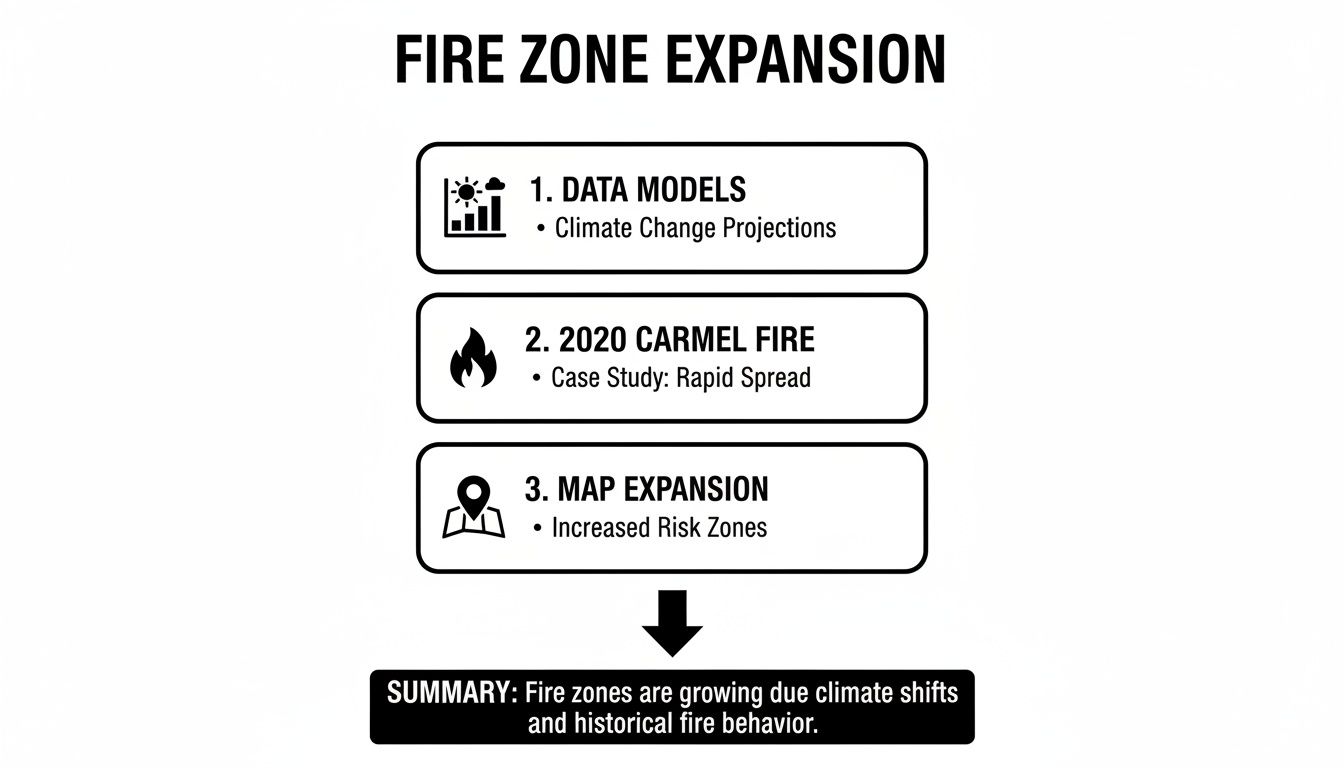
When choosing materials for a fire-safe patio in Carmel Valley, the 2026 codes make it simple: pick materials that are dense, non-porous, and carry a Class A fire rating. This focus guides us toward smart, durable options that provide a lasting line of defense.
If you want to dig deeper into local preparedness, the Ready Monterey County website is a fantastic resource. The data behind these new codes is a direct response to recent events and updated climate models, making non-combustible materials a hard requirement.
Top-Tier Materials for Fire Resilience
For homeowners here in Salinas, Carmel, and Pebble Beach, a few materials have proven themselves. They not only meet fire codes but also hold up beautifully in our coastal climate.
- Granite Pavers: Incredibly dense and tough, granite won’t crack or spall under extreme heat.
- Basalt: As a volcanic rock, basalt was born from fire and has exceptional heat resistance.
- Porcelain Pavers: Engineered for performance, their non-porous surface gives embers nowhere to lodge.
To make the choice easier, here’s a quick comparison. Each one brings unique benefits for fire safety and durability in our local environment.
Comparing Fire-Resistant Patio Materials
| Material | Fire Resistance | Durability in Coastal Climate | Key Benefit for Fire Zones |
|---|---|---|---|
| Granite Pavers | Excellent. Resists cracking and spalling under extreme heat. | High. Resists salt air and moisture exceptionally well. | Its natural density prevents embers from penetrating the surface. |
| Basalt | Superior. Formed by volcanic activity, it is inherently fireproof. | Very High. Extremely tough and wear-resistant. | A visually striking, ultra-durable choice that won't degrade under heat. |
| Porcelain Pavers | Excellent. Rated Class A; non-porous surface stops embers. | Superior. Impervious to moisture, salt, and staining. | Engineered to be completely non-combustible and provide a solid barrier. |
Materials Now Considered a Liability
Knowing what to avoid is just as crucial. With updated codes, some traditional favorites are now a major risk. Porous flagstone and other untreated sedimentary stones are often non-compliant, as their crevices trap flammable debris and embers.
Small Details That Make a Big Difference
A truly fire-safe patio isn't just about the pavers. The details holding it together matter just as much. Modern polymeric sand hardens to seal gaps between pavers, preventing debris from accumulating.
For natural stone, a non-combustible sealant adds another layer of security. It repels moisture and makes the surface easier to keep clean. At Stonecap Masonry, we specialize in designing and building custom patios and walkways that meet these tough new standards.
Designing Your Patio as an Effective Defensible Zone
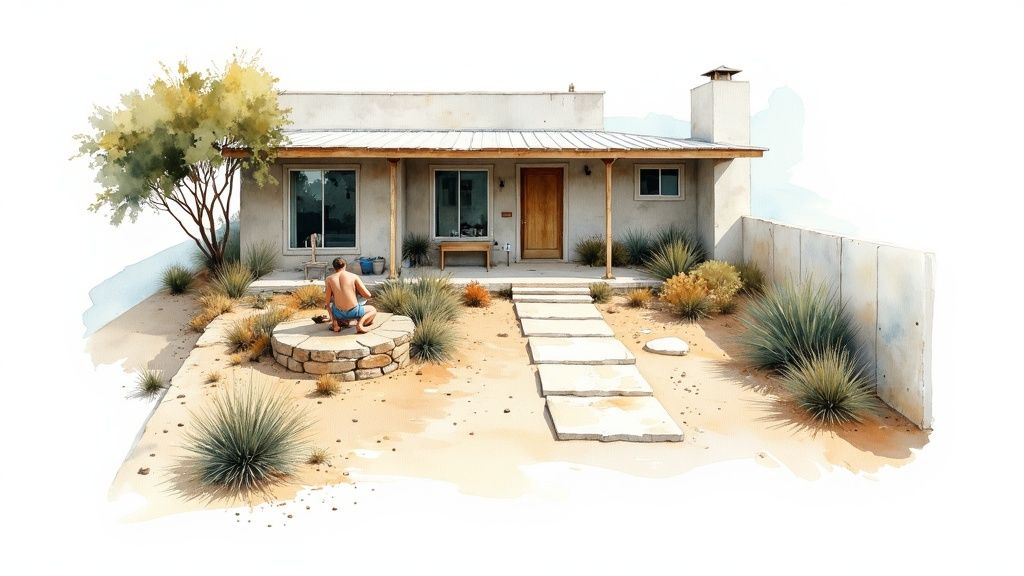
Understanding how Carmel Valley’s fire zones are changing stone patio design in 2026 means thinking of your patio as an active part of your home's fire protection system. A well-built stone patio is a beautiful and effective way to establish a defensible space—a clean, fire-resistant buffer zone around your house.
The Critical 5-Foot Ember-Resistant Zone
Fire experts have identified the most vulnerable area: the 0-5 feet directly surrounding your home’s foundation, also known as the Ember-Resistant Zone. It’s a sobering fact that most homes lost in wildfires ignite from wind-driven embers landing in this zone. A stone patio made from granite or porcelain offers those embers nothing to burn.
Practical Design Tips for a Fire-Wise Patio
Weaving fire-wise principles into your patio design is simple once you know what to look for. These small details turn a beautiful outdoor space into a functional fire buffer.
- Create a Hardscape "Defensible Zone": Your non-combustible patio surface should extend at least 5–15 feet from all exterior walls to create a clear, cleanable barrier.
- Seal the Joints: Use fire-resistant polymeric sand or mortared joints to seal gaps, creating a solid surface that denies fuel to embers.
- Avoid Flammable Features: Keep combustible items like wooden planters, wicker furniture, or flammable rugs outside this critical zone.
This strategic approach is now a key part of local building codes. Research from the Insurance Institute for Business & Home Safety shows that fire-hardened patios can slash the risk of a home igniting during an ember attack by 27%. (Source: IBHS) You can find more information on local preparedness at Ready Monterey County.
Integrating Fire Features Safely
Many homeowners in Carmel and Monterey still want a fire pit or outdoor fireplace. You can absolutely have them, as long as they are built safely within your defensible space. A skilled, licensed mason will ensure any built-in fire feature is made entirely of non-combustible materials and is positioned a safe distance from your home.
Our guide on building code-compliant fire pits dives deeper into enjoying these features safely. By thoughtfully designing your stone patio, you make a proactive investment in your family’s safety.
Why a Solid Foundation is Non-Negotiable
A fire-safe patio is only as good as what’s underneath it. On the Central Coast, with our challenging local soil conditions, expert craftsmanship isn't a luxury; it's essential for a lasting, safe investment. Cutting corners on the foundation leads to costly failures down the road.
Building for Carmel Valley’s Tricky Terrain
If you live in Carmel Valley or the Salinas area, you know our heavy clay soil can be a challenge. It swells when wet and shrinks when dry, putting immense stress on any structure built on top of it. A poorly built patio foundation will be torn apart by this movement.
A professional, licensed contractor understands this. We excavate unstable soil and build a solid, multi-layered base of compacted aggregate. This creates a stable platform that keeps your patio level and safe for years.
Proper water management is also critical, especially after a wildfire increases erosion risk. Read more about how these fire zone changes are impacting local building trends.
The High Cost of Unlicensed Work
Hiring an unlicensed or inexperienced contractor is one of the biggest risks a homeowner can take. They often cut corners on the foundation, leading to problems like heaving, sinking, and cracking. This subpar work creates dangerous tripping hazards and rarely meets local building codes, which can become a major legal and insurance nightmare for you.
At Stonecap Masonry, we understand that structural integrity is the invisible hero of a successful project. A well-built stone patio or a strategically placed masonry retaining wall is a powerful tool for fire resilience, but only when built on a foundation of true craftsmanship.
Bringing It All Together: A Resilient and Beautiful Outdoor Space
The updated fire maps for Carmel Valley are changing how we approach outdoor living. When we ask how Carmel Valley’s fire zones are changing stone patio design in 2026, the answer is about merging resilience with beauty. It means making smart choices and trusting the job to a licensed, insured professional.
Your stone patio is now a critical part of your home’s first line of defense. This approach doesn't just protect your property; it also boosts your home's long-term value. These safety-driven designs also align with modern aesthetics, as seen in these 5 trends for 2026 that make stone patios a top home upgrade.
For anyone living in Salinas, Monterey, Pebble Beach, or anywhere on our Central Coast, working with a trusted masonry expert is the best way to ensure your new patio is stunning, safe, and built to last.
Frequently Asked Questions
1. Does a fire-resistant stone patio really make my home safer?
Yes, absolutely. A well-designed stone patio creates a non-combustible "defensible space" around your home that can stop a ground fire and significantly reduce the risk from flying embers, which are a primary cause of home ignition in wildfires.
2. Will a fire-safe patio cost more than a traditional one?
The initial cost can be slightly higher due to the use of specific high-density materials like sealed granite or porcelain pavers. However, this investment often increases property value, may lead to homeowner's insurance discounts, and provides invaluable peace of mind.
3. Can I still use my existing flagstone patio in a new fire zone?
It depends on the stone type and its condition. Many porous flagstones with wide, unfilled gaps can trap flammable debris and are no longer compliant. A licensed masonry contractor can inspect it to see if it can be upgraded or if a replacement is the safest option.
4. What is the most important feature of a fire-wise patio design?
The "Ember-Resistant Zone" is the most critical feature. This is a non-combustible area extending at least five feet from your home’s foundation, made of solid-surface materials with sealed joints, and kept completely clear of flammable items. This same principle applies to features like fireplace facings.
5. How do I know if my property is in a new Carmel Valley fire zone?
The only way to know for sure is to check the official Fire Hazard Severity Zone (FHSZ) maps provided by CAL FIRE. A licensed local masonry contractor who is familiar with Monterey County regulations can also help you find the correct designation for your address.
For homeowners in Salinas, Monterey, Carmel, Pacific Grove, and Pebble Beach, Stonecap Masonry can design a custom stone patio that enhances outdoor living and strengthens wildfire resilience—built with craftsmanship that lasts in our Central Coast climate.
