Masonry Fireplace Construction in Salinas & Monterey Peninsula
A masonry fireplace is built on-site from brick, stone, or block, starting with a poured and reinforced foundation and finishing with the surface everyone sees. It is a different structure than a prefabricated metal unit, and building one correctly takes a permitted foundation, a properly engineered firebox and chimney, and code-compliant construction from the ground up.
Stonecap Masonry Inc. builds indoor and outdoor masonry fireplaces throughout Monterey County under CSLB License #1073620, led by master mason Candelario "Cande" Perez and his son Adrian. Stonecap builds new fireplaces for homes across Salinas, Carmel, Carmel Valley, Pebble Beach, Pacific Grove, Monterey, Marina, Seaside, and Prunedale.
Built From the Foundation Up
A masonry fireplace carries real weight and manages real heat, so the work that decides whether it lasts happens before anything is visible. Stonecap excavates to the depth and dimensions the local building code requires, places a steel rebar cage for seismic reinforcement, and pours a footing sized to carry the fireplace and chimney for the life of the house.
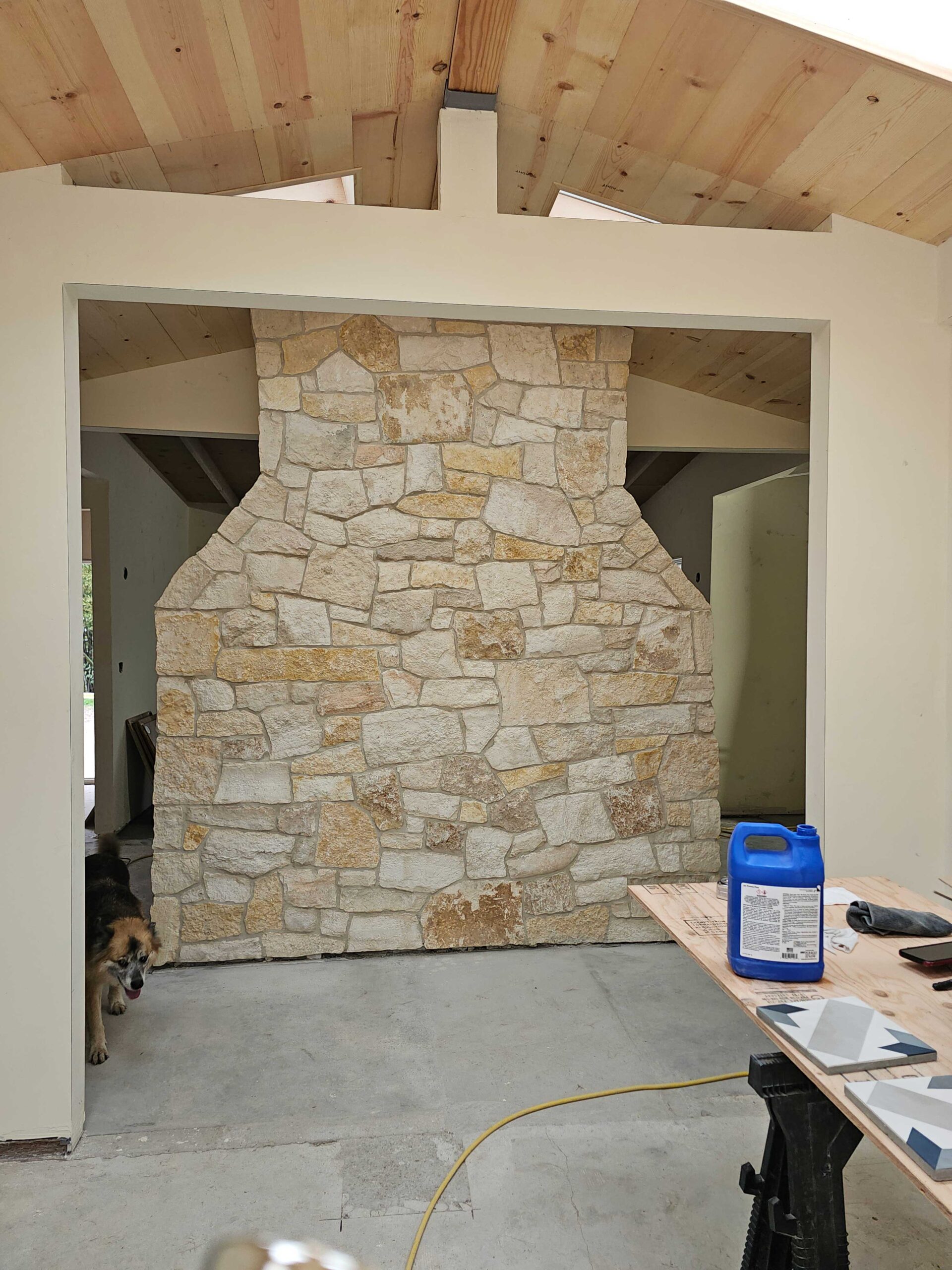
From there, the firebox, smoke chamber, and flue are built to manage extreme thermal cycling while maintaining proper draft. The facing and hearth you see are the last step in a structure that was engineered from the footing up, not a surface applied after the fact.
Why Homeowners Choose Stonecap for a Full Build
Permitted & Engineered
Foundation and structural work built to the depth, reinforcement, and code requirements the local building department calls for.
Seismic-Rated Foundation
Reinforced footings and rebar placement built for California's seismic requirements, not just the visible finish.
Indoor & Outdoor Builds
Living room fireplaces and patio or outdoor entertainment fireplaces, each engineered for its own site conditions.
Proper Draft & Draw
Firebox, smoke chamber, and flue sized and shaped to draw correctly and manage the thermal cycling of daily use.
Coastal-Ready Materials
Material and mortar choices suited to salt air and moisture cycling on the Monterey Peninsula.
Licensed & Bonded
CSLB License #1073620, verifiable in about a minute at cslb.ca.gov.
Masonry Fireplaces We Build
Every build starts with the site: how the fireplace will be used, where it sits, and what the structure around it needs to support. These are the projects we build most often.
Indoor Fireplace Construction
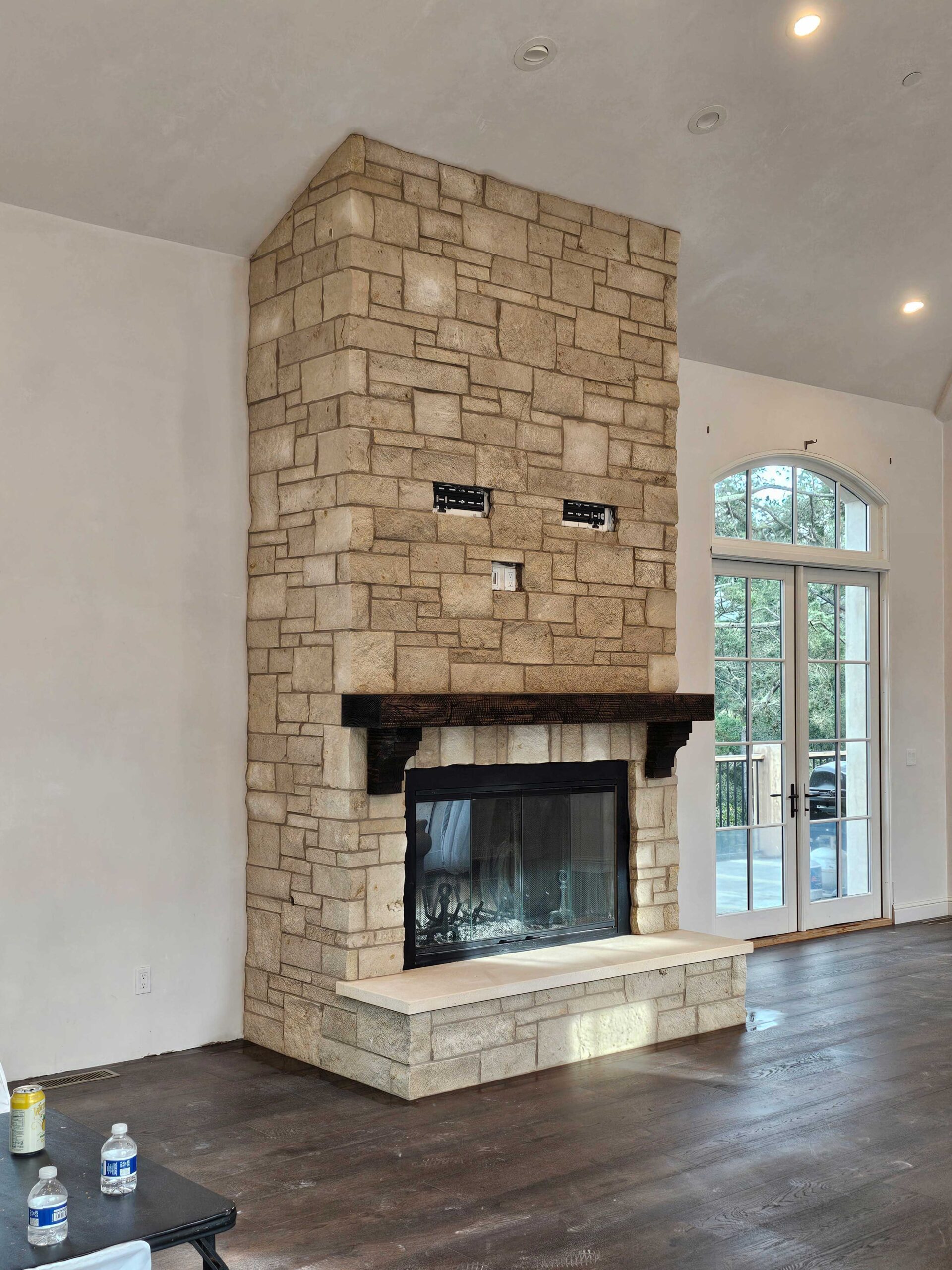
Living room and family room fireplaces built into new construction or added to an existing floor plan, framed and finished to become the room's structural and visual anchor.
Outdoor Fireplace Construction
Freestanding and built-in fireplaces for patios and entertainment areas, engineered for coastal exposure and proper draft in an open-air setting.
Fireplace & Outdoor Kitchen Combinations
Fireplaces built as part of a larger outdoor living space, coordinated with adjacent masonry work like patios, seating walls, and outdoor kitchen structures.

New Construction or a Structural Rebuild
Some projects start on open ground. Others start with a fireplace that no longer meets current code, has a failing firebox, or was never permitted correctly in the first place. Stonecap assesses the site or the existing structure first, then scopes the foundation, firebox, and chimney work the project actually needs.
A rebuild that touches the firebox, smoke chamber, or foundation is treated as new construction from a code standpoint, and is scoped and permitted accordingly.
Our Masonry Fireplace Construction Process

1. Site Assessment & Permit
We review the site or existing structure, confirm the scope, and handle permit submission with the local building department.

2. Foundation & Footing
Excavation, rebar reinforcement, and a poured footing sized to carry the fireplace and chimney for the life of the structure.

3. Firebox, Smoke Chamber & Chimney
The structural core of the fireplace is built to manage heat and draft correctly, using fire-rated materials throughout.

4. Facing & Hearth Finish
Stone, brick, or veneer facing and the hearth extension are set, finishing the structure into the room or outdoor space.

5. Inspection & Final Walkthrough
Building department inspection is scheduled and passed, and we walk the finished fireplace with you before calling the job complete.
What Shapes the Scope of a Masonry Fireplace Build
Two masonry fireplaces can look similar and involve very different amounts of work. These are the factors that shape the scope of a build.
- Foundation conditions Soil conditions, slope, and existing slab or framing all affect how the footing and foundation are engineered.
- Permit & engineering review Requirements vary by jurisdiction and by whether the project touches the firebox, hearth extension, or structure, so this is confirmed for your project rather than assumed.
- Indoor vs. outdoor placement Outdoor builds are engineered for coastal exposure and open-air draft, while indoor builds integrate with existing framing and finishes.
- Chimney height & design Roofline, setback requirements, and draft performance all factor into how the chimney is designed and built.
- Firebox & flue materials Fire-rated brick, mortar, and flue components are selected for the fireplace's intended use and burn frequency.
- New build vs. rebuild Demolition of a failing structure, or coordination with an existing foundation, changes the scope of work involved.
Recent Fireplace Construction Projects
Indoor and outdoor masonry fireplaces built from the foundation up across Salinas, Carmel, and the Monterey Peninsula.


Why Choose Stonecap Masonry
Licensed, bonded, and insured
CSLB #1073620 under California's C-29 masonry classification, published so you can verify it.
Family operated
Led by master mason Cande Perez and his son Adrian, so you know who is standing on your foundation.
Built for the seismic zone
Reinforced foundations and code-compliant structural work, not just a finished surface.
Local to the Peninsula
Based in Salinas and working daily in Carmel, Pebble Beach, Carmel Valley, and Pacific Grove.
Clear scope before work starts
You get the process, the permit timeline, and the schedule laid out at consultation, with a detailed quote to match.
Repeat clients
Homeowners who bring Stonecap back for a second and third project on the same property.
A masonry fireplace built correctly the first time becomes the lasting centerpiece of the home.
Frequently Asked Questions
About Masonry Fireplace Construction
Answers to what homeowners in Salinas and on the Peninsula ask most before building a new masonry fireplace.
Do I need a permit to build a masonry fireplace in Monterey County?
In most cases, yes. New masonry fireplace construction, including the foundation, firebox, and chimney, is structural work that requires a building permit. Requirements vary by jurisdiction, and we confirm what applies to your project and handle the permit submission as part of the process.
How long does it take to build a masonry fireplace?
Most outdoor masonry fireplace projects on the Monterey Peninsula take six to ten weeks from permit submission to final inspection. The permit process typically accounts for two to four weeks depending on the building department's current workload, and the masonry construction itself is usually one to two weeks. Timelines vary with design complexity, site conditions, and material lead times, and we provide a project schedule estimate as part of the proposal.
What does California's 2025 building code require for a masonry fireplace?
California's 2025 Title 24 code standards, effective January 1, 2026, govern the foundation reinforcement, clearances, and fire-rated construction required for permitted masonry fireplace work. Requirements are applied based on your specific project and jurisdiction, and we build to current code on every job.
What's the difference between a masonry fireplace and a prefabricated fireplace?
A masonry fireplace is a permanent structural part of the home, built on-site from brick, stone, or block on its own foundation. A prefabricated fireplace is a manufactured metal unit installed into a framed chase. Masonry fireplaces take longer to build and cost more, and in exchange they last for generations with minimal maintenance.
What maintenance does a masonry fireplace require?
A properly built masonry fireplace requires minimal maintenance in normal use. Wood-burning fireplaces should have the chimney cleaned annually, and the mortar joints, firebox interior, and smoke chamber should be inspected periodically. Coastal exposure accelerates mortar weathering on outdoor fireplaces, so we recommend a mortar inspection every three to five years for fireplaces exposed to the elements.
Is a masonry fireplace safe to build in a seismic zone?
Yes, when it is engineered and built to current code. California's building code requires reinforced foundations, rebar placement, and structural detailing specific to seismic activity, and Stonecap builds every fireplace to those standards.
Can an existing non-code fireplace be rebuilt to current standards?
In many cases yes. If the foundation is sound, a rebuild may be able to reuse it after inspection. If the footing, firebox, or chimney no longer meets code, those elements are rebuilt as part of the project. We assess the existing structure first so the scope reflects what is actually needed.
Didn't find the answer you were looking for? Contact us and our team will be happy to help.
Related Masonry Services
Ready to Build Your Fireplace?
Tell us about your project and we'll walk you through the site assessment, the permit process, and a detailed quote for the work.
Stonecap Masonry Inc. · Licensed, bonded & insured · CSLB #1073620